Many metal car parts can be laser cleaned, including steel chassis components, suspension brackets, external engine castings, and selected exhaust parts. Aluminum wheels, thin body panels, and brake components require additional precautions, while rubber, plastic, electronics, and sensitive friction surfaces should not be exposed to a general-purpose handheld laser cleaning process.
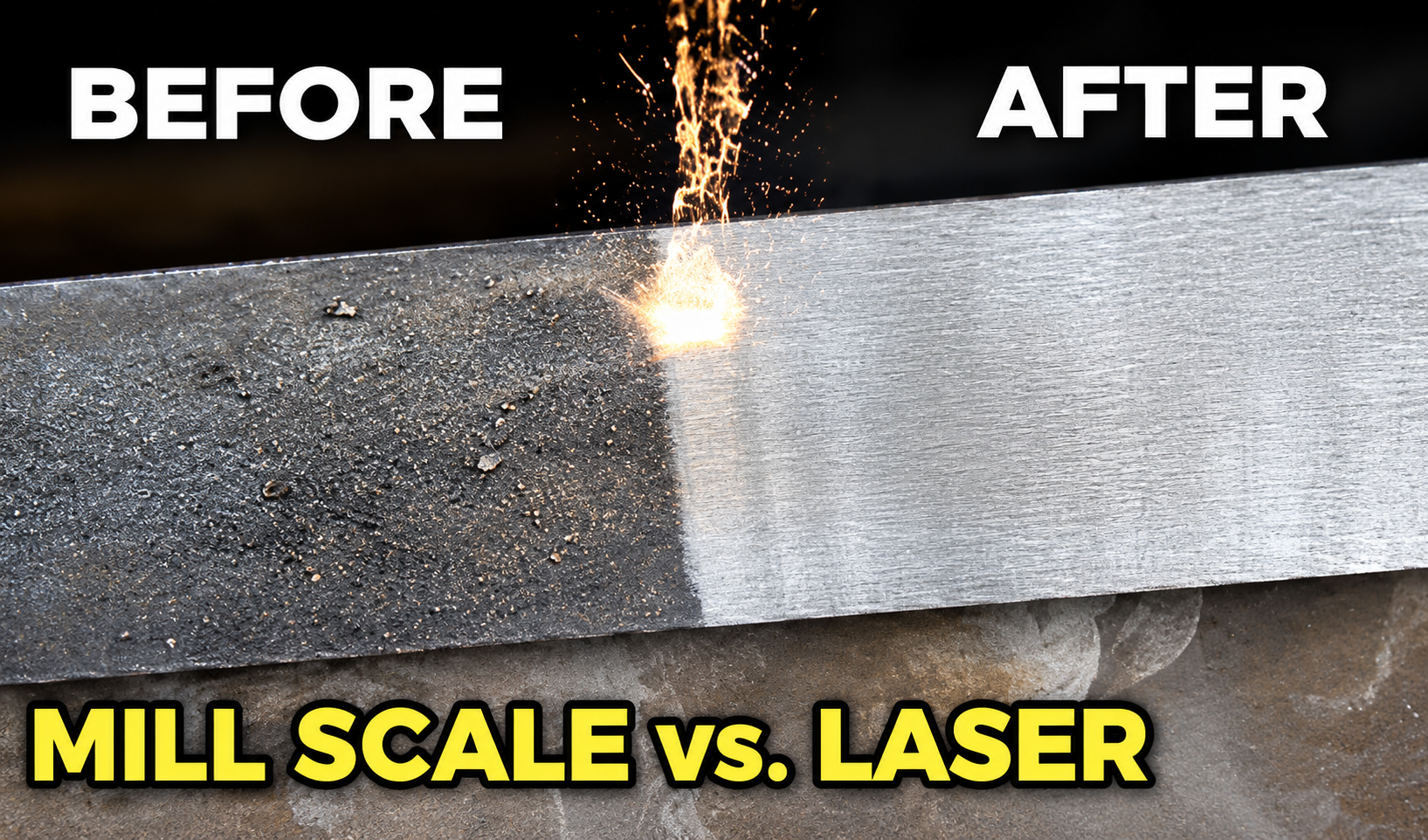
Laser cleaning removes surface contamination using concentrated light energy rather than abrasive media. It can be useful for automotive rust removal, selective paint stripping, and preparing metal surfaces before welding or refinishing. Workshops can compare an automotive laser rust removal supplier by testing the process on real parts first.
However, not every metal part is a suitable cleaning target.
Material thickness, protective coatings, component function, and nearby heat-sensitive materials all affect whether the process is appropriate.
For automotive repair shops, restoration businesses, and parts remanufacturers, the priority is to remove unwanted contamination without changing the properties or dimensions that make the part functional.
This guide explains which car parts are suitable for laser cleaning, where the limitations are, and how to evaluate the right process for your workshop.
1. Which Car Parts Can Be Laser Cleaned?
Laser cleaning is particularly useful on accessible metal surfaces where rust, oxides, old paint, or other deposits need to be removed.
However, suitability must be assessed by the specific component and cleaning objective.
Automotive Laser Cleaning Compatibility Chart
Car Part | What Laser Cleaning May Remove | Suitability and Limitations |
|---|---|---|
Steel Chassis and Subframes | Surface rust, paint, oxidation | Suitable on sound, accessible metal; inspect structural corrosion |
Suspension Brackets and Steel Fasteners | Rust, old coatings, surface contamination | Suitable after checking coatings, tolerances, and adjacent components |
Engine Blocks and Transmission Housings | External oxide, paint, selected carbon and oil residues | Conditional; protect ports, precision bores, and sealing surfaces |
Brake Caliper Housings | External rust and old coating | Conditional; properly dismantled metal components only |
Exhaust Pipes and Metal Manifolds | External rust, oxide, and selected coatings | Conditional; protect sensors and heat-sensitive components |
Aluminum Wheels | Selected coatings, oxidation, surface deposits | Requires testing and compliance with wheel-maker restrictions |
Thin Steel Body Panels | Localized rust and paint | Higher risk of heat distortion and coating damage |
Rubber, Plastic, Glass, and Electronic Parts | — | Not suitable for general-purpose handheld laser cleaning |
The most important distinction is between cleaning an exposed metal surface and treating a complete automotive assembly.
For example, an isolated steel suspension bracket may be a suitable laser-cleaning candidate.
The same bracket installed beside rubber bushings, brake hoses, and wiring requires a different risk assessment.
Steel Frames, Subframes, and Suspension Parts
Steel chassis components are among the more practical candidates for laser rust removal.
A suitable system can remove surface rust and coatings from accessible frame rails, brackets, mounting points, and suspension parts without adding abrasive blasting media.
This can be useful during vehicle restoration or preparation for further repair.
However, rust removal does not restore the thickness or strength of corroded steel.
If a subframe contains deep pitting, perforation, or suspected structural damage, it needs inspection and appropriate repair or replacement.
After cleaning, the exposed metal also needs suitable corrosion protection.
Engine Blocks and Transmission Housings
External surfaces of cast-iron and aluminum engine or transmission housings may be cleaned to remove certain oxides, carbon deposits, and coatings.
These parts can benefit from localized cleaning where abrasive residue would be undesirable.
However, precision surfaces require special care.
Cylinder bores, bearing seats, valve seats, gasket sealing faces, and other critical dimensions should not be subjected to an unqualified laser process.
Oil passages and internal cavities are also not suitable for general handheld cleaning simply because the laser head can be directed toward an opening.
For automotive remanufacturing, perform sample testing on representative, disassembled components and verify the required surface condition afterward. Ask a metal laser cleaning supplier to confirm parameter settings that avoid remelting or surface change.
Brake Calipers and Exhaust Components
Selected external metal surfaces of disassembled brake caliper housings may be suitable for rust or coating removal.
However, this does not mean laser cleaning is appropriate for complete brake assemblies.
Rubber seals, piston surfaces, brake lines, and other sensitive components must not be exposed to uncontrolled laser treatment.
Brake dust may also contain hazardous substances, including asbestos in some older or replacement components, so appropriate brake-service procedures and contamination controls are essential.
For exhaust pipes and metal manifolds, laser cleaning may remove external oxidation or surface rust.
Sensors, ceramic catalytic substrates, thin sections, and functional coatings require separate protection and assessment.

2. Where Is Laser Cleaning Most Useful in Automotive Repair?
For many workshops, laser cleaning is most valuable when the work involves localized contamination rather than general washing of an entire vehicle.
Three applications are particularly relevant.
Rust Removal During Vehicle Restoration
Consider a restoration workshop working on a detached steel subframe.
The component has surface corrosion around brackets, edges, and welded joints.
A laser rust removal machine may provide a controlled way to clean the accessible metal without blasting abrasive particles into nearby cavities.
However, heavily layered rust may require additional passes or an alternative process.
The operator should inspect the metal after cleaning to determine whether corrosion has affected its structural condition.
A cleaned surface is not automatically a serviceable component.
Paint Removal Before Welding or Repair
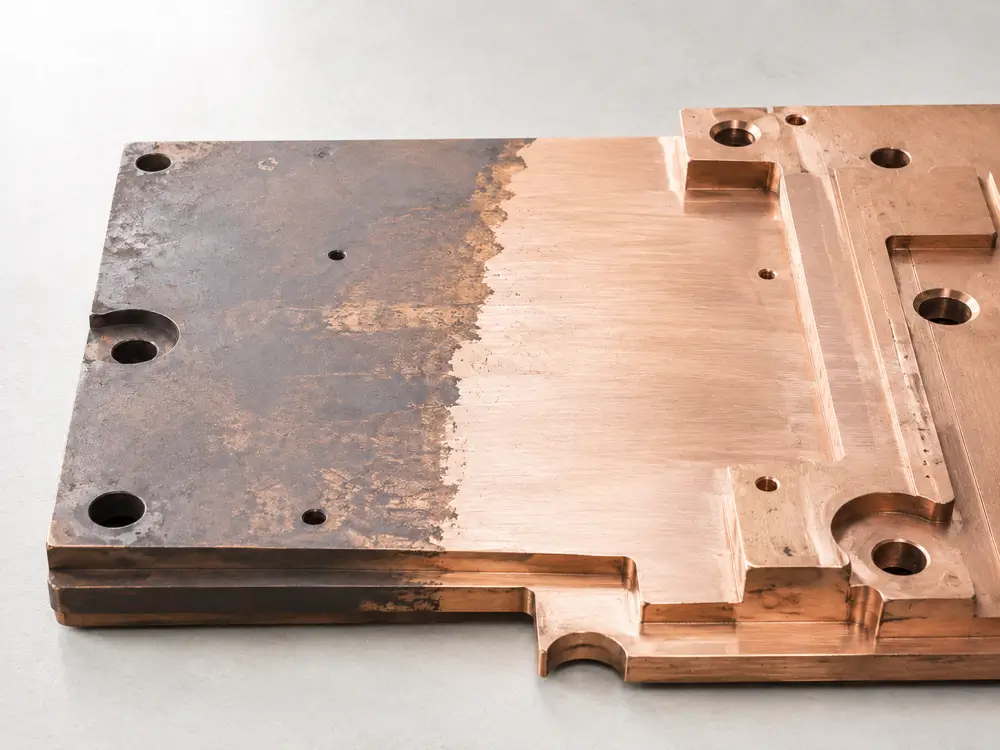
Laser cleaning can selectively remove paint, oxide, and other surface contamination from a defined metal area.
For example, a workshop repairing a steel bracket may need to clean the intended weld zone without stripping the entire component.
Selective cleaning can reduce the amount of unrelated surface material disturbed. Workshops sourcing from a laser paint removal machine supplier should ask for a test on their own coated parts.
This application also appears in industrial automotive production, where laser systems prepare localized joining and bonding areas before assembly.
However, the cleaned area must meet the requirements of the subsequent welding or bonding process.
Surface Preparation in Automotive Manufacturing
Laser cleaning is not limited to car restoration.
In automotive manufacturing, controlled laser processes are also used for components such as motor housings, structural castings, and joining surfaces. For welded parts, a laser weld cleaning supplier can test a sample seam for heat tint and oxide removal.
For example, an automotive supplier documented by Laserax used an automated laser process to remove oxides and other contaminants from components before adhesive bonding.
This type of application requires an engineered process with verified cleanliness and surface characteristics.
It should not be confused with directing a handheld laser cleaner at an assembled electric motor or battery system.
3. Which Automotive Parts Should You Avoid Laser Cleaning?
Some automotive materials are unsuitable for direct exposure to conventional high-power handheld laser cleaning.
Others may be technically cleanable but require such careful validation that alternative methods are more appropriate for normal repair shops.
Rubber, Plastic, Glass, and Electronics
Rubber seals, hoses, belts, bushings, and protective boots can be damaged by excessive heat or laser radiation.
Plastic trim, bumpers, sensor housings, and wiring insulation may melt, discolor, or deform.
Glass and transparent components can also experience thermal damage or unwanted optical changes.
Electronic modules, wiring harnesses, connectors, and sensors should not be treated as ordinary surface-cleaning targets.
Specialized industrial laser processes exist for selected electronic manufacturing applications, but these involve different equipment and controlled procedures.
Do not assume that a metal component is safe to clean while surrounding rubber, plastic, or electrical parts remain attached.
Brake Friction Surfaces and Safety-Critical Parts
Brake discs, drums, pads, and other safety-critical friction components require particular caution.
Laser cleaning should not be presented as a routine way to restore worn brake friction surfaces.
A laser cannot correct excessive wear, cracking, runout, or metal loss.
Removing rust without following the component manufacturer's service requirements may also produce an unsuitable surface.
For brake-system maintenance, use approved inspection and repair procedures rather than relying on appearance after cleaning.
Thin Body Panels and Original Finishes
Thin automotive sheet metal can be sensitive to excessive localized heating.
Poorly controlled laser cleaning may change the surface finish, affect existing coatings, or cause distortion.
This is especially important when restoring original bodywork.
A laser that successfully removes rust from a thick steel bracket may not be suitable for stripping paint from a thin aluminum hood.
Original paint, galvanizing, anodizing, and other protective finishes may also be removed or altered by laser exposure.
Before treating valuable or original body panels, conduct a controlled test on a matching sample and inspect the result.
Severe Corrosion and Damaged Metal
Laser cleaning removes contamination; it does not repair the damage already caused by corrosion.
If a structural component has lost significant thickness, cleaning it will not make it structurally sound again.
The same limitation applies to deeply pitted aluminum wheels or severely corroded suspension components.
In these situations, inspection and replacement decisions take priority over cleaning appearance.

4. Which Laser Cleaner Is Best for Automotive Parts?
For automotive applications, the choice between pulsed and continuous-wave (CW) laser cleaning often matters more than maximum wattage.
Pulsed systems generally provide better control for detailed components, thin metals, and localized cleaning.
CW systems can deliver greater throughput for heavy corrosion on larger, robust metal surfaces, but they also introduce greater heat-management challenges.
Pulsed vs CW Laser Cleaning for Car Parts
Laser Type | Equipment Range to Evaluate | Suitable Starting Applications |
|---|---|---|
Pulsed | 100–300W | Light rust, small brackets, detailed components, controlled paint removal |
Pulsed | 300–500W | Frequent restoration work, selected castings, larger areas requiring careful control |
CW | 1500–3000W | Heavy rust on substantial, detached steel components |
These power ranges are initial equipment-selection references, not approved processing parameters or guarantees of part compatibility.
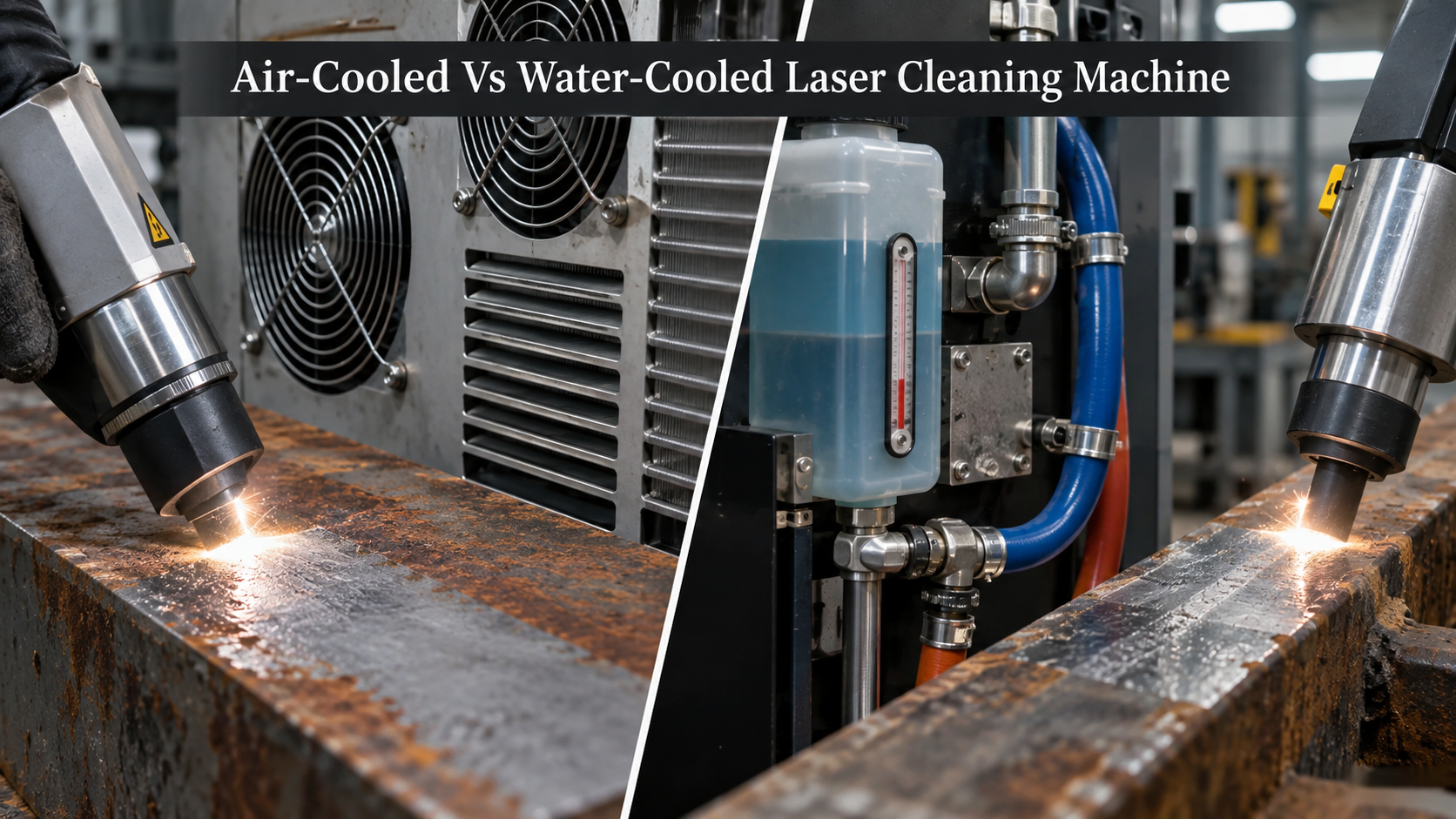
For example, LaserCleanerPro offers an air-cooled 100–500W pulsed series with adjustable pulse, frequency, and scan-width settings, as well as water-cooled high-power CW equipment.
For a restoration shop handling different components every week, a pulsed laser cleaner is often the more relevant starting category to test.
For a business cleaning large quantities of heavily rusted, robust steel components, a CW system from a fiber laser rust remover supplier may justify further evaluation.
However, more power does not automatically mean better automotive cleaning.
A machine suited to a heavy steel frame may be inappropriate for an aluminum wheel or thin body panel.
Before purchasing, compare actual cleaning results on the kinds of parts your workshop handles most often.

5. What Should You Verify Before Laser Cleaning a Car Part?
A successful automotive cleaning process must remove the required contamination without creating unacceptable damage or compromising the component's function.
Before introducing laser cleaning into a repair or restoration workflow, check five essentials.
Evaluate the Actual Part
1. Identify the material and coatings. Confirm whether the part is carbon steel, cast iron, aluminum, stainless steel, or another material. Check for protective finishes and unknown coatings.
2. Determine what needs removing. Light rust, old paint, carbon deposits, and thick corrosion can require very different processes. If a component is heavily contaminated with oil or flammable residues, it may need suitable preliminary cleaning.
3. Identify sensitive areas. Locate seals, wiring, sensors, bearing surfaces, precision dimensions, and nearby components that could be damaged.
4. Test a representative sample. Verify contamination removal, cleaning time, surface roughness, coating condition, and other acceptance requirements. Do not transfer one machine's settings automatically to another material.
5. Inspect the finished component. Confirm that the part still meets the appropriate repair, dimensional, corrosion-protection, or manufacturing requirements.
Don't Overlook Laser Safety
Most open-beam industrial handheld laser cleaners are Class 4 devices.
Direct and reflected beams can cause serious eye and skin injuries. Laser cleaning can also release hazardous particles and fumes from paint, corrosion, and other deposits.
Operation requires suitable beam containment or a properly assessed controlled area, effective extraction, trained personnel, and appropriate protective equipment.
This is particularly important around reflective automotive metals and components with unknown coatings.
When evaluating automotive laser cleaning equipment, request test results using your actual parts rather than relying on generic demonstrations.
A laser cleaning machine supplier should be able to explain what the machine can remove, what materials require special precautions, and when another cleaning method would be more appropriate.
Conclusion
Steel chassis components, suspension brackets, external engine castings, and selected metal exhaust parts are practical candidates for laser cleaning. Aluminum wheels, thin body panels, and brake components require more careful validation.
Rubber, plastic, glass, electronic assemblies, and safety-critical friction surfaces should not be treated as ordinary handheld laser-cleaning applications.
For automotive repair shops and restoration businesses, laser cleaning is most useful when controlled removal of rust, paint, or oxidation is needed on suitable metal surfaces.
The right equipment depends on material, contamination, part geometry, and the required finished condition. To see who builds the equipment, read about LaserCleanerPro, a laser cleaning machine manufacturer based in Wuhan.
If you're considering laser cleaning machines for automotive work, start with representative samples of the parts you clean regularly.
The best cleaning method is the one that removes the contamination while preserving the component's required function and surface condition.