Automotive Laser Rust & Paint Removal for Repair & Restoration
Strip rust and paint from a car without grinding the metal away. Controlled pulsed cleaning lifts corrosion and coatings from chassis, bodywork, alloy wheels and engine parts — with energy tuned to protect the base metal and the plastic and trim around it.
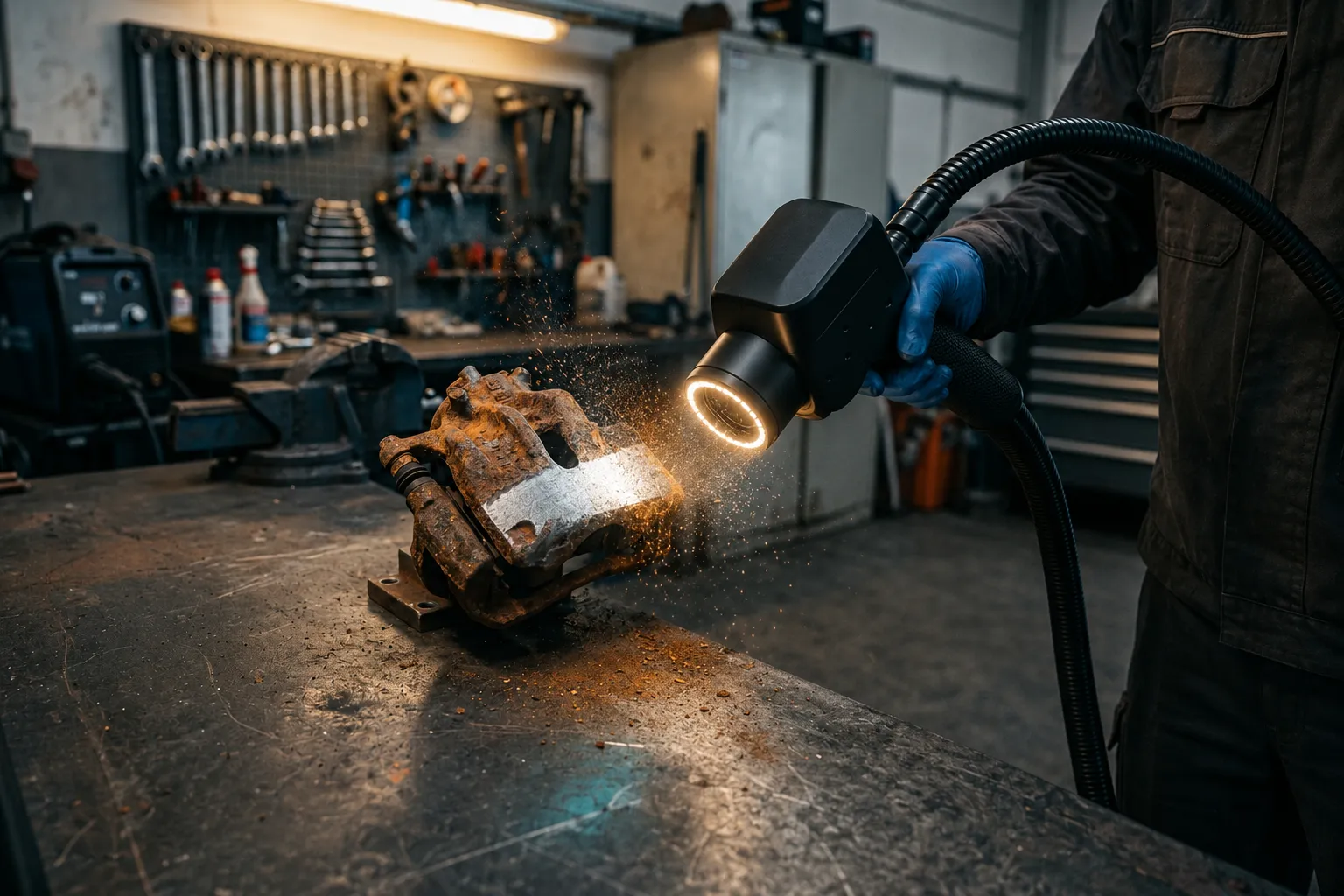
Traditional rust removal fights the car as much as the rust
For repair shops and restorers, the risk is not just the time — it is the damage an aggressive method does to thin panels and original metal.
Grinding damages the panel
Wire wheels and sanders thin sheet metal, distort panels and round off edges — costly on bodywork and original metal.
Slow, fiddly rust removal
Pitted areas, seams and chassis recesses are slow to reach and rarely cleaned evenly by hand.
High labour cost
Hours of prep, masking and cleanup per job push up the cost of every restoration and repair.
What matters when the metal is the asset
The questions a repair shop or restoration studio weighs — answered straight.
Cleaning precision
Pulsed energy is tuned to the rust or paint, so you can clean a panel without touching the plastic, trim and rubber around it. Control is set to the part, not fixed to the machine.
Impact on the base metal
Because there is no abrasive media, impact on the substrate is low and controlled — though the outcome depends on the material, settings and operator, so we test your part first.
Complex shapes & recesses
Reaches engine recesses, seams and intricate geometry that grinders and blasting struggle to clean evenly.
Footprint & shop safety
A compact unit fits a workshop bay, and every machine ships with laser-safety guidance; operators use appropriate eye protection and enclosure practice.
From chassis rust to alloy wheels
Precision cleaning across the parts where panel and metal condition matter most.
Chassis & underbody
Strip rust from chassis rails, floors and underbody.
Bodywork paint
Remove paint and filler from panels without grinding.
Alloy wheels & brakes
Clean alloy wheels, brake parts and hardware.
Engine & valve parts
Clean engine components, valves and aluminium castings.
Result on each part depends on the material, rust or coating, laser power and scanning width — confirmed on a representative sample before the job.

Clean the rust, protect the panel
A pulsed laser delivers energy in short, controlled bursts and lets the surface shed heat between pulses — which is what thin automotive panels and aluminium need. The energy is matched to the rust or paint, not the metal beneath it, so cleaning stays controlled around delicate and original parts.
- Tunable energy set to the contaminant, not the panel
- Lower heat build-up on thin sheet & aluminium
- Reaches seams, spot-welds and recesses cleanly
Classic-car restoration that respects the metal
On a classic, the original metal is part of the value. Laser cleaning removes rust and old paint with high precision and no abrasive media, helping you keep more of the factory metal intact instead of grinding it back. We test settings on a representative area before any visible panel.
Rust and paint, on one machine
Pulsed precision for automotive work
Bodywork and original metal are precision surfaces — pulsed control is the right tool for the job.
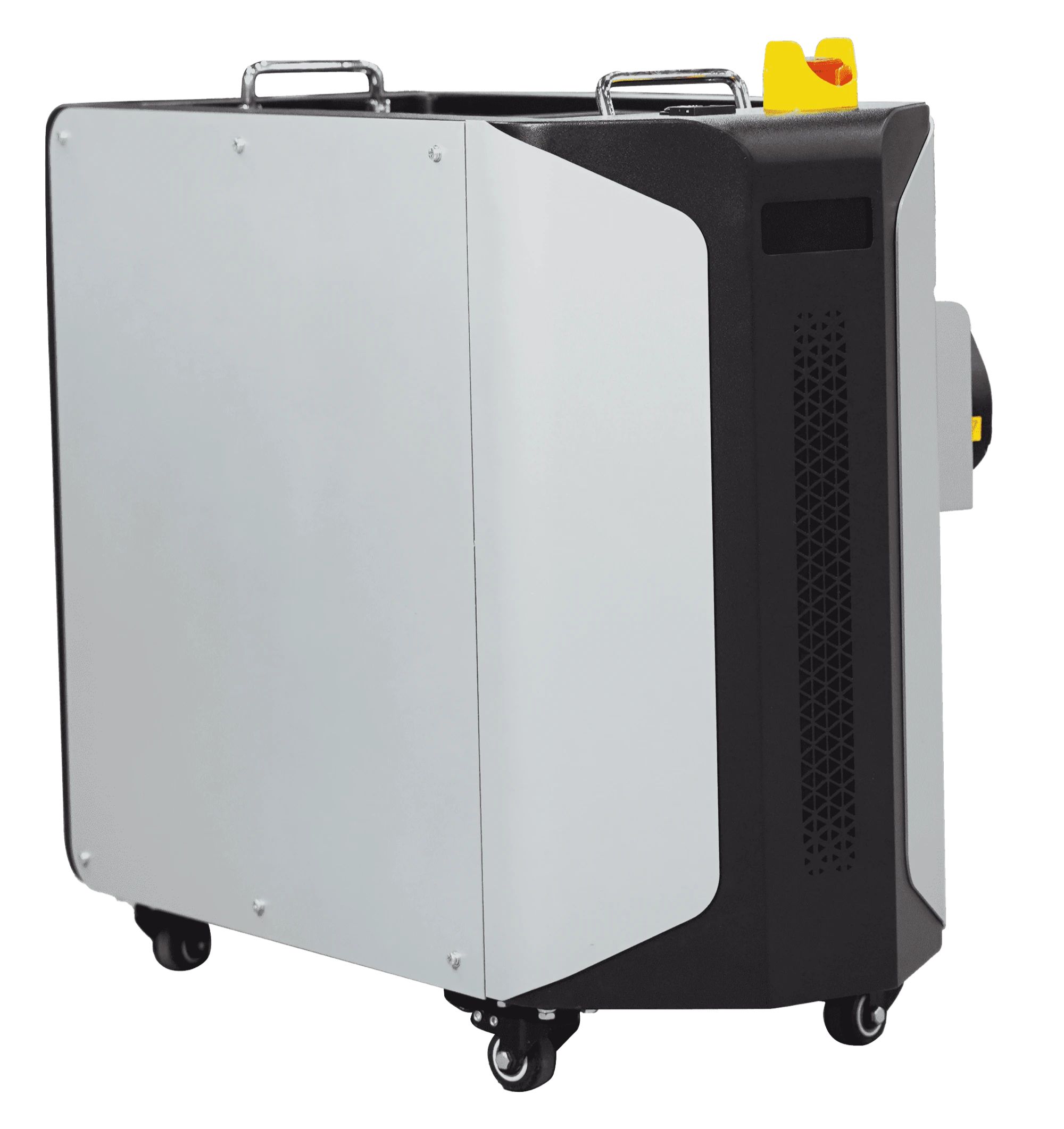
Pulsed — LY100-500W
An air-cooled pulsed platform with a handheld head and adjustable pulse, frequency and scan width — controlled enough for thin panels, aluminium and detailed parts. The 300W pulse build is a common choice for automotive work; lighter handheld and backpack units suit mobile service.
- 100–500W pulsed, configurable (300W popular)
- Tunable energy for panels & aluminium
- Wheeled cabinet; portable units also available
How laser compares for automotive cleaning
Structural differences that hold across most automotive rust and paint removal.
| Factor | Laser | Grinding / sanding | Chemical | Sandblasting |
|---|---|---|---|---|
| Base-metal impact | Low, energy-controlled | Thins & distorts panels | Can etch / residue | Can warp thin panels |
| Precision | High, set to the part | Operator-dependent | Hard to localise | Broad, abrasive |
| Complex shapes | Reaches seams & recesses | Misses recesses | Pooling / dwell issues | Media traps in seams |
| Consumables & mess | None — no media | Discs + dust | Solvent waste | Grit everywhere |
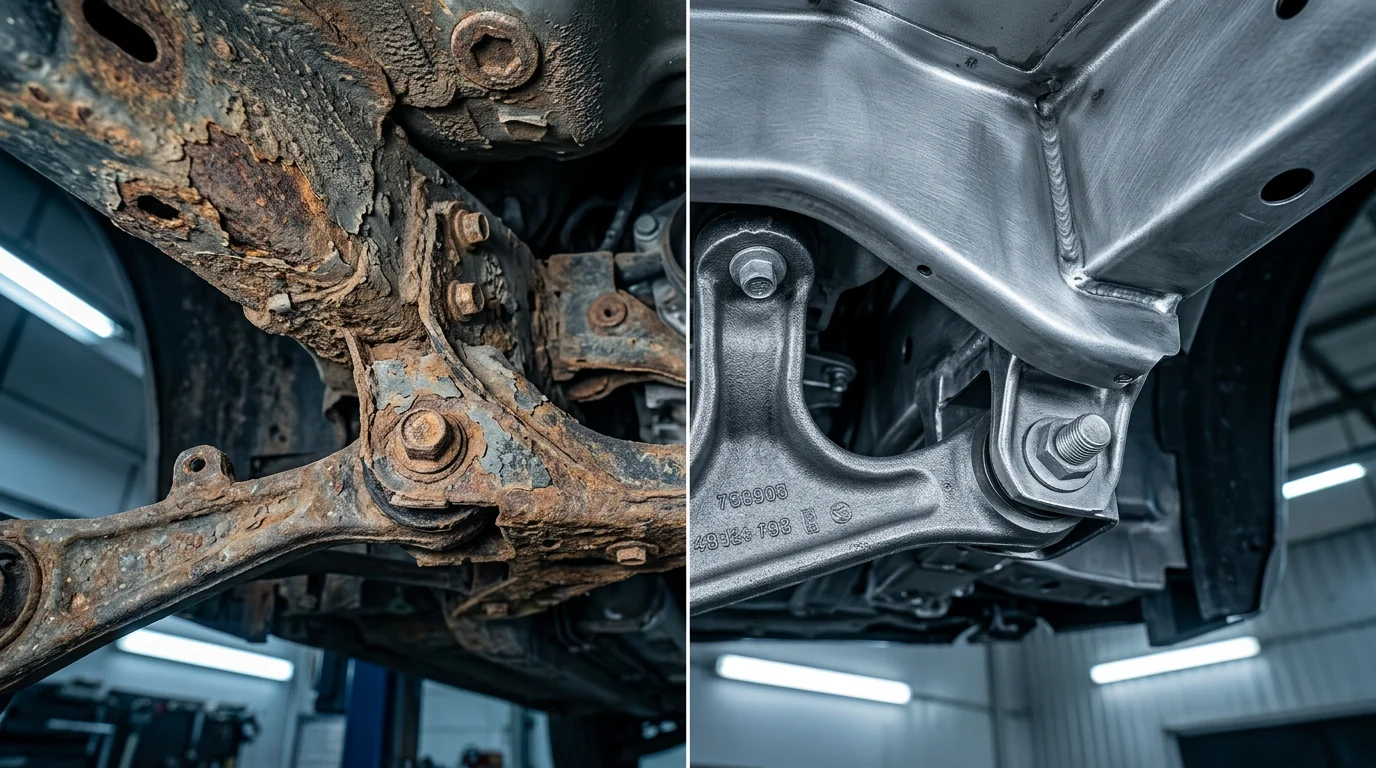
Automotive cleaning results
Representative before/after results on chassis and bodywork.
Materials & conditions matrix
Vehicle parts and contamination the controlled pulsed process handles, with the base metal protected.
| Part | Contamination | Suggested approach |
|---|---|---|
| Chassis & underbody | Rust | Pulsed, controlled |
| Bodywork panels | Paint & filler | Pulsed, selective |
| Alloy wheels & brakes | Corrosion | Pulsed, fine |
| Engine / aluminium parts | Oxide & oil | Pulsed, low heat |
The result on any combination depends on the material, contaminant, laser power and scanning setup — confirmed on a representative sample.
The workflow, step by step
Restoration-grade cleaning that respects the metal — step by step.
Assess part & sensitivity
Identify the material, the contamination and nearby plastic or trim.
Test a discreet area
Clean a representative or hidden area and confirm settings.
Set pulsed parameters
Controlled energy matched to the part, protecting the base metal.
Clean — mask trim as needed
Work the area while protecting surrounding parts.
Inspect base metal
Confirm the substrate condition and finish for the next step.
Related machines & solutions
Automotive laser cleaning questions, answered straight
Send your part and get a factory-direct quote
Tell us the vehicle area, the rust or paint, and how sensitive the part is. We will recommend a pulsed configuration, offer sample testing, and send pricing — usually within one business day.
- [email protected]
- +86 153 2715 5363
- Mon–Sat 9:00–18:00 (GMT+8)