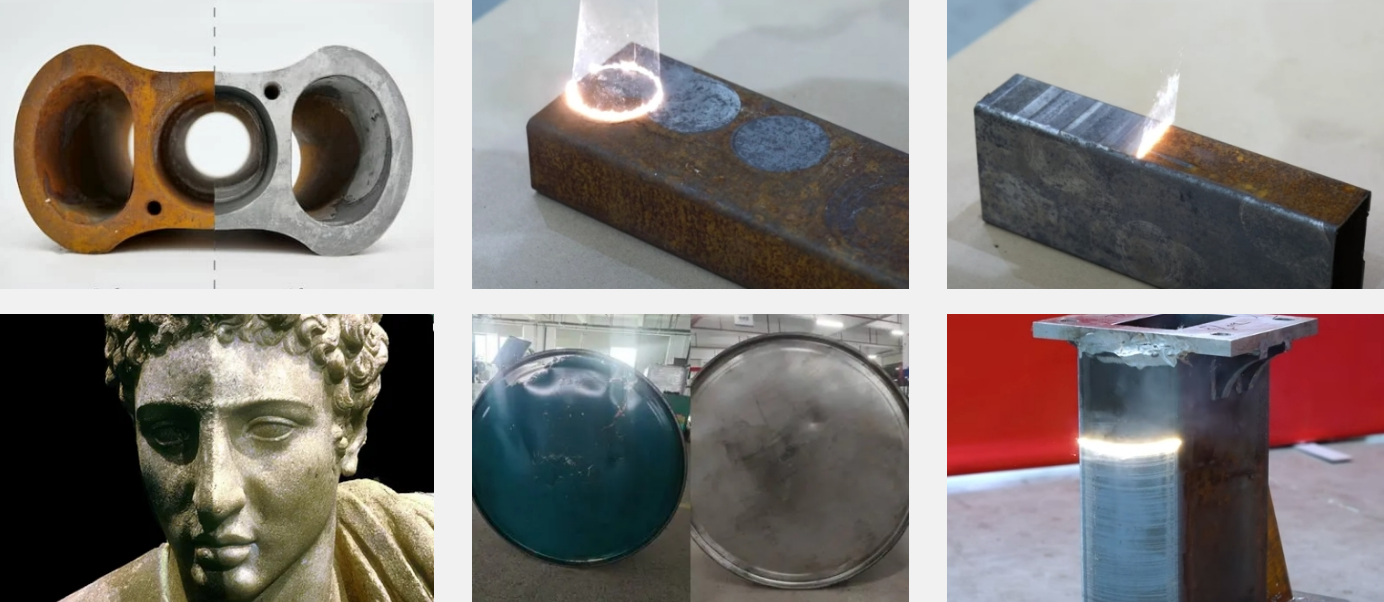
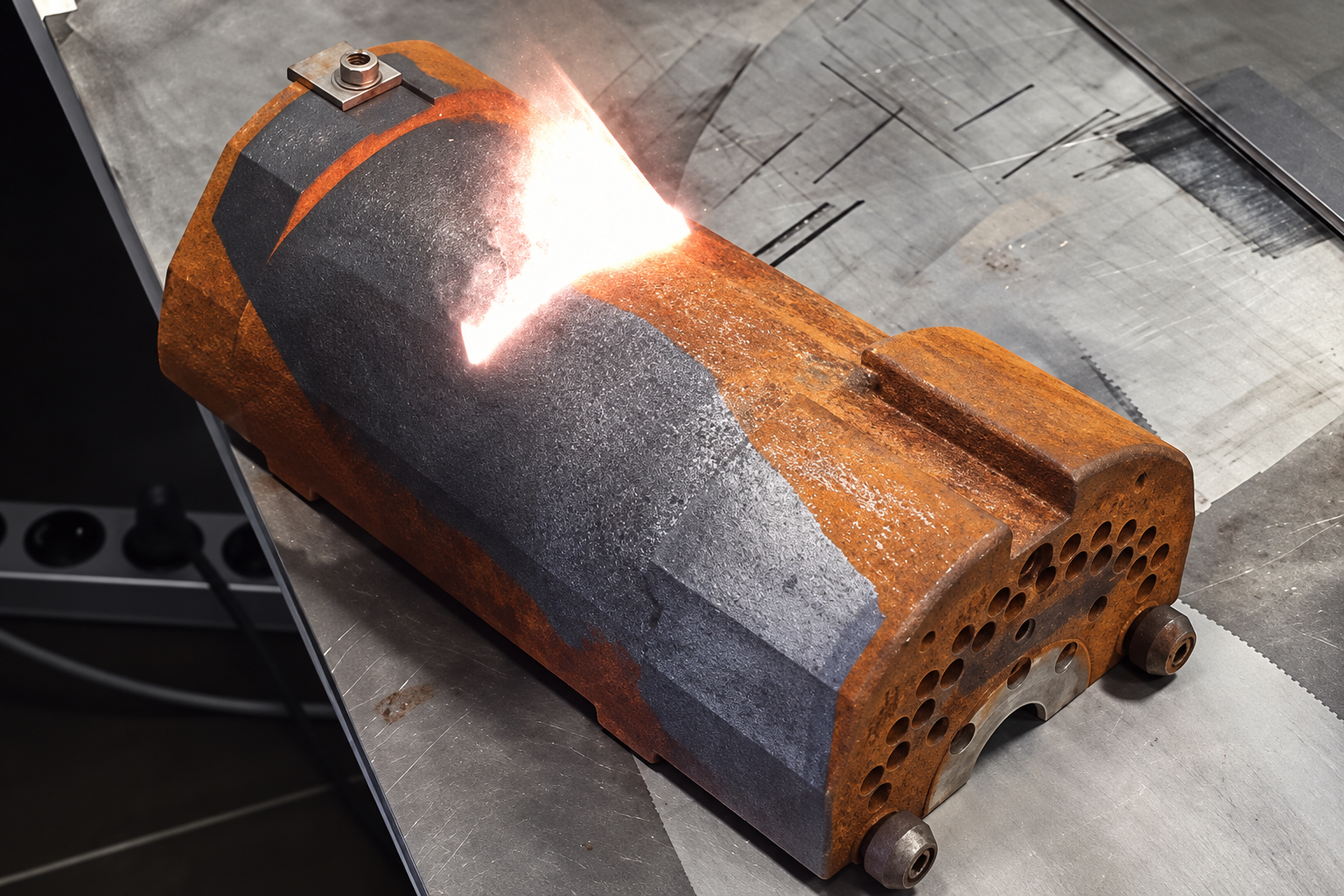
Yes, laser cleaning can be operated safely—but it is not a process that should be treated like an ordinary pressure washer or handheld power tool.
Industrial laser cleaners can involve several hazards at the same time:
Laser radiation and reflected beams.
Smoke, dust and fumes from the material being removed.
Hot particles and fire risk.
Electrical, noise and workplace-access hazards.
Many open-beam industrial laser systems operate as Class 4 lasers. OSHA describes Class 4 lasers as capable of creating immediate eye and skin hazards from direct or reflected beams and potentially creating fire hazards.
That does not mean laser cleaning is inherently unsafe.
It means safety depends on using the correct combination of engineering controls, fume extraction, PPE, operator training and work-area controls.
For anyone evaluating a laser cleaning machine, the basic safety hierarchy should look like this:
Hazard | Primary Control |
|---|---|
Direct/reflected laser beam | Enclosure, barriers, controlled area, interlocks |
Eye exposure | Wavelength- and hazard-matched laser eyewear |
Cleaning fumes and particles | Local exhaust extraction at the source |
Hazardous coatings | Identify material/coating before cleaning |
Fire / hot particles | Remove combustibles and control work area |
Respiratory exposure | Engineering controls first; respirator when assessment requires it |
Unauthorized access | Training, warning signs and controlled access |
1. What Are the Main Hazards of Laser Cleaning?
The first mistake is treating “laser safety” as only an eye-protection issue.
Eye protection is critical, but a real industrial laser cleaner also interacts with rust, paint, oil, oxide, coatings and the underlying substrate. Each interaction can create different hazards.
Laser Beam and Reflection Hazards
The primary hazard is the laser itself.
Many fiber laser cleaners operate at a near-infrared wavelength around 1064 nm. That radiation is invisible to the human eye, so an operator cannot rely on brightness or discomfort as a warning.
Reflective metals make this especially important.
Fresh metal, stainless steel, aluminum and other surfaces can produce reflected laser radiation depending on surface condition and beam angle.
For an open-beam Class 4 system, safety therefore cannot rely on:
“Just don't look at the beam.”
A safer setup uses engineering controls first:
Controlled access.
Appropriate barriers or enclosure.
Beam-control measures.
Interlocks where applicable.
Warning signs.
Emergency stop.
Authorized operators only.
OSHA's laser guidance identifies Class 4 lasers as hazardous from both direct and reflected exposure, which is why controlling the beam path and access to the hazardous area matters as much as operator eyewear.
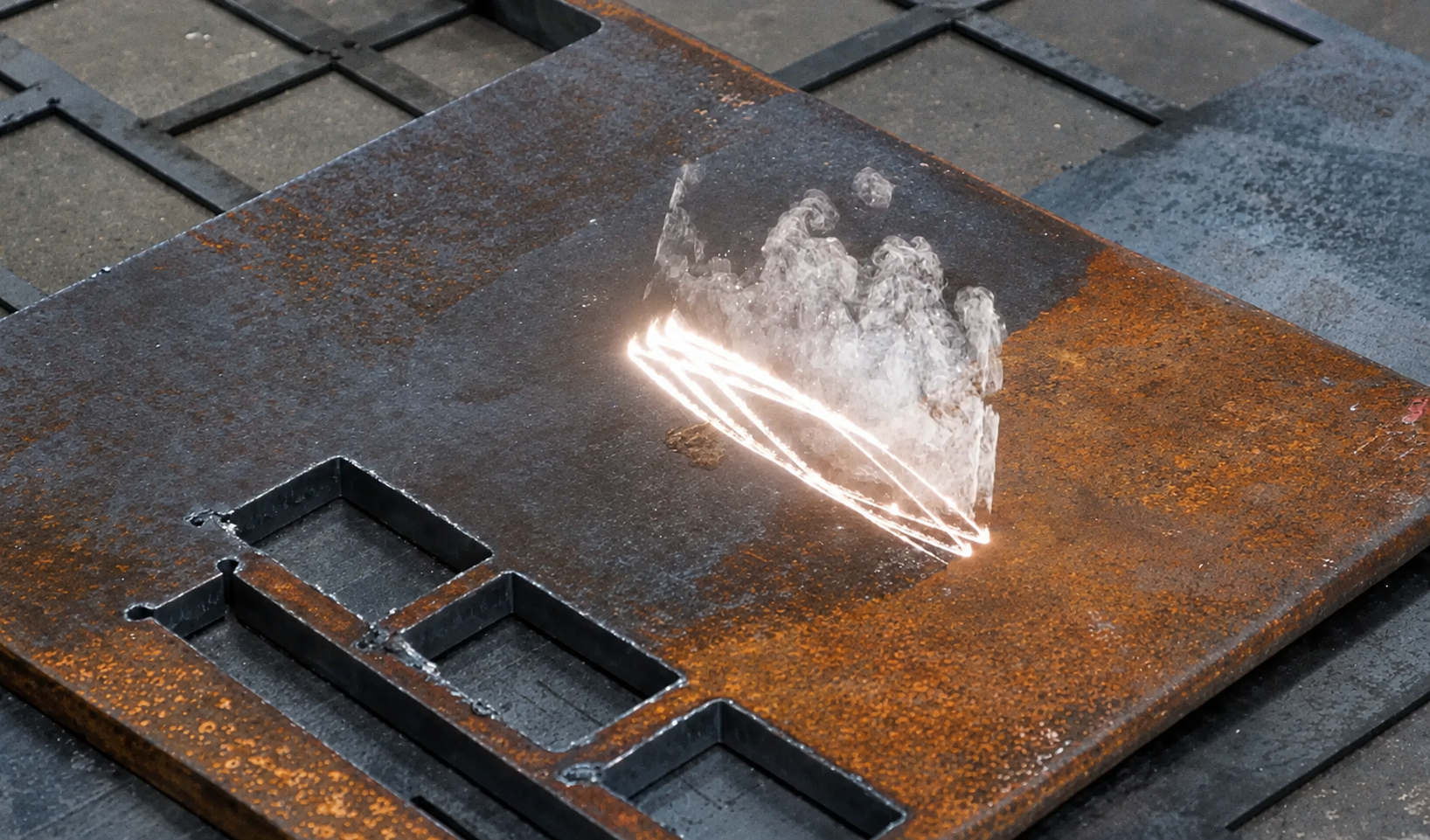
Fumes, Dust and Particles
The second major hazard comes from what you are cleaning.
The laser removes material from the surface. That material does not simply disappear.
Depending on the job, the plume can contain particles or fumes originating from:
Rust and oxide.
Paint.
Primer.
Oil.
Grease.
Plating.
Galvanized coatings.
Industrial coatings.
Unknown older surface treatments.
This is why a laser rust removal machine cleaning ordinary rust is not automatically the same exposure situation as a machine stripping old paint or removing coating from galvanized steel.
OSHA specifically notes that laser interaction with a target can generate hazardous fumes and vapors and that adequate ventilation should be used to keep exposure below applicable limits.
The practical rule is:
Know what is on the surface before you clean it.
Unknown paint or coating should not simply be treated as “dust.”
Fire and Hot-Particle Hazards
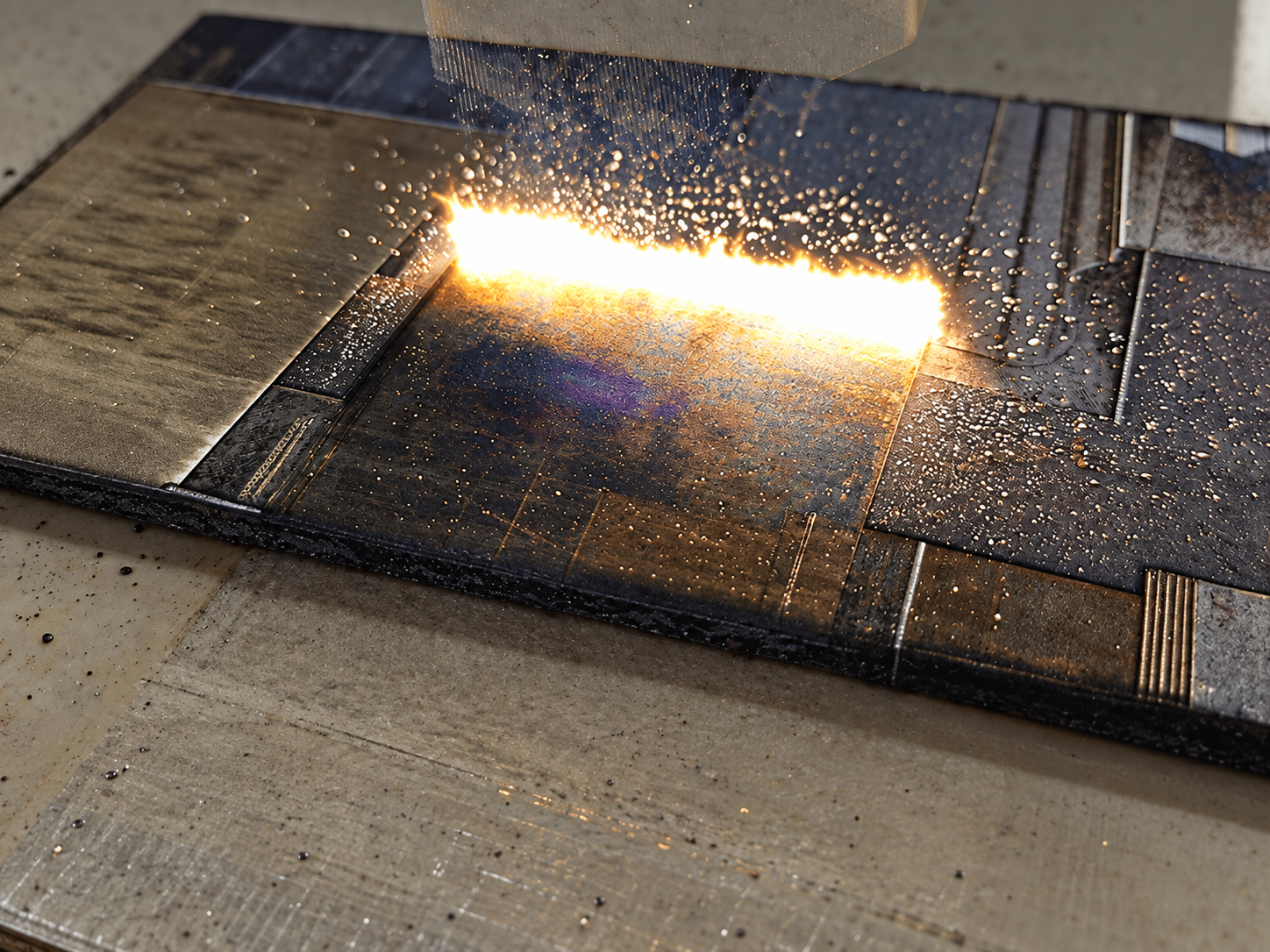
Laser cleaning can also generate hot material at the interaction point.
The work area should therefore be checked for combustible materials such as:
Solvents.
Oily rags.
Flammable cleaning products.
Loose plastic.
Fuel residue.
Other combustible contamination.
The risk depends strongly on the process and material, but fire control belongs in the pre-job assessment rather than being considered only after sparks appear.
Noise and Other Workplace Hazards
The laser source is not the only piece of equipment operating.
A complete setup may also include:
Fume extraction.
Cooling systems.
Compressed air.
Robotics.
Production equipment.
Noise should therefore be measured in the actual workplace rather than assuming every laser cleaner needs—or does not need—hearing protection.
The same principle applies throughout this article:
PPE should follow the actual hazard assessment, not a generic equipment checklist.
2. What PPE Do You Need for Laser Cleaning?
PPE is important, but it should be the last layer of protection, not the only one.
OSHA's PPE requirements call for employers to assess workplace hazards first and then select equipment appropriate to the hazards identified.
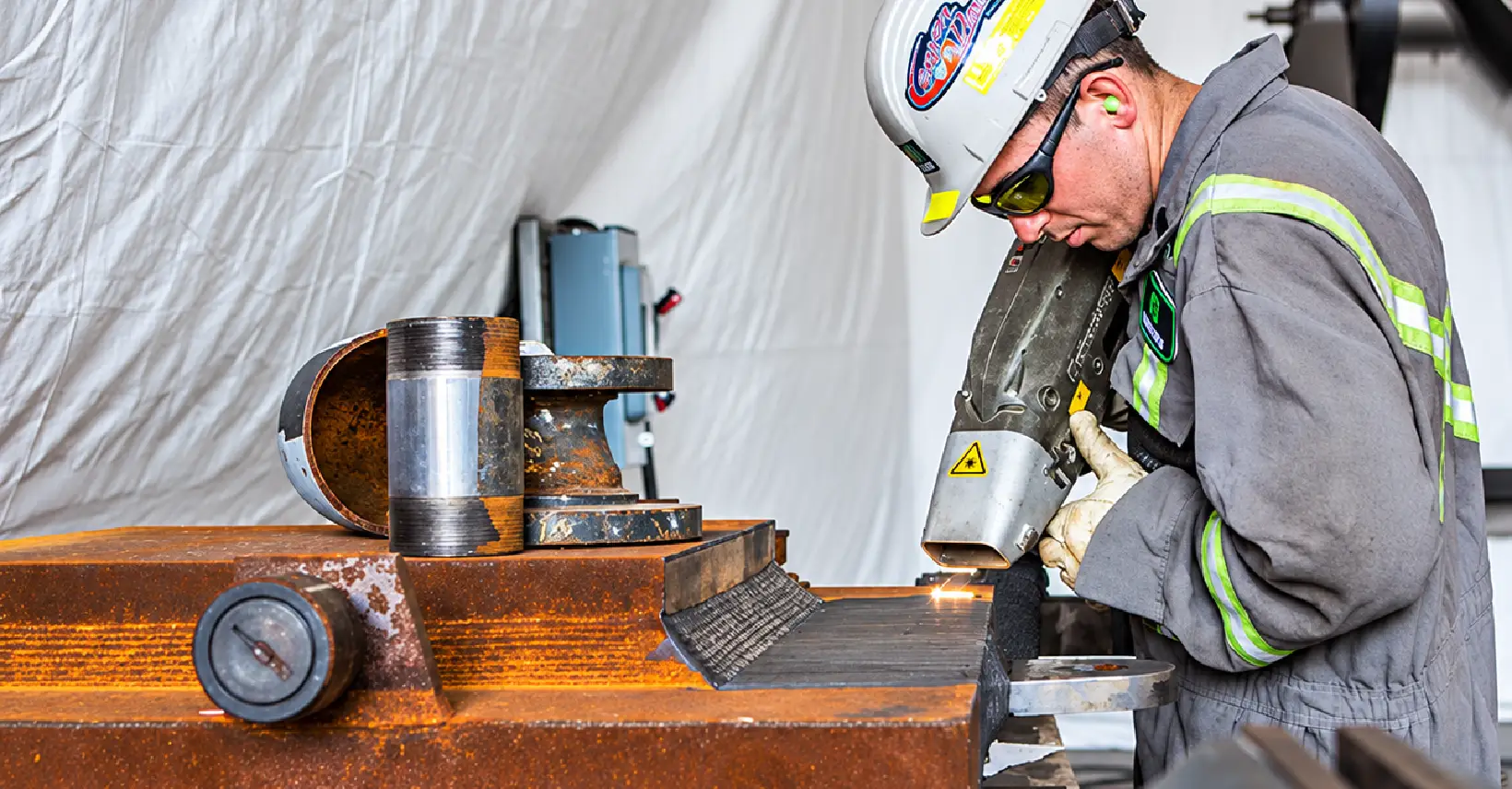
For laser cleaning, that usually means considering eye protection, clothing/gloves, respiratory protection and possibly hearing protection.
Laser Safety Eyewear
Do not buy glasses labeled only:
“Laser safety glasses.”
The eyewear must be suitable for the specific wavelength being used and provide sufficient optical density for the actual exposure hazard.
OSHA specifically requires laser protective eyewear to identify the wavelength it protects against and its Optical Density.
For many fiber pulsed laser cleaner systems, the operating wavelength is around 1064 nm—but you should confirm the exact machine specification.
The correct OD should come from the manufacturer's safety information or a qualified laser-safety assessment.
This is why I recommend removing the original table saying:
50W = OD5
200W = OD5–6
1000W = OD6–7
2000W = OD7+
That is too simplistic.
Power alone does not determine appropriate eyewear.
Also remember that a normal clear face shield is not a replacement for wavelength-rated laser eyewear.
Gloves and Protective Clothing
Appropriate work clothing can protect against particulate contamination, debris and hot material.
The exact requirement depends on what is being cleaned.
For example, a small precision oxide-cleaning job and heavy paint stripping do not necessarily require the same skin protection.
The PPE assessment should account for:
Hot particles.
Sharp parts.
Chemical contamination already on the workpiece.
Cleaning chemicals used before or after the process.
Fire risk.
Respiratory Protection
This is another area where I would significantly simplify the original article.
Do not publish a rule such as:
“Rust = P3”
“Paint = P3 + organic vapor”
“1000W = half-face respirator”
without an exposure assessment.
OSHA's respiratory-protection standard says the primary objective is to prevent atmospheric contamination through engineering controls such as enclosure and local ventilation. Respirators are used when those controls are not feasible or do not adequately control exposure. If respirators are required, the employer needs an appropriate respiratory-protection program, including correct respirator selection and, where applicable, medical evaluation and fit testing.
So a better rule is:
Control the plume at the source first.
Then determine whether additional respiratory protection is required based on the contaminant and measured or reasonably estimated exposure.
Hearing Protection
Do not automatically prescribe earplugs + earmuffs for every laser cleaner.
Measure the actual workplace noise.
If the laser system, extraction equipment or surrounding production environment creates hazardous noise levels, select hearing protection accordingly.
This is both more accurate and more useful to industrial buyers.
3. Does a Laser Cleaner Need Fume Extraction?
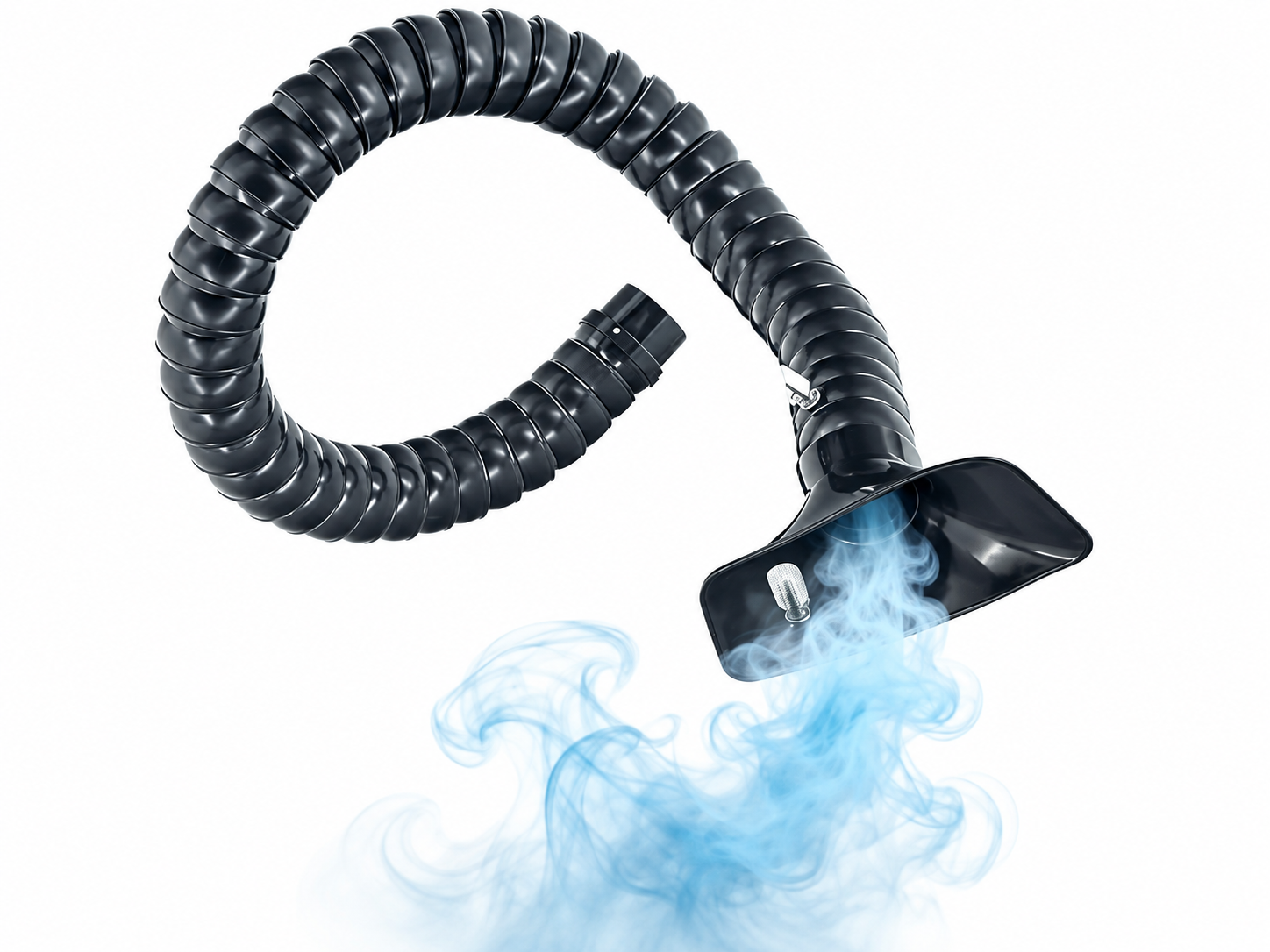
For many real cleaning applications, yes, local fume or particle extraction should be part of the safety setup.
Opening a workshop door or running a general room fan is not the same thing as capturing contamination where it is generated.
OSHA recommends adequate ventilation for hazardous fumes and vapors produced by laser-material interaction, while NIOSH guidance on laser-generated plume control supports local exhaust capture close to the source rather than relying only on general room ventilation.
Capture the Plume Close to the Cleaning Point
The extractor inlet should be positioned so the plume is captured before it travels through the operator's breathing zone.
This principle matters more than simply buying the extractor with the biggest advertised CFM number.
A system can have impressive airflow on paper but poor capture if:
The hood is too far away.
The hose is poorly positioned.
Duct losses are high.
Filters are overloaded.
Cross-drafts pull the plume away.
The operator works between the cleaning point and extraction inlet.
This is why I would remove the original universal table assigning fixed CFM or capture velocities to different laser-cleaning materials.
The correct extraction requirement depends on the process, hood design, distance, contaminant and airflow conditions.
The Filter Must Match What You Are Removing
Rust particles and paint fumes are not necessarily the same filtration problem.
For predominantly particulate contamination, appropriate high-efficiency particulate filtration may be important.
If the process can generate gases or vapors from coatings, oils, adhesives or other substances, particulate filtration alone may not address the complete hazard.
That is why buyers should ask:
What am I removing?
What does that material generate when laser-cleaned?
What filter configuration is specified for that contaminant?
How is filter loading monitored?
How often do filters require inspection or replacement?
Do not choose a fume extractor based only on “HEPA + carbon” appearing on a product page.
Paint and Unknown Coatings Need More Attention
If you know you are cleaning plain carbon-steel rust, you have a clearer starting point.
If you are removing:
Old industrial paint.
Unknown coating.
Galvanized material.
Plated material.
Contaminated equipment.
the hazard assessment needs to account for what that surface contains.
SDS information, coating records and industrial-hygiene evaluation can all become relevant.
A laser cleaner for metal does not change the chemistry of what was already on the part.
This is also why abnormal plume behavior or extraction failure should not simply be ignored. If smoke is escaping into the breathing zone, extraction performance should be checked before continuing.
4. What Safety Features Should You Check Before Buying a Laser Cleaner?
For buyers, safety should be evaluated at the same time as power, cleaning speed and price.
Start by asking the supplier for the laser classification of the complete system, not just the laser source.
Class 1 Enclosed vs Open-Beam Class 4
An enclosed system may be engineered so that hazardous laser radiation is inaccessible during normal operation, allowing the complete machine to operate as a lower-hazard laser product.
A handheld open-beam industrial cleaner is a different situation.
If the operator can directly access the high-power beam, expect much stricter area-control requirements.
For open-beam Class 4 equipment, evaluate:
Controlled access.
Suitable barriers or enclosure.
Emergency stop.
Key or authorized control.
Warning indicators.
Interlocks where applicable.
Safe beam termination.
Reflected-beam risk.
OSHA's guidance specifically recognizes that windows, entrances and other openings within the hazardous zone of Class 3B/Class 4 systems may require suitable barriers or filters.
Ask About Training
A machine should not arrive with only a PDF manual and a five-minute startup video.
Training should cover:
Machine startup and shutdown.
Laser hazards.
Reflection control.
Required PPE.
Fume extraction.
Material identification.
Emergency stop.
Cleaning-head handling.
Routine inspection.
What to do after an abnormal condition.
For workplaces subject to U.S. OSHA requirements, laser, PPE and respiratory obligations can depend on the application and industry. ANSI Z136.1 is also widely used as a laser-safety framework; OSHA's own current safety manual points to ANSI Z136.1-2022 when selecting laser protective eyewear.
Avoid promising that one supplier certificate automatically makes a workplace “OSHA compliant.”
Compliance depends on the actual installation and work practices.
A Practical Pre-Use Checklist
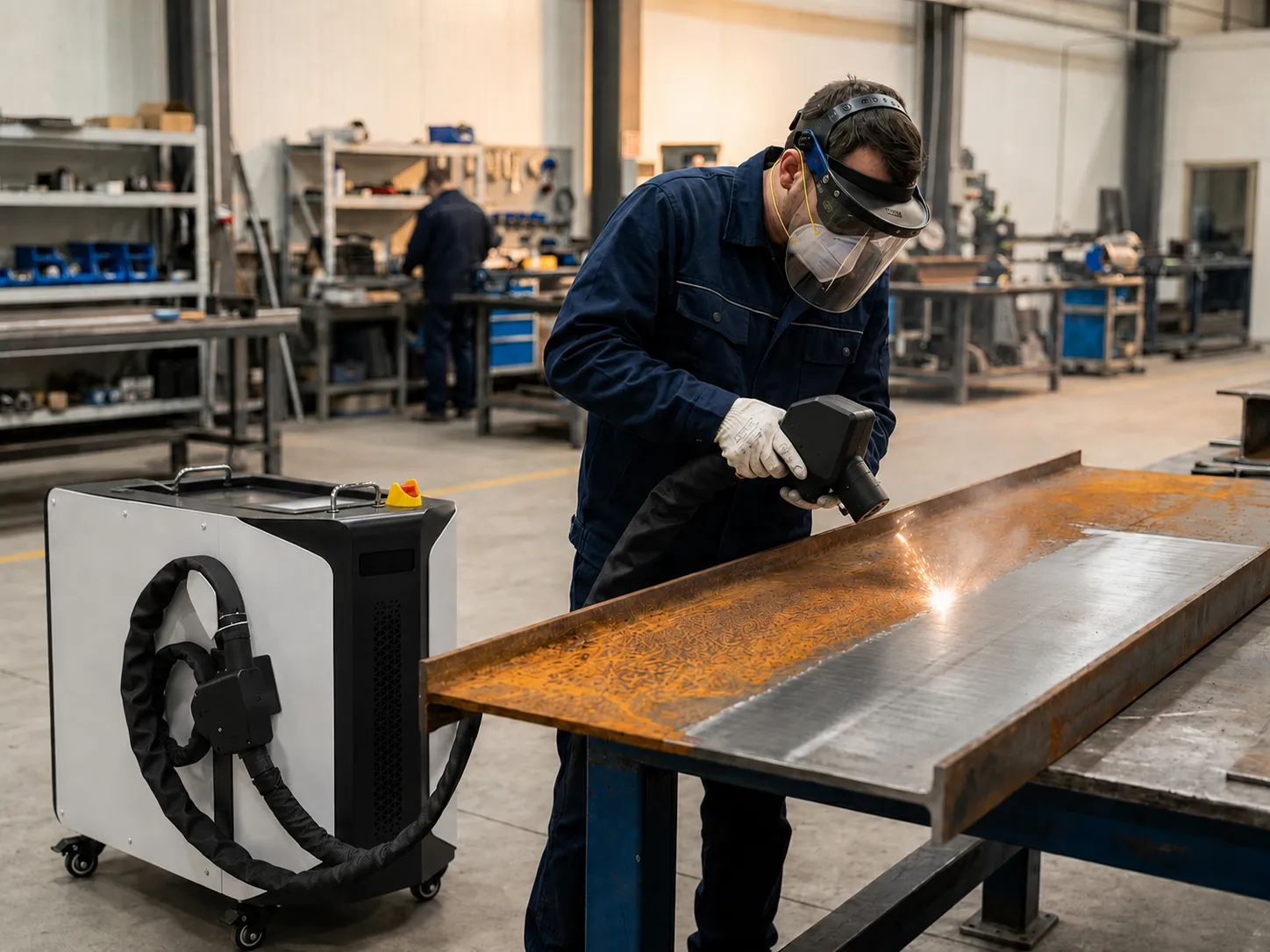
Before operating a portable laser cleaner, the operator should at minimum verify that:
Check | Why It Matters |
|---|---|
Correct material/coating identified | Determines plume and process hazards |
Work area controlled | Keeps unauthorized personnel away |
Eyewear matches wavelength and assessed hazard | Protects against beam/reflection exposure |
Barriers/enclosure are correctly positioned | Reduces accessible beam hazard |
Emergency stop and safety devices are functional | Allows rapid shutdown |
Extraction is operating and positioned correctly | Captures plume near the source |
Combustibles are removed | Reduces fire risk |
Optics, cable and cleaning head are undamaged | Reduces equipment and process risk |
Operator is trained for the machine | Reduces procedural errors |
The original draft's pre-operation checklist is one of its strongest sections and is worth retaining in simplified form.
The mistake would be turning the checklist into a universal legal compliance certificate.
It should remain a practical operator check, while the employer's formal safety program follows the regulations and standards applicable to its workplace.
Conclusion
So, is laser cleaning safe?
Yes—when the laser beam, reflections, plume and workplace are controlled properly.
The three most important safety priorities are:
Control access to the laser hazard.
Capture fumes and particles close to where they are generated.
Select PPE from the actual hazard assessment—not from a generic wattage chart.
For many open-beam industrial laser cleaners, simply handing the operator a pair of glasses is not an adequate safety system.
A professional setup considers:
Laser classification.
Beam and reflection control.
Wavelength-specific eye protection.
Local fume extraction.
The material and coating being removed.
Fire risk.
Operator training.
Work-area control.
Respiratory protection when required.
If you are comparing an industrial laser cleaning machine, ask the supplier for the complete safety configuration alongside the cleaning specifications.
That should include the machine's laser classification, wavelength, recommended protective eyewear information, emergency controls, extraction requirements, operating manual and training.