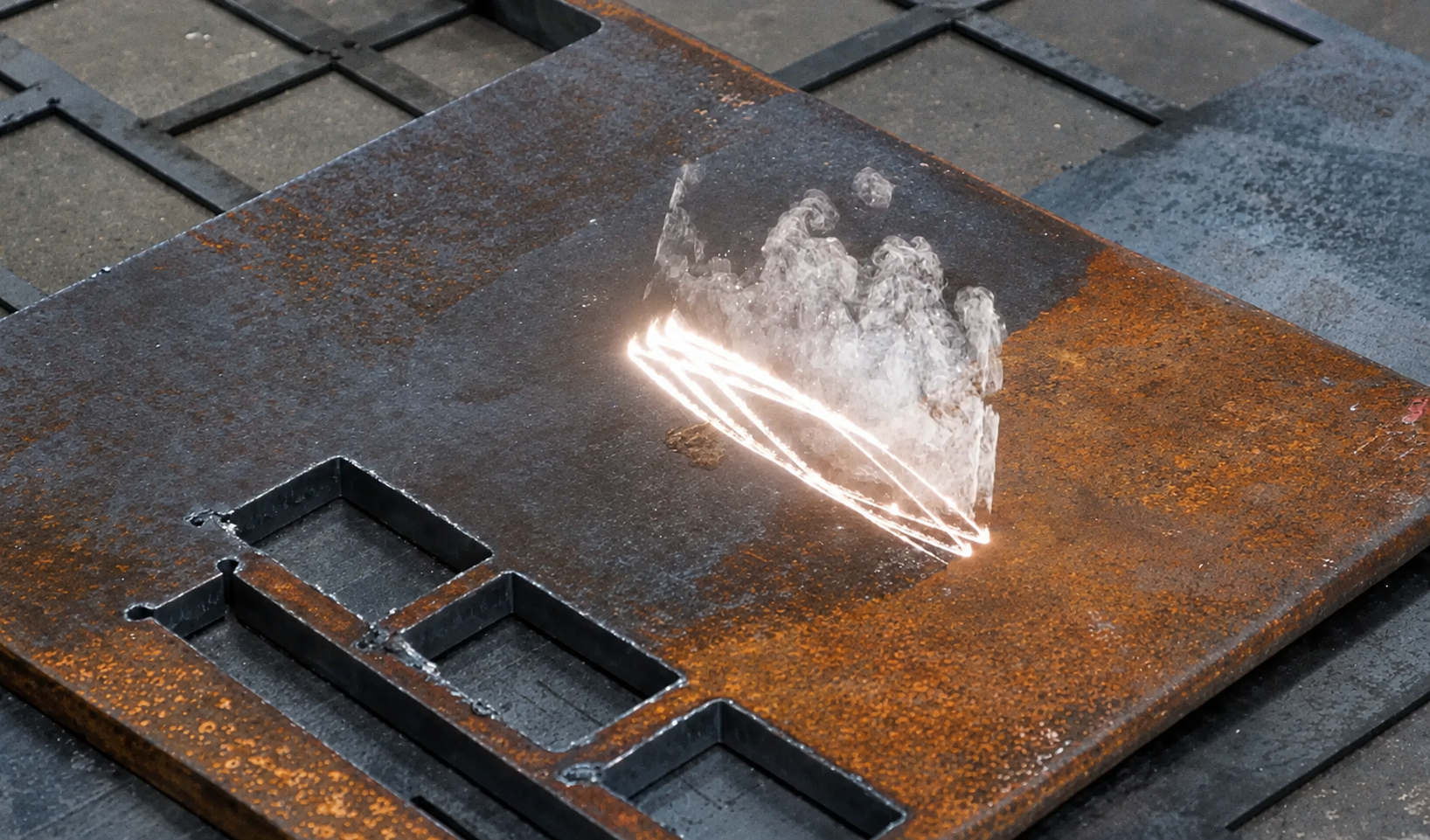
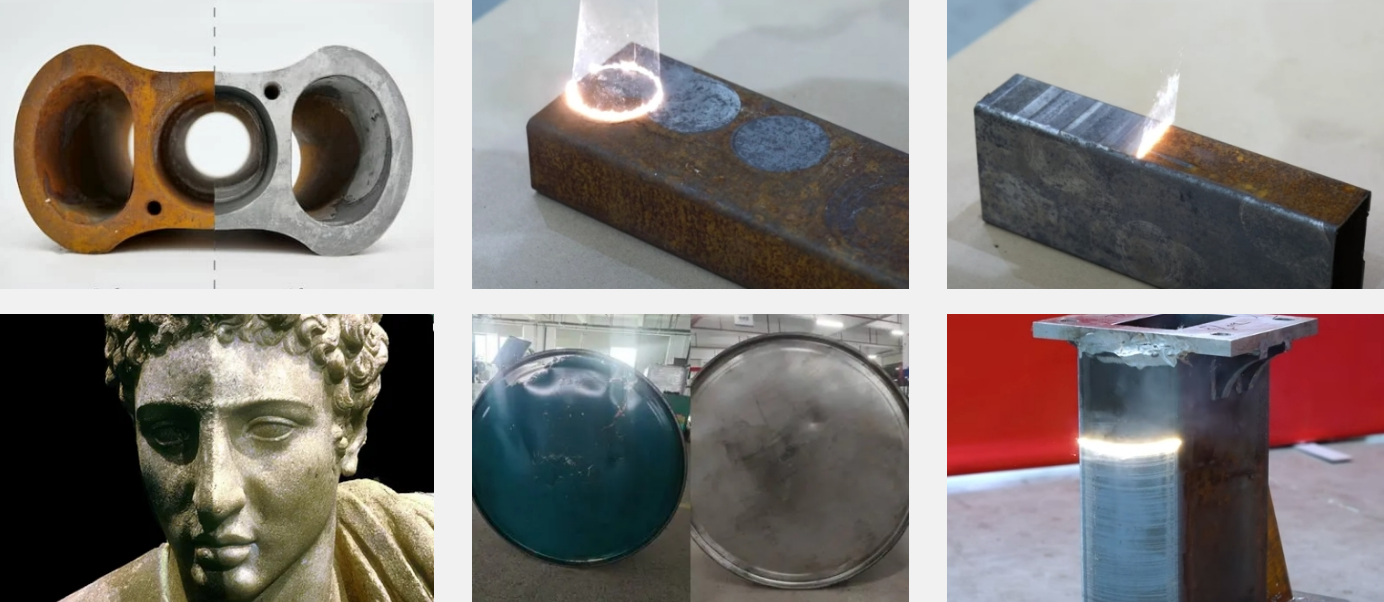
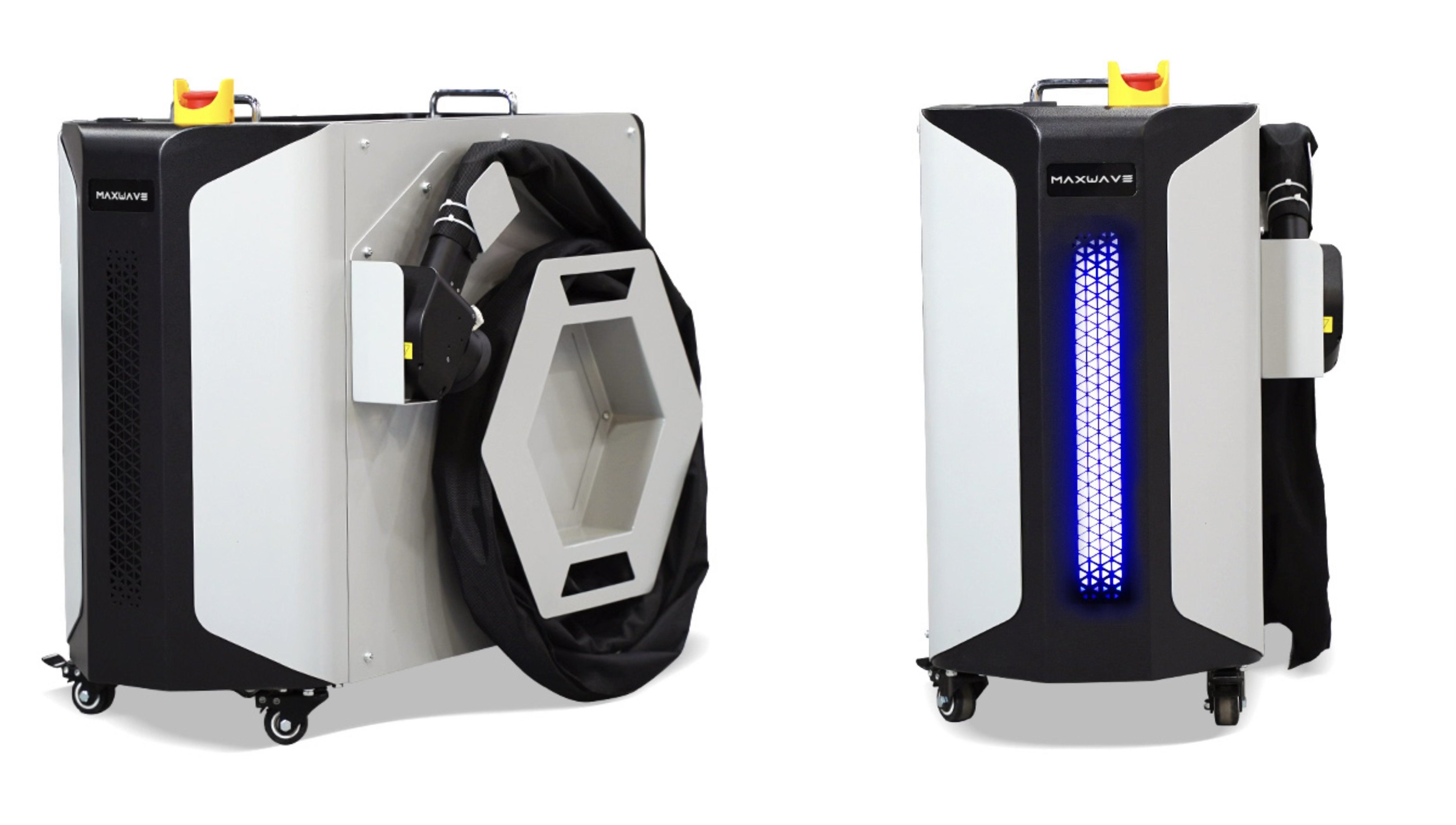
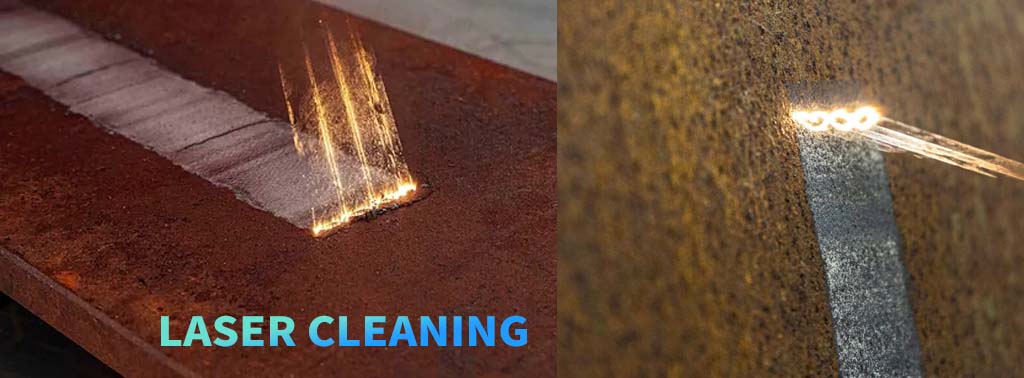
Laser cleaning is often marketed as a “no-consumables” cleaning process, and compared with sandblasting or chemical stripping, that description is partly true.
A laser cleaner does not continuously consume abrasive media, chemical stripper, dry ice or blasting grit while it works. However, that does not mean the machine has zero recurring operating costs.
In real use, you still need to budget for protective optics, fume-extraction filters, cooling-system maintenance where applicable, electricity, routine cleaning materials and occasional replacement parts.
So the more accurate answer is:
Laser cleaning uses very few process consumables, but it is not completely maintenance-free or cost-free to operate.
For buyers comparing a laser cleaning machine, this distinction matters because the real advantage is not “zero cost.” It is that recurring consumable costs are usually structured very differently from blasting or chemical cleaning.
1. What Consumables Does a Laser Cleaner Actually Use?
The biggest difference between laser cleaning and traditional cleaning methods is that the laser itself does not require a material to be continuously fed into the cleaning process.
Sandblasting consumes abrasive media. Chemical stripping consumes chemicals. Dry-ice blasting consumes dry ice. Laser cleaning mainly consumes electricity, while several machine components require inspection or periodic replacement.
A practical breakdown looks like this:
Item | Routine Consumable? | What You Should Know |
|---|---|---|
Blasting media | No | Not required for laser cleaning |
Chemical stripper | No | Not required for the laser-cleaning process |
Water | Usually no as process media | Water-cooled machines may use coolant in a closed cooling system |
Protective lens / cover glass | Yes | One of the most common wear items |
Fume-extraction filters | Yes | Replacement depends heavily on contamination and workload |
Optical cleaning materials | Yes | Used to maintain protective optics |
Coolant | Periodic | Applies to water-cooled systems |
Cleaning-head parts | Occasional | Depends on machine design and operating conditions |
Fiber cable | Not normally a consumable | Replacement is usually due to damage rather than routine wear |
Laser source | No routine replacement | Normally a long-life core component |
The protective window or cover glass deserves particular attention. It sits between the contaminated work area and the more expensive internal optics. Rust particles, paint residue, smoke and other debris can eventually contaminate this protective surface.
Replacing a protective window when necessary is far cheaper than allowing contamination to damage deeper optical components.
This is why the claim that a laser cleaner uses “no consumables” should really be understood as:
No continuously consumed cleaning media.
That is very different from saying there are no wear parts.
What About Protective Lenses?
Protective lenses are normally one of the first operating costs buyers should ask about.
How often they need replacement depends on how dirty the application is, how effective the fume extraction is, how close the cleaning head operates to the contamination and how well the operator maintains the optics.
Heavy paint stripping and dirty rust-removal work may contaminate optics more quickly than occasional weld-oxide cleaning.
For that reason, I would not rely on a universal rule such as:
“Replace the lens every 100 hours.”
Instead ask the supplier:
What does the protective lens cost?
How do I know when it needs replacement?
How many should I keep in stock?
Can the operator replace it without a service engineer?
Those questions are more useful than a theoretical replacement interval.
Does the Cooling System Use Consumables?
Air-cooled machines generally have a simpler cooling-maintenance profile, although vents and filters still need to stay clean.
Water-cooled systems may require coolant replacement, filter maintenance and inspection of hoses or pumps according to the manufacturer's schedule.
This becomes more relevant on higher-power machines that run for long periods.
A pulsed laser cleaner used intermittently for precision work may therefore have a different recurring-cost structure from a high-power CW machine operating through an entire production shift.

2. What Does a Laser Cleaning Machine Really Cost to Run?
For most buyers, focusing only on “consumables” gives an incomplete answer.
The better question is:
What does laser cleaning cost per hour or per job?
A useful operating-cost model is:
Operating Cost = Electricity + Wear Parts + Maintenance + Labor + Equipment Depreciation
This is more realistic than treating electricity as the entire running cost.
Electricity
Electricity is usually one of the easiest costs to calculate.
Do not use laser output power alone.
A 1500W laser does not necessarily draw only 1.5 kW from the electrical supply because the complete system may also include:
Cooling.
Cleaning-head electronics.
Control system.
Fume extraction.
Other auxiliary equipment.
Use the total machine power consumption stated on the nameplate or specification sheet.
Then calculate:
Electricity Cost per Hour = Total System kW × Local Electricity Rate
For example, if the complete system consumes 5 kW and your electricity costs $0.15/kWh:
5 × $0.15 = $0.75 per operating hour
That is an example, not a universal laser-cleaning cost.
Your actual figure should use your own machine and local electricity price.
Protective Optics and Filters
Next, spread the cost of wear parts over operating hours.
Suppose your protective optics and extraction filters cost $600 over one year and the machine operates 1,000 hours:
$600 ÷ 1,000 = $0.60/hour
Again, your real figure may be higher or lower depending on the application.
A clean mold-maintenance operation and heavy paint-removal service will not consume filters and protective optics at exactly the same rate.
Labor Usually Matters More Than Buyers Expect
For handheld cleaning, the operator can easily become the largest hourly cost.
If your operator costs $25 per hour, reducing electricity from $1.00 to $0.70 per hour saves far less money than reducing cleaning time from three hours to one hour.
This is why buyers evaluating a portable laser cleaner should look at cleaning speed and labor hours, not only electricity consumption.
A more powerful machine can cost more to run per hour and still cost less per job if it completes the work much faster.
Depreciation and Machine Cost
The machine purchase price also needs to be spread across its productive use.
A simple calculation is:
Machine Cost per Hour = Purchase Price ÷ Expected Productive Operating Hours
For business decisions, this makes much more sense than pretending the equipment becomes “free” after purchase.
The complete calculation can therefore be written as:
True Cost per Hour = Electricity + Consumables + Maintenance + Labor + Depreciation
For most businesses, this is the number worth comparing against sandblasting, chemical cleaning or outsourcing.

3. Which Parts Need Replacement, and What Should You Budget For?
You do not need a long list of every component inside the machine.
For normal ownership, focus on the items most likely to affect downtime and recurring cost.
Protective Windows and Optics
Inspect protective optics regularly and replace them when contamination, pitting, cracking or coating damage can no longer be safely cleaned.
Do not repeatedly wipe damaged optics in an attempt to extend their life.
Good fume extraction and careful cleaning-head handling can significantly reduce unnecessary contamination.
Fume Extraction Filters
Laser cleaning converts contamination into particles and fumes.
Those materials have to go somewhere.
A laser rust removal machine processing rust, paint or coating residue may therefore require a fume extractor with filters that are replaced according to loading and pressure condition.
The cost depends strongly on what you remove.
Light oxide cleaning creates a different filtration load from thick paint or contaminated industrial coating.
If fume extraction is part of your operation, ask the supplier for replacement-filter prices before purchasing the machine.
Cooling-System Maintenance
Water-cooled systems may require periodic coolant changes, filter inspection and cleaning.
Air-cooled systems avoid some of that maintenance but still need clear airflow and clean vents.
Neither system is completely maintenance-free.
The right comparison is whether the cooling system matches your power level, operating hours and working environment.
Cleaning Head and Fiber Cable
The cleaning head should be inspected for contamination, damage and abnormal behavior.
Some machine designs may also include replaceable front-end components or protective parts.
The fiber cable, however, should not normally be treated as a routine consumable.
If properly handled, it should remain in service for a long time. Replacement is more commonly associated with accidental damage, sharp bending, crushing or connector problems.
That is why operators should be trained not to drag, tightly coil or sharply bend the fiber cable.
Keep a Small Spare-Parts Kit
For commercial users, downtime can cost more than the spare part.
A practical stock may include:
Protective lenses/windows.
Recommended optical wipes and cleaning fluid.
Common filters.
Manufacturer-recommended seals or small wear parts.
Coolant where applicable.
The exact list should come from the machine supplier.
Original maintenance guidance also recognizes protective optics and filters as recurring items whose service life varies considerably according to operating conditions rather than one universal calendar interval.

4. Is Laser Cleaning Actually Cheaper Than Sandblasting or Chemical Cleaning?
This is where the “low consumables” advantage becomes commercially important.
Laser cleaning usually has a higher equipment purchase price than basic blasting or chemical tools.
But the recurring cost structure is different.
Laser Cleaning
Typical recurring costs include electricity, protective optics, filters, cooling maintenance and labor.
What you generally do not continuously purchase is abrasive media or chemical cleaning material.
Sandblasting
Sandblasting may have a much lower machine-entry cost, but you repeatedly pay for blasting media.
You may also have:
Media recovery.
Cleanup.
Spent-media disposal.
Dust management.
PPE.
Compressor operation.
Surface masking.
For a large structural steel job where creating an anchor profile is required, those costs may still be justified because blasting can be extremely productive.
Chemical Cleaning
Chemical stripping may be attractive for complex shapes or immersion-based batch cleaning, but recurring costs can include chemicals, rinse water, handling, containment and waste treatment.
The cheapest method therefore depends on the application.
Laser cleaning should not automatically be described as cheaper than every traditional method.
Its cost advantage becomes strongest when the business repeatedly pays for media, chemicals, cleanup, masking, waste disposal or high manual labor.
Compare Cost Per Job, Not Cost Per Hour
Imagine Method A costs $15 per hour but needs four hours.
Total cost:
$60
Method B costs $25 per hour but finishes in one hour.
Total cost:
$25
That is why “laser cleaning costs X dollars per hour” does not tell you enough.
You need:
Cost per Job = Operating Cost per Hour × Hours Required per Job
Or for production:
Cost per Part = Total Operating Cost ÷ Number of Parts Cleaned
This is especially important when comparing a lower-power precision system against a more productive industrial laser cleaning machine.
The higher-power machine may consume more electricity but still produce a lower cost per cleaned part.
How Should You Calculate ROI?
If you already use another cleaning process, calculate the difference.
Monthly Savings = Current Cleaning Cost – Laser Cleaning Cost
Then:
Payback Period = Total Laser Investment ÷ Monthly Savings
Include the complete investment:
Machine.
Fume extraction.
Safety equipment.
Shipping.
Training.
Required accessories.
Then compare it with the complete current process:
Labor.
Media.
Chemicals.
Waste disposal.
Cleaning equipment.
Masking.
Cleanup.
Rework.
Downtime.
The original article correctly uses this type of comparison rather than treating machine price alone as ROI.
Do not accept a supplier saying:
“This laser pays for itself in six months.”
Ask:
Using what monthly cleaning volume, labor rate, consumable cost and cleaning time?
If those assumptions do not match your operation, the payback number does not apply to you.
Conclusion
So, does laser cleaning use consumables?
Yes—but far fewer process consumables than sandblasting or chemical cleaning.
Laser cleaning normally does not require a continuous supply of blasting media, chemical stripper or dry ice.
However, you should still budget for:
Protective optics.
Fume-extraction filters.
Cooling-system maintenance.
Optical cleaning materials.
Electricity.
Labor.
Occasional replacement parts.
That is why describing a laser cleaning machine as “zero consumables” is technically incomplete.
A better description is:
Low-consumable, low-media cleaning.
For buyers, the most important number is not how much one protective lens costs or how many kilowatt-hours the machine consumes.
It is:
How much does it cost to complete my actual cleaning job?
Calculate electricity, wear parts, maintenance, labor and machine depreciation, then compare that total with your existing blasting, chemical or outsourced cleaning process.
If you are considering a laser cleaner, send LaserCleanerPro your material, contamination type, cleaning area, expected working hours and current cleaning method. The team can test the application and help estimate the machine configuration, productivity and recurring operating costs before you buy.