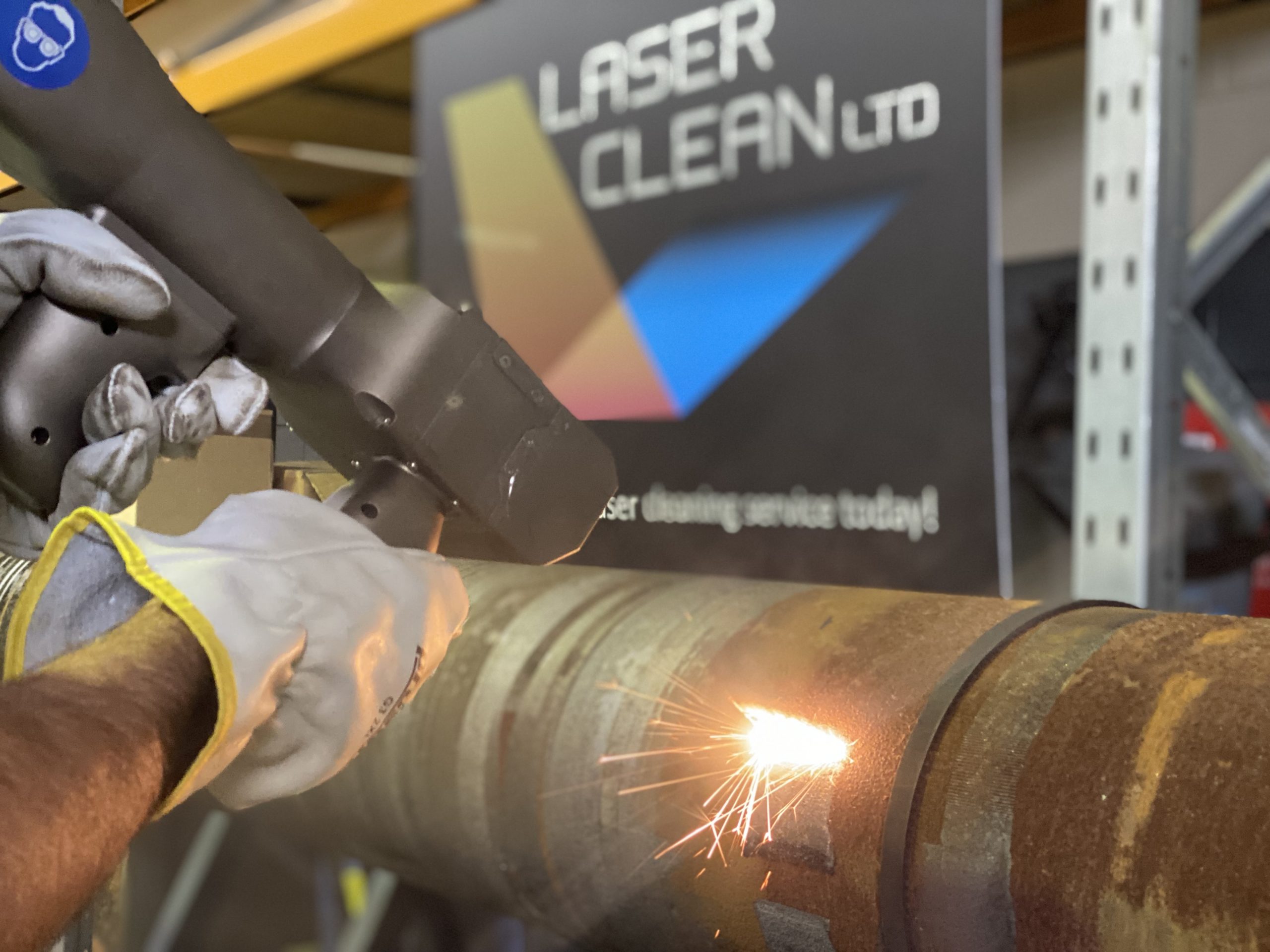
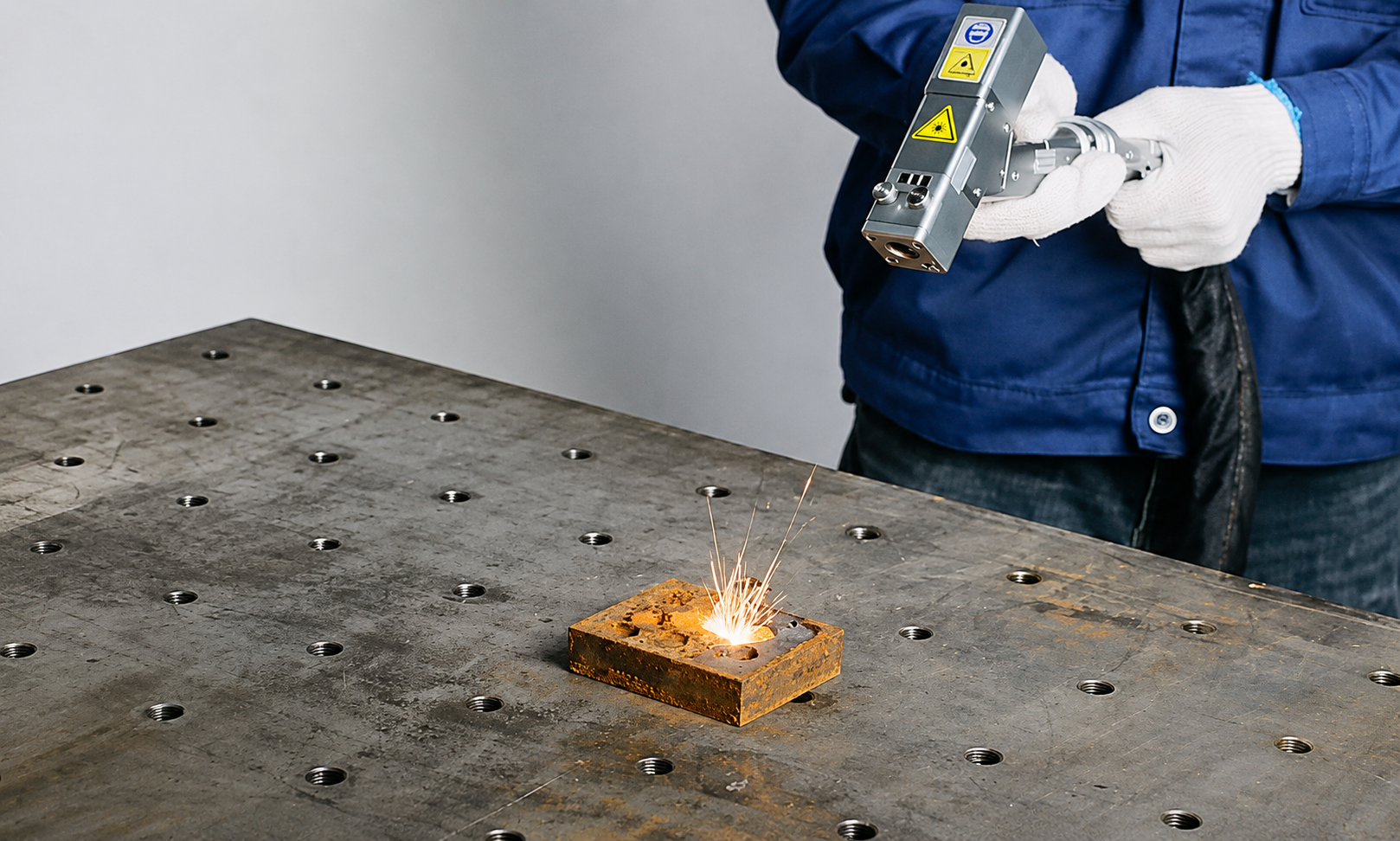
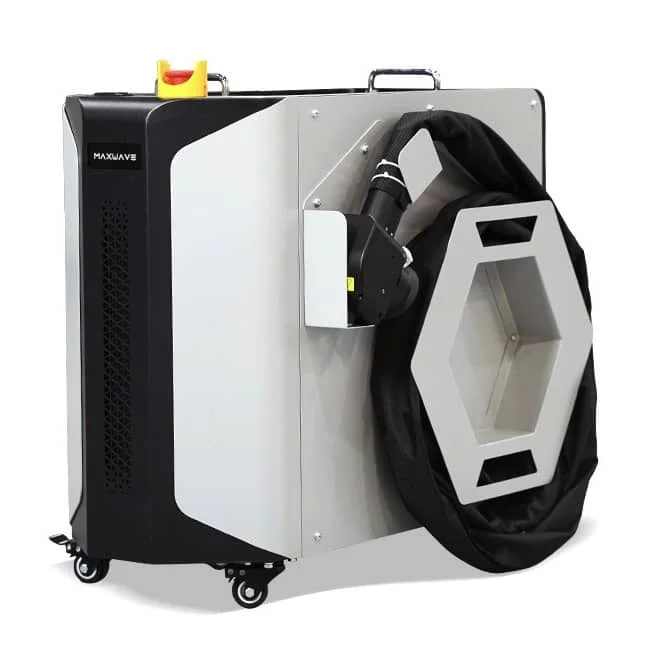
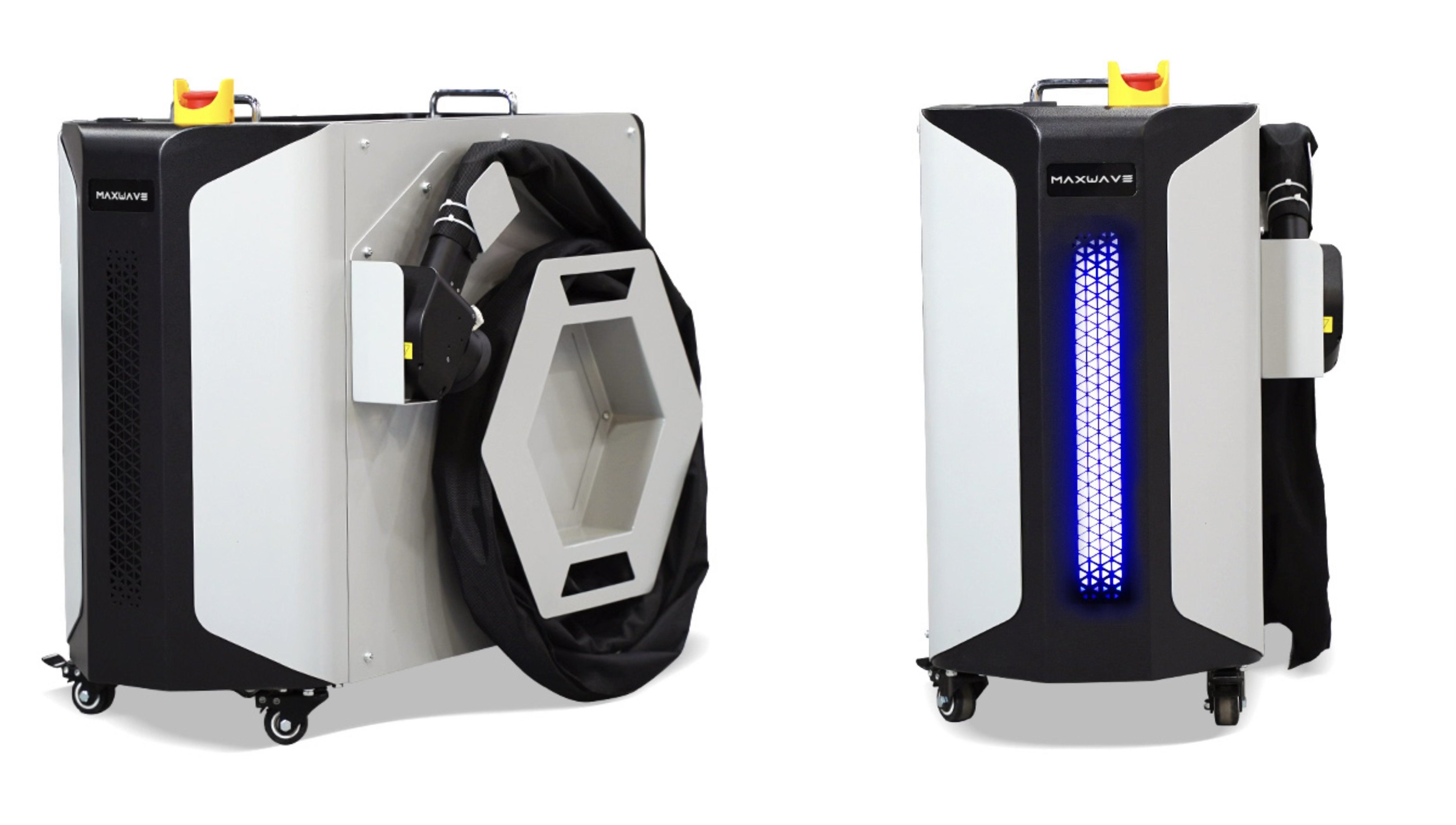
Single-mode and multimode laser cleaning machines can both remove rust, oxide, paint and other surface contamination.
The difference is mainly how the laser energy is distributed in the beam.
A single-mode laser has higher beam quality and can focus energy into a smaller spot. This creates higher power density and can be useful when concentrated energy or finer localized processing is required.
A multimode laser distributes energy across a larger beam profile. For broad-area cleaning, this can be useful because the energy does not need to be focused as tightly.
The simplest starting point is:
Single-mode → tighter focus and higher energy density.
Multimode → broader energy distribution and wider-area processing.
But that does not mean:
Single-mode = precision laser cleaner
and
Multimode = heavy-duty laser cleaner
in every case.
Pulse type, average power, scan width, coating thickness and substrate can affect the cleaning result more than the beam-mode label alone.
Factor | Single-Mode | Multimode |
|---|---|---|
Beam quality | Higher | Lower |
Focusability | Stronger | Lower |
Energy concentration | Higher | More distributed |
Typical strength | Localized energy delivery | Wider-area processing |
Best choice | Depends on application | Depends on application |
IPG explains that single-mode fiber lasers can focus into smaller spots because of their higher beam quality, while some applications such as wide-area laser cleaning can actually benefit from less-focused energy.

1. What Is Single-Mode vs Multimode Laser Cleaning?
Single-mode and multimode describe the spatial characteristics of the laser beam.
They do not mean the same thing as pulsed and continuous-wave lasers.
That distinction is important when comparing a laser cleaning machine.
Single-Mode Laser Beam
A single-mode fiber laser produces a beam with very high beam quality.
Beam quality is commonly described using M².
The closer M² is to 1, the more tightly the beam can theoretically be focused.
IPG lists industrial single-mode fiber lasers with beam quality around M² <1.1 on many configurations.
The practical effect is:
More laser power can be concentrated into a smaller area.
That can create higher power density without necessarily increasing total laser wattage.
For cleaning, this can help when contamination is strongly bonded or when energy needs to be concentrated into a relatively small working area.
Multimode Laser Beam
A multimode source contains several spatial modes instead of one.
Its output usually produces a larger focal spot and more distributed energy.
That is not automatically a disadvantage.
Laser cleaning frequently involves scanning a beam across a relatively large surface rather than focusing it into an extremely small cutting spot.
IPG specifically notes that wide-area processes such as laser cleaning do not always require extremely high beam quality and may benefit from less-focused laser energy.
This makes multimode sources useful when coverage and energy distribution matter.
Beam Mode Is Not Pulse Mode
This is where many equipment comparisons become confusing.
These are two different questions:
Single-mode vs multimode:
How is the beam spatially distributed?
Pulsed vs CW:
How is laser energy delivered over time?
For an actual industrial laser cleaner, both characteristics can influence performance.
So you should not choose a machine simply because the brochure says “single-mode.”
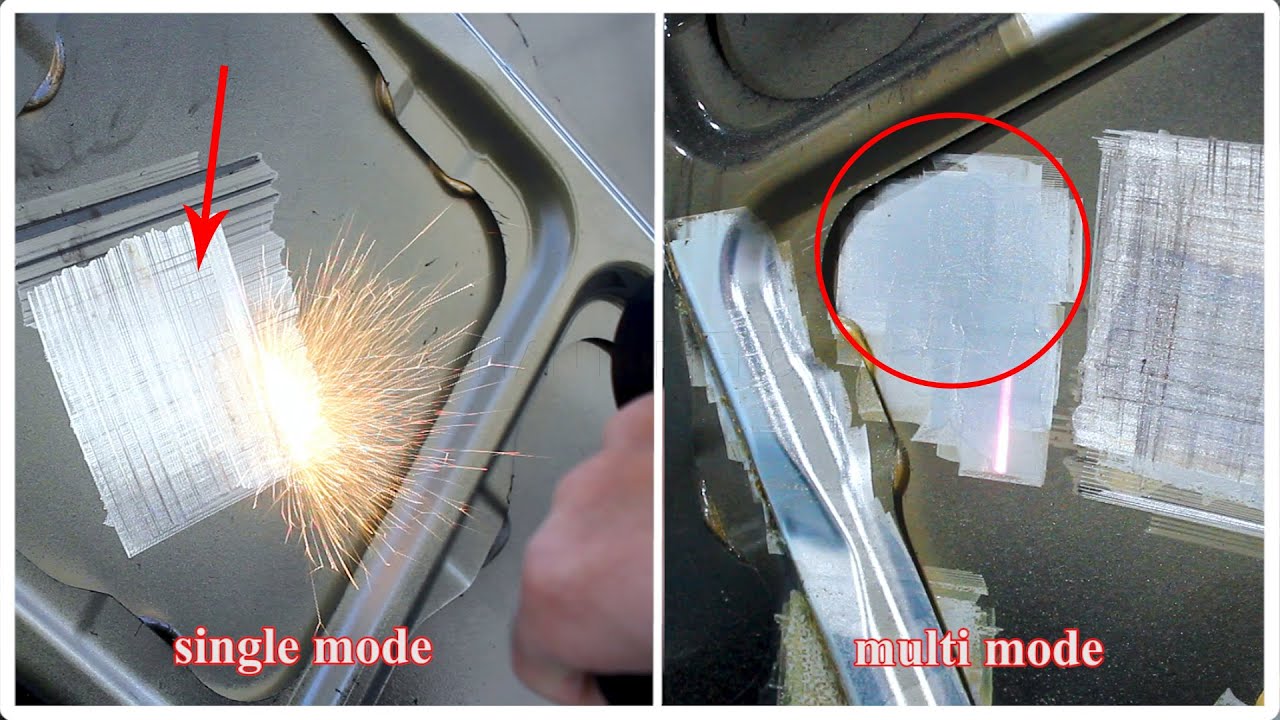
2. Where Does Each Beam Mode Work Best?
There is no universal application table that says one mode always wins.
However, the beam characteristics give buyers some useful starting points.
When Single-Mode Is Useful
Single-mode becomes attractive when high energy concentration is useful.
Typical situations may include localized rust, tightly adhered oxide, weld-zone preparation or applications where a smaller effective spot helps concentrate energy.
It can also be useful when the process requires strong energy density without simply increasing average power.
But single-mode does not automatically mean lower heat or zero substrate damage.
A tightly focused beam can also become aggressive if power density is too high.
The cleaning parameters still need to match the material.
When Multimode Is Useful
Multimode becomes attractive when the application benefits from broader energy distribution.
This can include larger metal surfaces and general industrial cleaning where wide-area productivity is more important than maximum focusability.
Potential applications include:
Large steel components
Broad rusted surfaces
Paint or coating removal
General industrial maintenance
Large-area surface preparation
The key advantage is not simply “multimode cleans faster.”
The actual throughput depends on power, scanning width, coating and machine setup.
Precision Does Not Come From Mode Alone
This is an important buying distinction.
A single-mode source may have better beam quality, but the actual cleaning footprint is also affected by the cleaning head, optics and scanning system.
Likewise, a multimode laser can still provide controlled cleaning when the machine is correctly configured.
Therefore, claims such as:
“Single-mode always gives better surface quality.”
or:
“Multimode always cleans faster.”
are too simple.
A real comparison should use the same substrate and contamination.
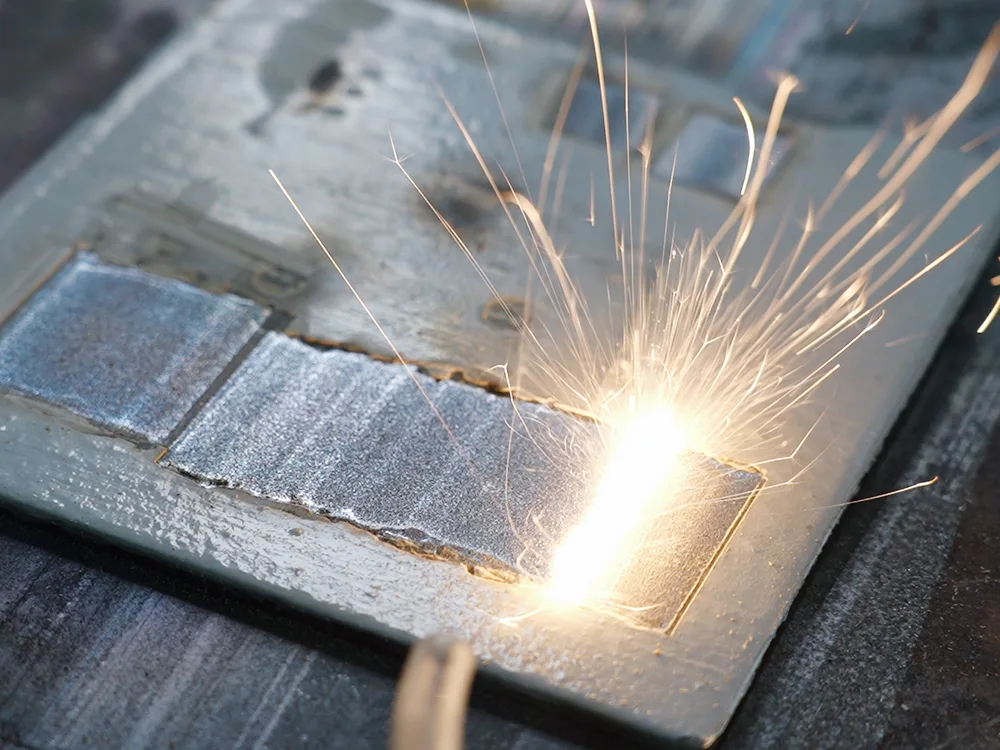
3. What Matters More Than Beam Mode?
For most laser cleaner buyers, beam mode should not be the first specification they choose.
Several other factors usually have a larger impact on whether the machine is right for the job.
Pulsed or Continuous-Wave
This is often more important than single-mode vs multimode.
LaserCleanerPro's current range separates pulsed systems from high-power CW systems primarily by application:
Pulsed: detailed, thin and heat-sensitive cleaning.
CW: heavy rust, thick contamination and large-area throughput.
A 300W pulsed pulsed laser cleaner and a 1500W CW machine are fundamentally different tools regardless of their beam-mode specification.
Substrate and Contamination
Start with the material.
Thin aluminum and precision molds require a different cleaning strategy from thick carbon-steel structures.
Then identify the contamination.
Light oxide, oil, paint and heavy rust do not require the same energy delivery.
LaserCleanerPro's current buying guidance recommends selecting the machine according to substrate, contamination and workload rather than wattage alone.
Scan Width and Spot
The cleaning head changes how the beam reaches the surface.
A machine may allow the operator to change scan width, pattern and speed.
For large surfaces, a wider working area may be more valuable than extremely high source beam quality.
For detailed components, a narrower and more controlled scan may matter more.
That is why beam mode should always be evaluated together with the cleaning head.
Cleaning Volume
A buyer cleaning ten small molds per week has a different priority from a shipyard removing rust from hundreds of square meters of steel.
One prioritizes control.
The other prioritizes throughput.
This is also why there is no useful universal statement such as:
“Single-mode is better.”
Better for what?
That is the question the supplier needs to answer.
4. How Should You Choose a Laser Cleaner?
Do not begin the buying process by asking:
“Do I need single-mode or multimode?”
Start with the job.
Start With Four Questions
Ask:
What material are you cleaning?
What contamination are you removing?
How large is the cleaning area?
How sensitive is the substrate?
Those four answers usually narrow the machine much faster than comparing M² values.
Then Compare Beam Mode
Once the application is defined, ask the supplier for:
Laser type: pulsed or CW.
Beam mode: single or multimode.
Power and scan width.
Measured cleaning rate.
Surface result after cleaning.
That gives you a much more complete picture.
Use a Practical Selection Table
Your Priority | Better Starting Direction |
|---|---|
Localized high energy density | Single-mode worth comparing |
Wide-area energy distribution | Multimode worth comparing |
Thin or heat-sensitive parts | Pulsed system first |
Heavy rust on large steel | High-power CW first |
Unsure which applies | Sample test both configurations |
Notice that this table does not treat beam mode as the only decision.
That is intentional.
Compare the Same Sample
The best way to decide is to test your own part.
Ask the supplier to keep the comparison consistent:
Same material.
Same contamination.
Same required finish.
Same approximate working area.
Then compare cleaning time and surface result.
Do not compare one machine cleaning light oxide with another machine cleaning heavy rust.
That tells you nothing useful.
LaserCleanerPro currently recommends measured sample testing because real cleaning speed changes with material, contamination thickness, power, scan width and operator settings.
Conclusion
Single-mode vs multimode laser cleaning—which should you choose?
The real difference is beam quality and energy distribution.
Single-mode provides higher beam quality and can concentrate energy into a smaller spot.
Multimode distributes energy over a broader beam profile and can be useful for wide-area processing.
But beam mode alone does not determine whether a laser cleaner is suitable for your application.
For most buyers, the correct order is:
Application → Substrate → Contamination → Pulsed or CW → Power → Beam and scan configuration
not:
Single-mode or multimode → buy the machine
That distinction matters because laser cleaning is not the same as cutting or precision welding, where maximum focusability can be a primary performance advantage.
Wide-area cleaning may actually benefit from a less-focused beam.
If you are comparing a single-mode or multimode laser cleaner for metal, send LaserCleanerPro your material, contamination type, approximate thickness, cleaning area and required surface finish.
The team can test your sample, compare the appropriate laser configuration and provide a measured cleaning result before you choose the machine.