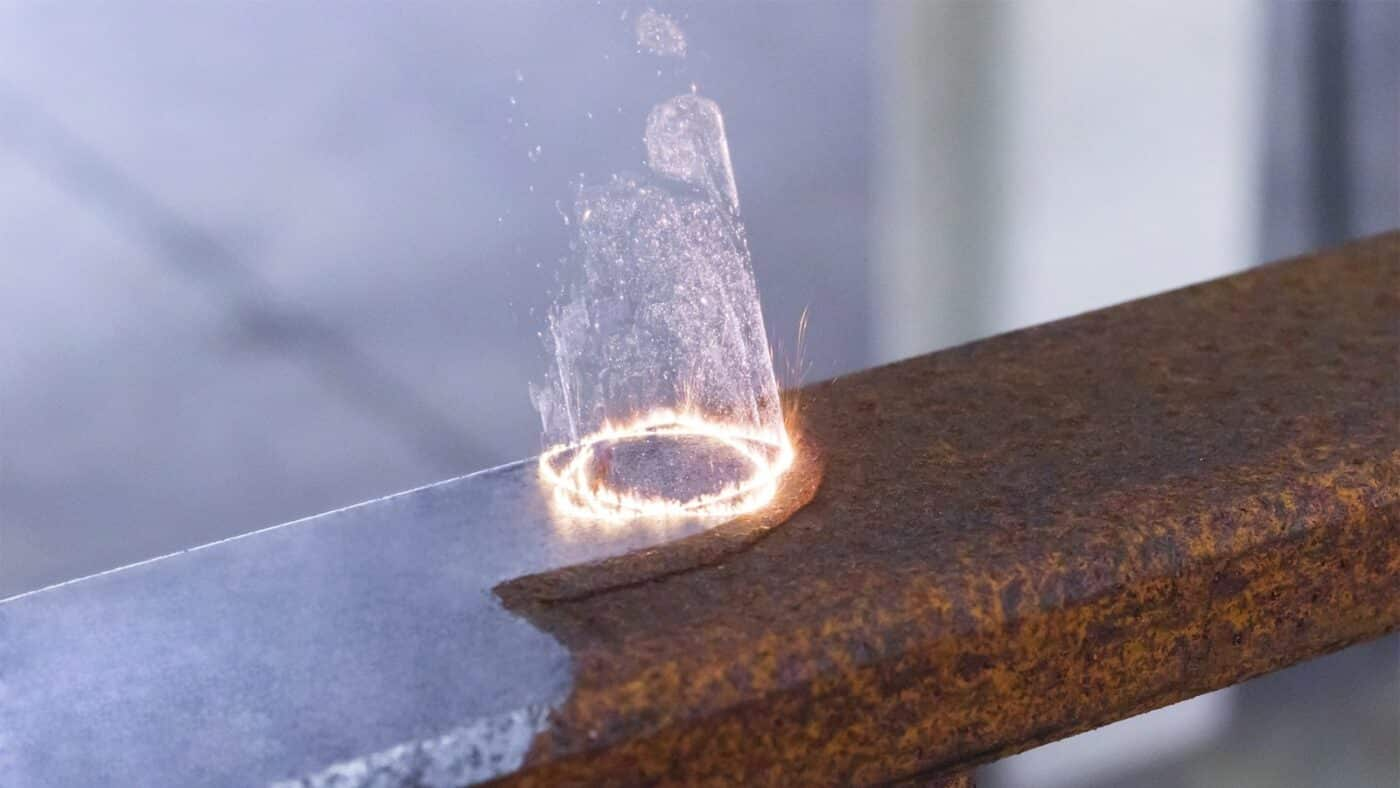
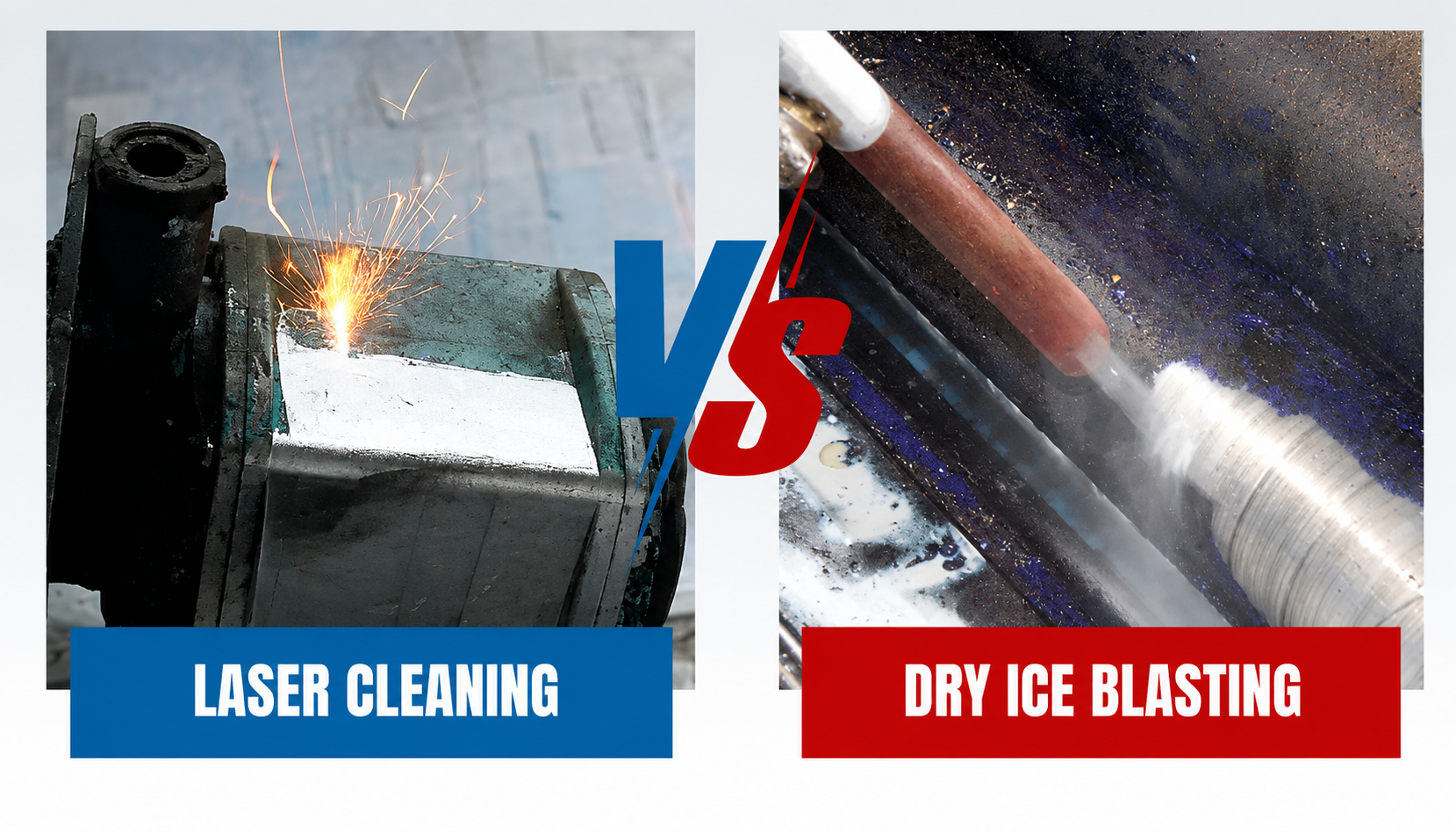
Choosing the best laser cleaning machine in 2026 is not simply a matter of buying the highest wattage available.
A 200W pulsed laser cleaner can be a better choice than a 1500W continuous-wave machine for molds, precision parts and surfaces where excessive heat must be avoided. On the other hand, a high-power CW laser can remove heavy rust from large steel structures much faster and at a lower equipment cost per watt.
That is why this comparison focuses on the factors buyers actually need to know: laser type, power, price, portability and the applications each machine is best suited for.
We compared current machines and product ranges from LaserCleanerPro, cleanLASER, Laserax, P-Laser, Laser Photonics, Adapt Laser, Narran, SFX and MaxWave.
Price note: Many professional industrial laser cleaning manufacturers do not publish fixed retail prices because the final configuration depends on the laser source, optics, fiber length, cooling system, safety equipment and automation requirements. Where no official public price is available, we have marked the machine as Request a Quote rather than inventing a number.
Best Laser Cleaning Machines in 2026: Quick Comparison
Rank | Machine | Power | Laser Type | Best Use |
|---|---|---|---|---|
1 | LaserCleanerPro LY100-500W | 100–500W | Pulsed Fiber | Best overall for workshops and industrial cleaning |
2 | cleanLASER CL 500iM | 500W | Industrial Laser | Professional handheld industrial cleaning |
3 | Laserax LXQ-UHP | 500W–3000W | Pulsed Fiber | Automated high-speed production |
4 | P-Laser QF-2000 | 2000W | Pulsed | Heavy industrial and mold cleaning |
5 | Laser Photonics CleanTech 3000-CTH | 3000W | High-Power Laser | Heavy corrosion and coating removal |
6 | Adapt Laser CL300 FFC streamLINE | 300W | Pulsed | Aerospace and sensitive surfaces |
7 | Narran ROD 500 | 500W | Pulsed Fiber | Mobile industrial cleaning |
8 | SFX FGC-200 Backpack Cleaner | 200W | Pulsed Fiber | Mobile service and field cleaning |
9 | MaxWave MW-C200 | 200W | Fiber Laser | General rust and paint removal |
10 | MaxWave 1000W CW Laser Cleaner | 1000W | Continuous Wave | Large-area rust removal |
1. LaserCleanerPro LY100-500W — Best Overall Laser Cleaning Machine
Power: 100W–500W
Laser Type: Pulsed fiber laser
Cooling: Air-cooled
Price: Factory-direct quote
Best For: Rust, oxide, paint, mold and precision metal cleaning
The LaserCleanerPro LY100-500W takes the top position because it covers one of the most useful power ranges for professional laser cleaning without immediately moving into large, water-cooled industrial equipment.
The series is available from 100W to 500W and combines a handheld cleaning gun with an air-cooled laser cleaning system. LaserCleanerPro positions the LY series specifically for oxide removal, paint removal and mold cleaning.
For most workshops and cleaning businesses, this is a more practical starting point than buying a 1500W or 3000W system simply because it has a larger power number.
A lower-power configuration can handle precision work and light contamination, while 300W–500W versions provide more cleaning speed for regular commercial use.
Another useful advantage is application testing. LaserCleanerPro recommends selecting the machine according to the material, contamination thickness and expected cleaning volume rather than wattage alone, and buyers can submit sample parts before ordering.
Best choice for: fabrication shops, maintenance companies, mold cleaning, automotive parts, equipment restoration and businesses entering professional laser cleaning.
Main limitation: For large steel structures covered in heavy rust or mill scale, a 1500W–3000W CW cleaner will provide substantially higher area throughput.
2. cleanLASER CL 500iM — Best Premium Handheld Industrial Cleaner
Power: 500W
Cooling: Air-cooled
Price: Request a Quote
Best For: Industrial maintenance, weld cleaning, rust, oxide and paint removal
The cleanLASER CL 500iM is one of the more interesting industrial laser cleaners introduced into the market recently.
It provides 500W output while remaining air-cooled. cleanLASER says the cleaning machine uses an IPG Photonics beam source and can operate from a single-phase electrical supply. It also uses a seven-meter fiber-optic cable and hand-guided processing optics.
Its application range includes laser cleaning, pre- and post-weld treatment, rust and oxide removal, paint removal and industrial decontamination.
The CL 500iM makes the most sense when machine durability, industrial engineering and long-duty operation matter more than getting the lowest purchase price.
Best choice for: professional industrial maintenance teams, manufacturing plants and companies wanting a premium mobile system.
Main limitation: Premium industrial equipment usually costs considerably more than factory-direct machines with similar nominal wattage, and cleanLASER requires buyers to request pricing.
3. Laserax LXQ-UHP — Best for Automated High-Speed Production
Power: 500W–3000W
Laser Type: Multimode pulsed fiber
Price: Request a Quote
Best For: Automotive, production lines and automated surface preparation
The Laserax LXQ-UHP is very different from a typical portable handheld cleaner.
This system is built for high-throughput industrial integration. Laserax offers the LXQ-UHP from 500W up to 3kW and specifically designs it for large surfaces and short production cycle times.
It is also robot compatible and supports fiber cable lengths from 10 to 100 meters, making it particularly suitable for robotic cells, gantry systems and production-line integration.
That makes the LXQ-UHP one of the strongest choices here for manufacturers that care more about cycle time, automation and repeatability than portability.
Best choice for: automotive factories, battery manufacturing, automated weld preparation and large-volume component cleaning.
Main limitation: This is not a practical purchase for a small cleaning business or workshop. The machine needs to be evaluated as part of an industrial process rather than as a standalone handheld tool.
4. P-Laser QF-2000 — Best High-Power Pulsed Mobile Cleaner
Power: 2000W
Laser Type: Pulsed
Price: Request a Quote
Best For: Molds, shipyards and heavy industrial cleaning
P-Laser's QF-2000 provides an unusual combination: very high pulsed laser power with an industrial system that can still be moved around a facility.
The machine delivers 2000W and is designed for applications where higher cleaning speed is required without giving up the control associated with pulsed laser cleaning. P-Laser specifically highlights mold cleaning, rust, grease and paint removal among its applications.
For large industrial sites, its mobility is also useful. The QF-2000 includes provisions for towing and forklift handling and can be configured with fiber lengths up to 50 meters.
Best choice for: shipyards, mining, aerospace, petrochemical facilities and manufacturers cleaning expensive molds or large components.
Main limitation: 2000W pulsed technology is far beyond what most small workshops require, so both the equipment investment and application engineering need to be justified by cleaning volume.
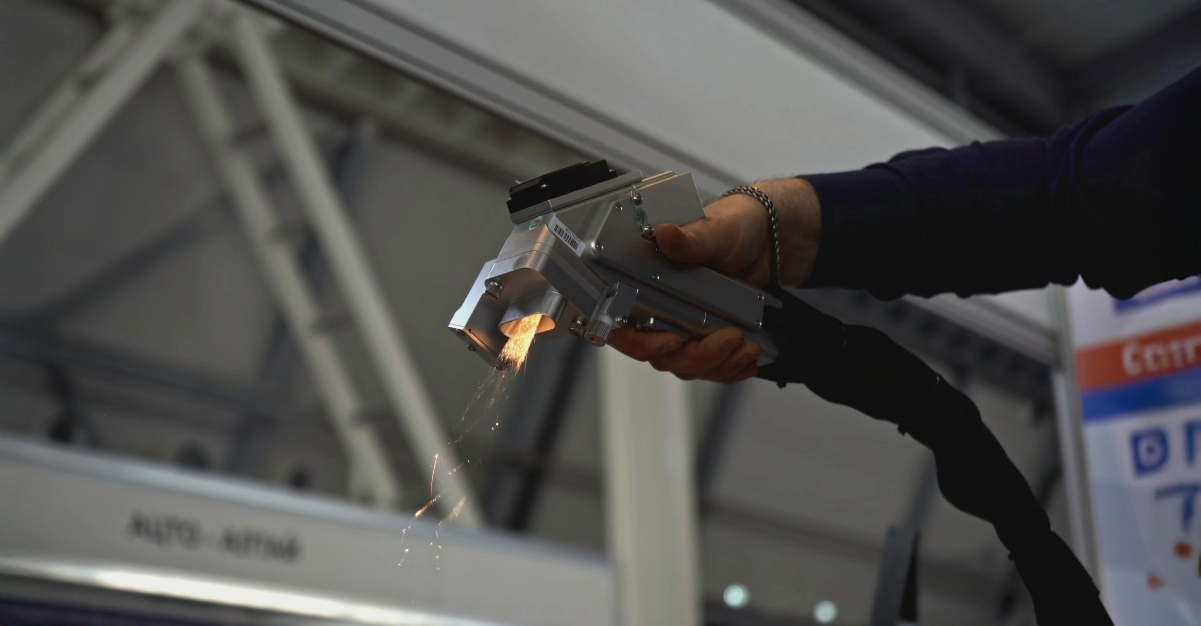
5. Laser Photonics CleanTech 3000-CTH — Best for Heavy Corrosion
Power: 3000W
Laser Type: High-power laser cleaning system
Cooling: Integrated chiller
Price: Request a Quote
Best For: Heavy corrosion, industrial coating removal and surface preparation
When cleaning speed becomes more important than portability, the Laser Photonics CleanTech 3000-CTH is worth considering.
Laser Photonics introduced the 3000-CTH as a 3kW handheld cleaning system aimed at demanding corrosion and pre-paint surface preparation applications. The system includes an integrated chiller.
This makes it more appropriate for aggressive industrial cleaning than the 100W–300W machines commonly used for precision work.
Its strongest use cases are large metal components and surfaces where significant corrosion or coating needs to be removed quickly.
Best choice for: maritime maintenance, infrastructure, heavy manufacturing and industrial surface preparation.
Main limitation: A 3kW system is excessive for delicate restoration and small precision parts. Buyers should not choose it purely because the wattage is higher.
6. Adapt Laser CL300 FFC streamLINE — Best for Aerospace and Sensitive Surfaces
Power: 300W
Laser Type: Pulsed laser cleaning
Cooling: Air-cooled
Price: Request a Quote
Best For: Aerospace, conservation, molds and controlled coating removal
The Adapt Laser CL300 FFC streamLINE is designed around a different priority: controlled cleaning with good portability.
The system delivers 300W and operates from a standard 110V outlet. Adapt Laser also uses an air-cooled design, which reduces the infrastructure required compared with larger water-cooled industrial cleaners.
Its applications include aircraft work, composite molds, conservation, military maintenance and other jobs where protecting the substrate is especially important.
This makes the CL300 particularly attractive when the part being cleaned is much more valuable than the contamination being removed.
Best choice for: aerospace maintenance, composite tooling, conservation and precision industrial cleaning.
Main limitation: Buyers focused primarily on removing thick rust from large steel surfaces can get much more throughput from a high-power CW cleaner.
7. Narran ROD 500 — Best Mobile European Industrial Laser Cleaner
Power: 500W
Laser Type: Nanosecond pulsed laser
Cooling: Water-cooled
Price: Request a Quote
Best For: Rust, grease, paint and industrial component cleaning
The Czech-made Narran ROD 500 is a strong option between small portable laser cleaning machines and very large automated systems.
It produces 500W average output with a nanosecond pulsed laser. Narran lists rust, grease and paint removal from metals among its typical applications, while the processing head can also be used manually or integrated into robotic applications.
The standard optical fiber is 10 meters, with longer configurations available for specialized applications. The machine is built on a wheeled industrial frame for movement around a workshop or production site.
Best choice for: industrial maintenance, manufacturing plants, restoration contractors and companies that need both manual and potential automated use.
Main limitation: At around 240 kg according to Narran's published specifications, “mobile” means movable around an industrial site—not backpack portable.
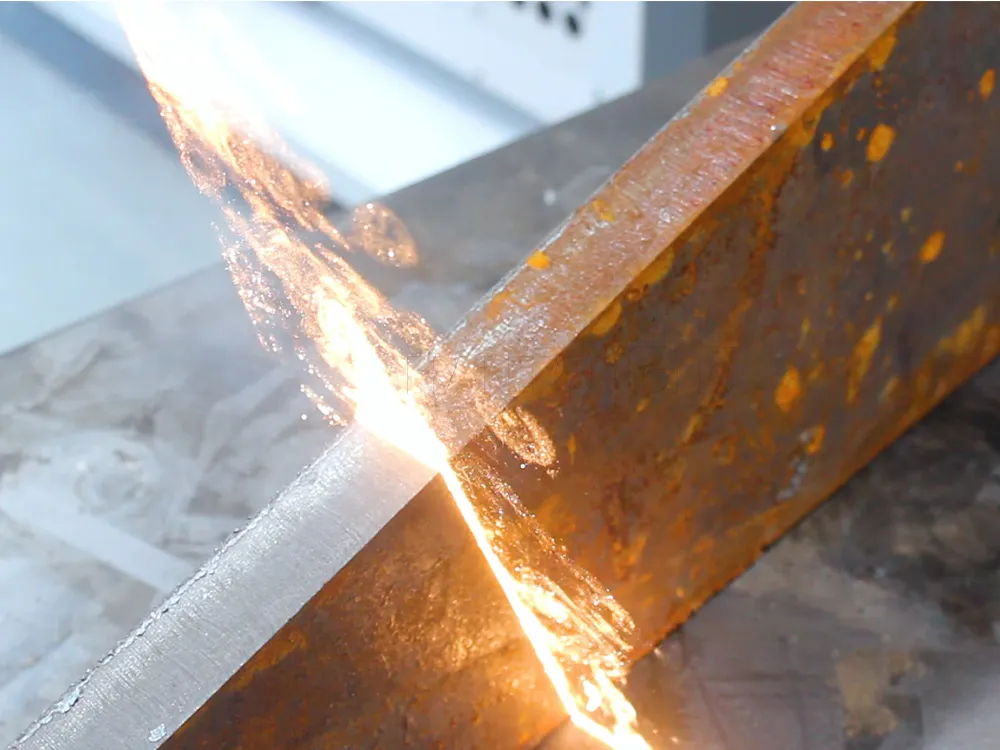
8. SFX FGC-200 200W Backpack Laser Cleaner — Best Budget Backpack Option
Power: 200W
Laser Type: Pulsed fiber
Cooling: Air-cooled
Listed Price: About $7,999 at the time of comparison
Best For: Field service, mobile rust removal and small businesses
The SFX FGC-200 represents the other end of the market: a relatively affordable portable system with a published online price.
SFX currently lists the 200W backpack version at about $7,999. It uses a pulsed, air-cooled laser and can be configured with an optional battery for jobs where mains electricity is inconvenient.
The machine is intended for rust, paint, coating and oil removal and weighs about 21 kg including the battery in the listed configuration.
For mobile cleaning contractors, the ability to carry the system directly to the workpiece is its biggest advantage.
Best choice for: mobile laser cleaning services, auto restoration, field maintenance and small businesses.
Main limitation: A backpack system cannot match the continuous throughput or thermal management of a large industrial cabinet machine.
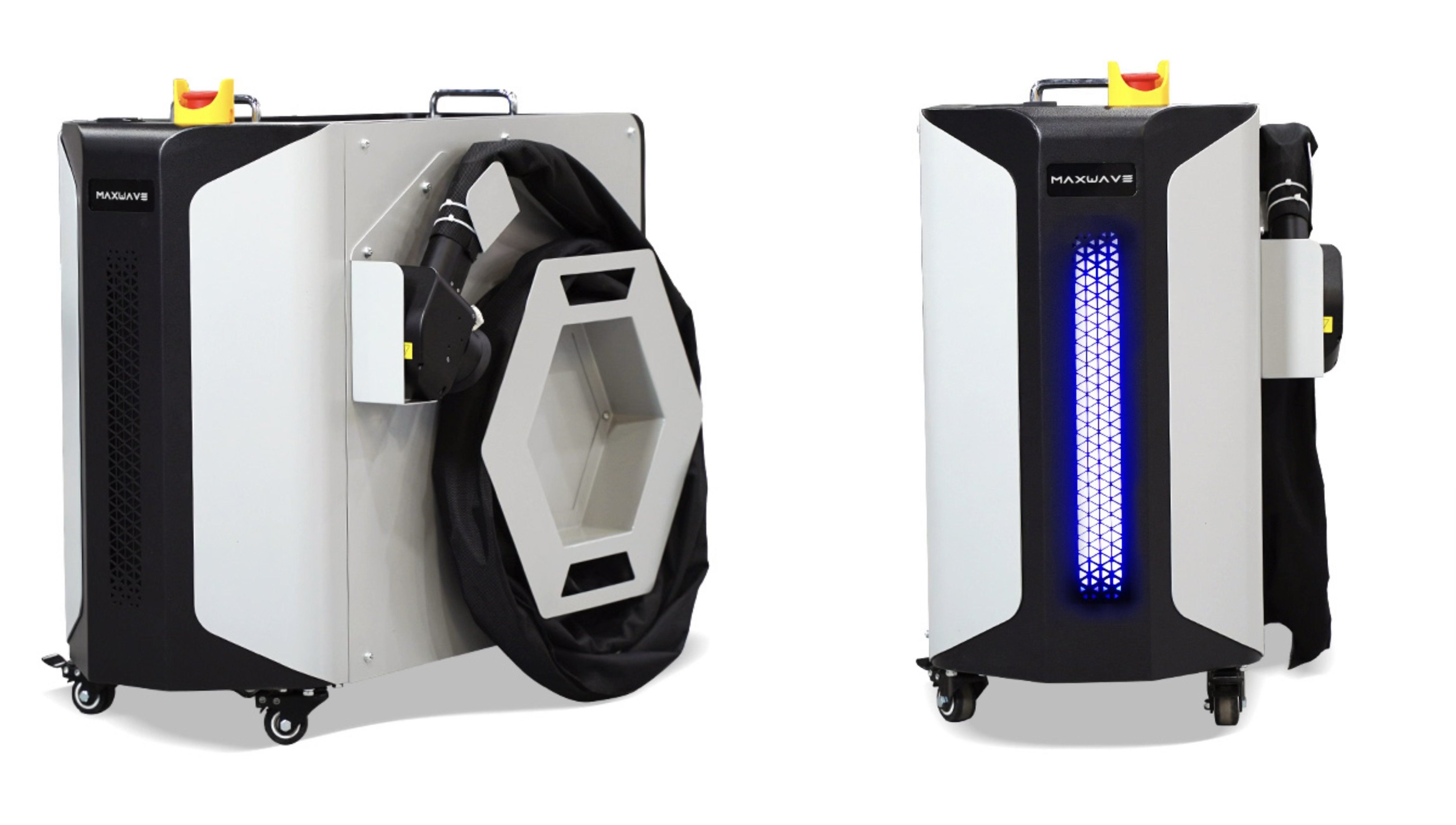
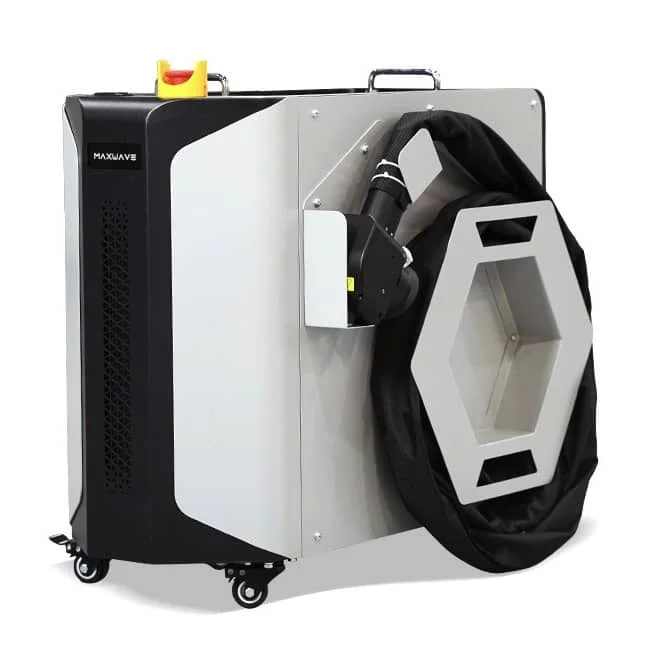
9. MaxWave MW-C200 — Best Value 200W Laser Cleaner
Power: 200W
Wavelength: 1064 nm
Price: Request a Quote
Best For: Rust, paint, oxide and general workshop cleaning
The MaxWave MW-C200 is positioned in one of the most useful power classes for buyers who want more performance than an entry-level 50W or 100W cleaner without jumping to a large high-power machine.
MaxWave's published specifications list the MW-C200 at 200W with a 1064 nm laser and a 10–80 mm scanning width. The product range supports both handheld and automatic configurations.
A 200W machine is particularly useful for mixed workshop work because it sits between delicate low-power cleaning and heavy industrial rust removal.
Best choice for: repair facilities, metal fabrication shops, automotive work and general industrial maintenance.
Main limitation: 200W is not intended to compete with 1000W–3000W continuous-wave systems on large areas of thick corrosion.
10. MaxWave 1000W CW Laser Cleaner — Best Value for Large-Area Rust Removal
Power: 1000W
Laser Type: Continuous wave fiber laser
Price: Request a Quote
Best For: Heavy rust, paint, oil and larger metal surfaces
For buyers more interested in cleaning speed than fine surface control, the MaxWave 1000W CW Laser Cleaner offers a more aggressive alternative to lower-power pulsed systems.
MaxWave positions its CW laser cleaner for removing paint, oil and rust from metal and stone surfaces.
The important distinction here is the laser type.
A 1000W continuous-wave machine should not be thought of as simply “five times better” than a 200W pulsed cleaner. CW systems are primarily attractive for higher-throughput removal on larger, tougher surfaces, while pulsed systems are generally preferred where heat input and substrate control matter more.
Best choice for: structural steel, industrial maintenance, machinery refurbishment and large-area rust removal.
Main limitation: Less suitable than a pulsed laser for delicate parts, expensive molds or applications where minimizing thermal impact is the highest priority.
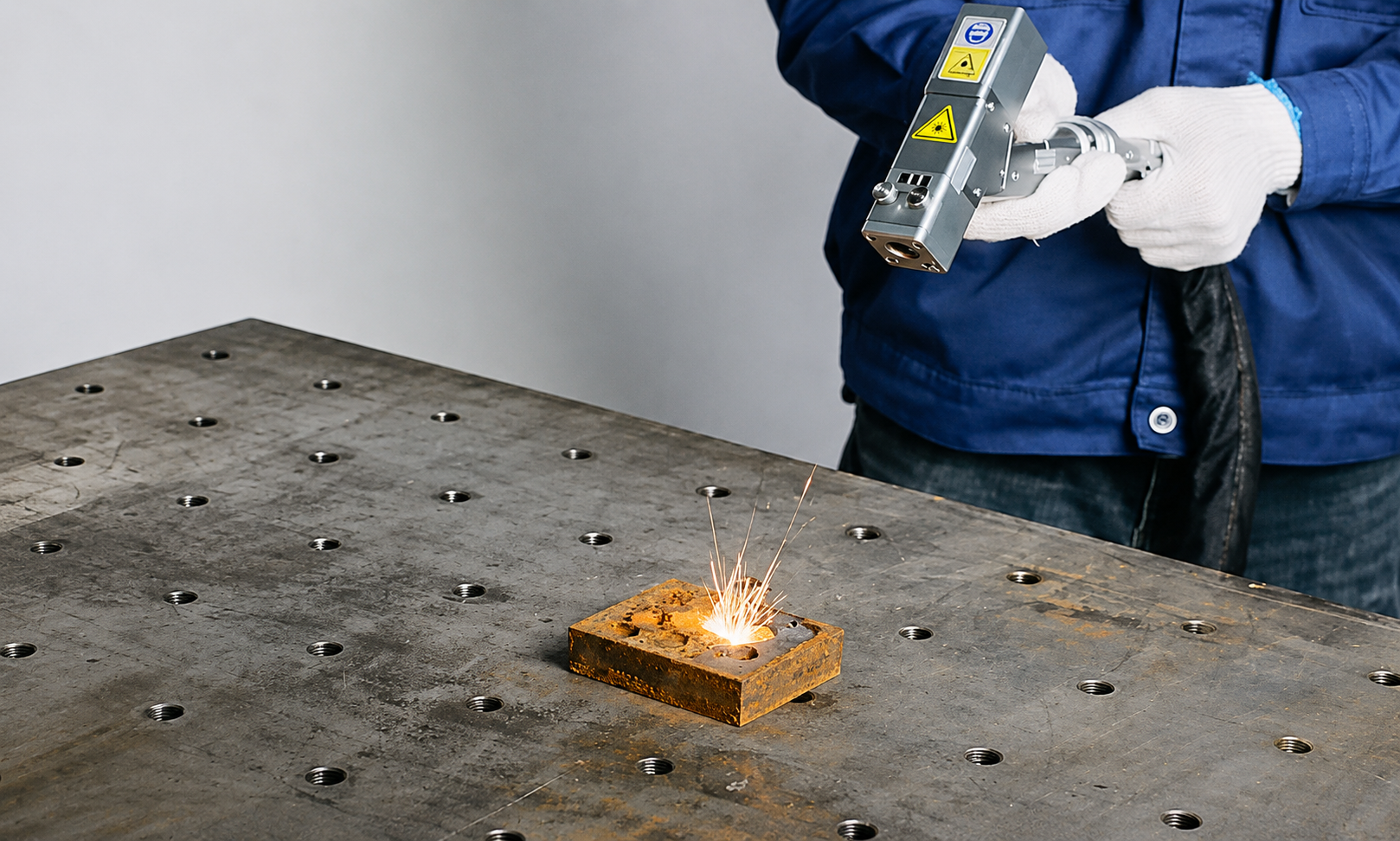
How Much Does a Laser Cleaning Machine Cost in 2026?
Laser cleaning machine prices vary dramatically because laser type matters as much as wattage.
Current 2026 public listings illustrate the difference. STYLECNC reports around $6,500–$7,000 for some 100W pulsed systems and around $10,000 for 200W pulsed machines, while SENFENG cites a broader $12,000–$25,000 range for 200W pulsed systems depending on configuration.
SFX currently lists its 200W backpack pulsed laser cleaner at approximately $7,999 and a 300W air-cooled pulsed model at about $10,299, showing how configuration and supplier positioning can significantly affect the final price.
High-power CW cleaners can surprisingly cost less per watt. Some factory-direct 1500W–3000W handheld CW systems are advertised in the roughly $3,800–$13,000 range, although premium industrial brands, integrated safety cells and automated systems can cost substantially more.
For that reason, buyers should never compare laser cleaners by $/watt alone.
Machine Type | Typical 2026 Buying Position | Common Buyers |
|---|---|---|
50W–100W Pulsed | Entry precision segment | Restoration, small parts |
200W Pulsed | Mainstream professional segment | Workshops, mobile services |
300W–500W Pulsed | Professional/industrial segment | Molds, manufacturing |
1000W–1500W CW | Entry industrial high-throughput | Rust and steel cleaning |
2000W–3000W CW | Heavy-duty industrial | Shipyards, structures |
500W–3000W Premium Pulsed | High-end industrial | Automotive, aerospace, automation |
The exact delivered cost may also include shipping, duties, extraction equipment, laser safety equipment, training and automation.
Pulsed vs. Continuous-Wave Laser Cleaner: Which Should You Buy?
This is more important than simply choosing between 200W and 2000W.
Choose a Pulsed Laser Cleaner If:
You need to clean molds, precision metal parts, aluminum, welds, thin oxide layers, valuable components or surfaces where minimizing heat input is important.
For most workshops, mobile cleaning businesses and general industrial maintenance operations, 200W–500W pulsed systems are the most versatile range.
Choose a Continuous-Wave Laser Cleaner If:
Your main work is heavy rust, mill scale, thick contamination or large steel surfaces.
A 1000W–3000W CW system generally makes more sense when square meters cleaned per hour matter more than fine control.
Which Laser Cleaning Machine Is Best for Your Application?
Application | Recommended Machine Type |
|---|---|
Small rust spots | 100W–200W Pulsed |
Automotive restoration | 200W–300W Pulsed |
Weld cleaning | 200W–500W Pulsed |
Mold cleaning | 200W–500W Pulsed |
Aerospace components | Controlled Pulsed System |
Paint removal | 300W–500W Pulsed / High-Power CW |
Heavy rust | 1000W–3000W CW |
Steel structures | 1500W–3000W CW |
Shipyard cleaning | 2000W–3000W CW |
Automated production | Industrial Pulsed / Robotic System |

What Should You Check Before Buying a Laser Cleaning Machine?
Power is important, but it should not be the first specification you compare.
Start with the material and contamination. Removing light oxide from aluminum is very different from removing thick rust from structural steel.
Next, determine how much surface you need to clean per day. Occasional spot cleaning may only require a 100W–200W pulsed machine, while production facilities may need 500W pulsed or 1500W–3000W CW equipment.
Mobility also matters. A backpack cleaner is excellent for field service but unnecessary if the machine will remain beside a production line.
Finally, ask the supplier to clean your actual sample before ordering. Cleaning speed depends on material, coating thickness, scanning width, laser parameters and required final surface condition, so catalogue speed figures should never replace application testing. LaserCleanerPro, for example, specifically recommends sample testing because there is no single cleaning-speed number that applies to every material.
Laser Cleaning Safety Matters Too
Every serious laser cleaning purchase also needs a safety plan.
Industrial laser cleaners commonly operate as Class 4 laser systems, which means operators need wavelength-appropriate eye protection, controlled beam areas and proper training. Laser cleaning also creates fumes and particles from the material being removed, so suitable extraction should be included in the setup.
Do not choose a machine based only on the laser source and cleaning gun. Safety interlocks, extraction, operator training and after-sales support are part of the real system cost.
Our Final Picks
For most buyers looking for a balance of precision, portability and useful power options, the LaserCleanerPro LY100-500W is our best overall choice. Its 100W–500W pulsed range covers the applications most workshops, service companies and industrial maintenance teams encounter without forcing buyers into a high-power CW platform.
For premium industrial handheld cleaning, the cleanLASER CL 500iM stands out.
For automated manufacturing and very high throughput, the Laserax LXQ-UHP is the stronger option.
For field service and portability on a lower budget, the SFX FGC-200 backpack cleaner is one of the easier machines to price because a public retail price is available.
For buyers focused mainly on heavy rust and large steel surfaces, a 1000W–3000W continuous-wave cleaner, such as the MaxWave CW range, generally offers better throughput than a low-power pulsed system.
Conclusion
There is no single laser cleaning machine that is best for every application.
The right choice depends on three things: what you need to remove, how much surface area you need to clean, and how sensitive the underlying material is.
For precision cleaning, molds, delicate components, and mixed applications, 200W–500W pulsed laser cleaners are often the most versatile starting point. For heavy rust, thick coatings, structural steel, and large-area industrial cleaning, 1000W–3000W continuous-wave systems generally provide higher productivity. Automated production lines require a broader evaluation of cycle time, optics, integration, safety, and process repeatability—not just laser power.
Most importantly, do not choose a machine from wattage or specification sheets alone. A real cleaning test on your own material is the most reliable way to confirm cleaning speed, surface quality, and the correct power configuration.
Send LaserCleanerPro photos or samples of your parts, together with the substrate, contaminant type, approximate layer thickness, and expected daily workload. Our engineering team can arrange an application test and recommend the pulsed or CW laser cleaning system that best matches your actual process.