Should you hire a laser cleaning service or buy your own machine?
For occasional or one-time cleaning, hiring a service usually creates less financial risk. You pay for the job, avoid equipment ownership and do not need to train an operator.
If rust, paint, oxide or weld-preparation work becomes a regular part of your operation, buying a laser cleaner can become more cost-effective because the initial investment is spread across more cleaning hours and more jobs.
The important point is that there is no universal number of hours at which buying automatically becomes cheaper.
The answer depends on:
Your local service quote.
The machine you actually need.
Your operator and maintenance costs.
How often the equipment will really be used.
For most buyers, the decision looks like this:
Situation | Better Starting Point |
|---|---|
One-time or occasional project | Hire a service |
Application has not been tested | Service or sample test first |
Recurring weekly cleaning | Calculate break-even |
Daily production cleaning | Buying becomes more attractive |
Cleaning itself generates revenue | Buying may become core equipment |
Current LaserCleanerPro pricing guidance places standalone laser cleaning machines broadly around $3,000–$25,000, while automated industrial systems can exceed $60,000. For many workshops and contractors, approximately $4,000–$15,000 is a more realistic equipment budget before application-specific extras.
But the machine price alone does not tell you whether ownership is cheaper.
You need to compare total service cost against total ownership cost.
1. When Does Hiring a Laser Cleaning Service Make Sense?
Hiring a professional service works best when the cleaning requirement is occasional, uncertain or difficult to standardize.
One-Time or Occasional Cleaning
Imagine your company has one batch of rusted components or a single machine that needs paint removed before refurbishment.
Purchasing a machine for that job may mean spending thousands of dollars on equipment that sits idle afterward.
A service provider allows you to pay only when cleaning is actually required.
You also avoid the immediate burden of machine storage, operator training, maintenance and safety setup.
This can make outsourcing more economical even when the contractor's hourly rate initially looks expensive.
Your Application Is Still Uncertain
This is another strong reason not to buy immediately.
Laser cleaning performance changes significantly according to the substrate, contamination and required final surface.
A 200W pulsed laser cleaner may be a good fit for precision oxide removal, while a high-power CW machine may be more appropriate for large areas of heavy rust.
If you have not yet tested your actual material, buying first creates unnecessary risk.
LaserCleanerPro's current buying guidance specifically recommends testing representative samples and measuring the real cleaning rate rather than selecting equipment from specifications alone.
For an unfamiliar application, the safer path is:
Test first → confirm result → measure cleaning time → choose equipment
You Do Not Have a Trained Operator
Owning equipment also means someone must operate it correctly.
That includes understanding machine settings, laser safety, fume extraction, routine inspection and basic troubleshooting.
For a company that needs cleaning only a few times each year, maintaining that internal capability may not make financial sense.
The service provider brings both the machine and the operator.
The Job Has Special Requirements
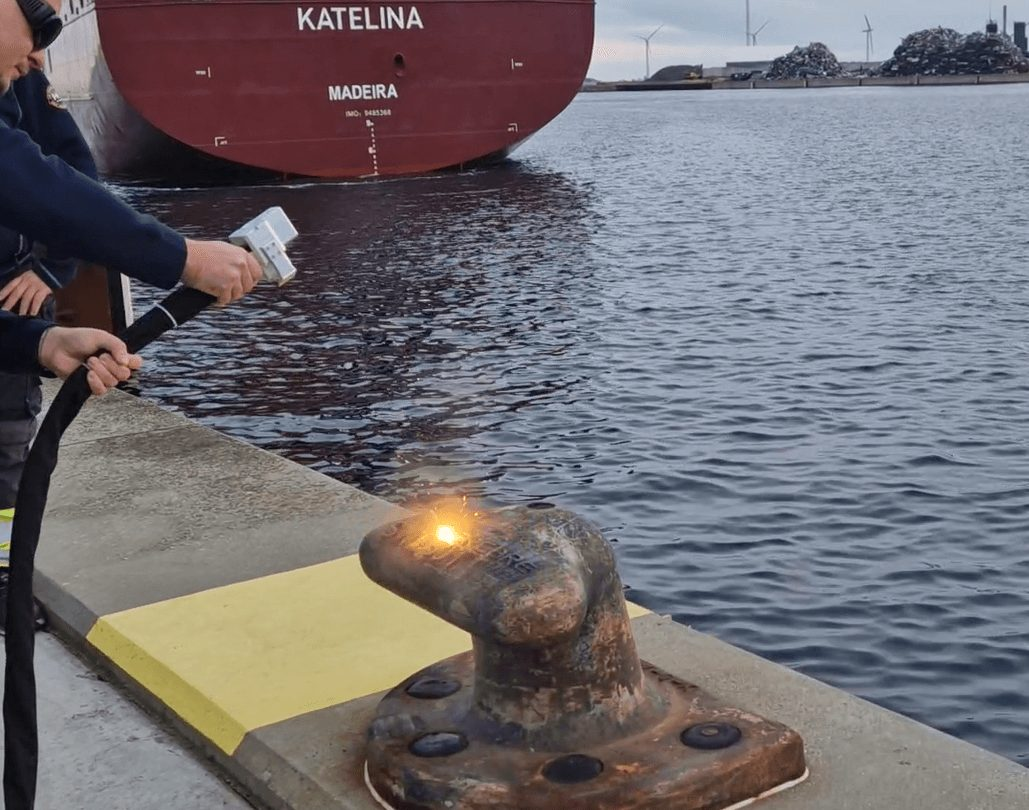
Outsourcing can also make sense when the project involves difficult access, hazardous coatings or unusual safety requirements.
A specialist contractor may already have the extraction, safety controls and application experience required.
Buying a machine does not automatically give your team that capability.
The machine is only one part of the process.
2. When Does Buying a Laser Cleaner Make More Sense?
Ownership becomes more attractive when cleaning becomes a repeatable business activity rather than an occasional project.
Cleaning Happens Every Week
Outsourcing has one fundamental characteristic:
Every new cleaning hour creates another service charge.
Equipment ownership works differently.
Once the machine has been purchased, additional cleaning mainly adds variable costs such as labor, electricity, maintenance and wear parts.
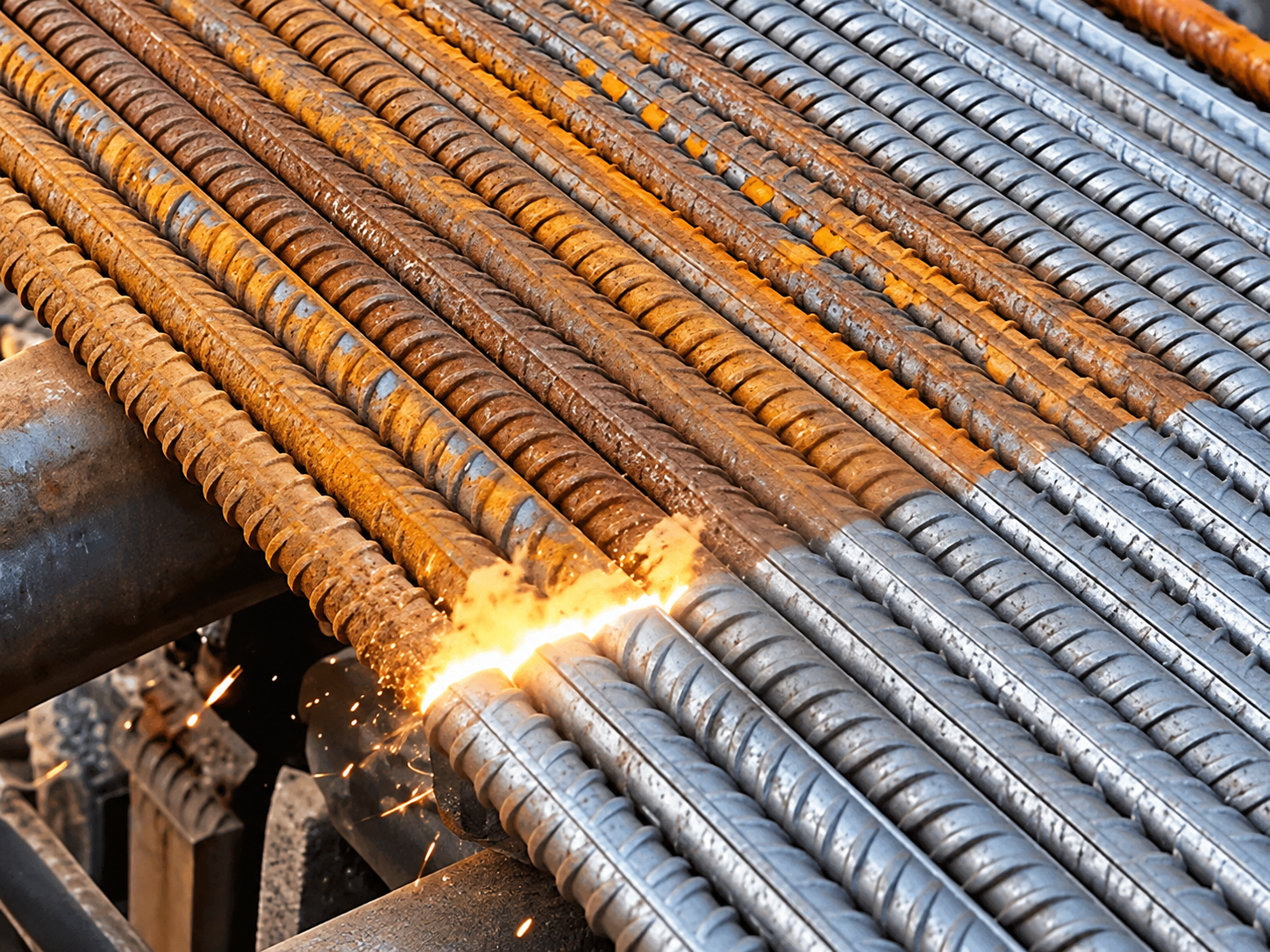
If you regularly need rust removal, coating removal, mold cleaning or weld preparation, the equipment investment can gradually be spread across many jobs.
This is where a professional laser cleaning machine starts becoming financially interesting.
Cleaning Is Part of Production
For manufacturers, the contractor invoice may not even be the biggest cost.
Waiting can be more expensive.
If components must be cleaned before welding, painting, bonding or assembly, waiting for an external provider can interrupt the production schedule.
Bringing cleaning in-house gives the factory more control over when parts move to the next process.
For this type of buyer, equipment availability itself has economic value.
The Same Job Repeats
Ownership becomes particularly attractive when the application is predictable.
For example:
The same oxide on the same component.
The same weld zone before assembly.
The same mold-cleaning procedure.
Once the correct parameters are established, operators can repeat the process internally without purchasing a new service each time.
An industrial laser cleaner is much easier to justify when it becomes part of a stable production process.
You Sell Laser Cleaning Services
If laser cleaning itself becomes your product, the calculation changes again.
A contractor earning revenue from rust removal, automotive restoration or industrial maintenance is not buying the machine only to reduce an existing expense.
The machine becomes a revenue-generating asset.
In that case, the important calculation is not only:
How much service cost will I save?
It is also:
How much contribution margin can this machine generate every month?
3. How Do You Calculate the Break-Even Point?
This is the most important section for anyone deciding between outsourcing and ownership.
Do not rely on a generic statement such as:
“Buy once you reach 40 hours per year.”
Two companies can use the laser cleaning equipment for the same number of hours and reach completely different conclusions because their service rates and machine configurations are different.
Calculate Your Real Outsourcing Cost
Use the quotes you actually receive.
Your annual service cost can be calculated as:
Annual Service Cost = Service Charges + Travel + Setup + Other Required Fees
If the provider charges hourly, calculate the complete effective rate after minimum charges and travel.
For example, a contractor quoting $200 per hour may still have a four-hour minimum.
A two-hour job would therefore not cost $400.
It could cost $800 before travel.
That effective project cost is the number you should compare with ownership.
Calculate Your Real Machine Investment
Do not use the factory equipment price alone.
A realistic initial investment may include the machine, delivery, required safety or extraction equipment, training and installation.
LaserCleanerPro's current pricing guidance also emphasizes that power, pulsed vs CW technology, cooling, cleaning head and configuration can all significantly change the final equipment cost.
For the calculation, call this:
Total Initial Investment
Calculate In-House Operating Cost
The original draft was correct to recognize that electricity alone is not the actual operating cost.
A practical in-house hourly cost includes:
Operator labor + Electricity + Wear parts + Filtration + Maintenance reserve
You do not need perfect precision before buying.
You need a realistic estimate.
Labor is particularly important because it can be much more expensive than electricity.
Use the Break-Even Formula
Once you have those figures:
Break-Even Hours = Total Initial Investment ÷ (Service Cost per Hour − In-House Cost per Hour)
Here is a simple illustrative example:
Total installed machine investment: $10,000
Effective service cost: $250/hour
In-house operating cost: $40/hour
Then:
$10,000 ÷ ($250 − $40) = about 48 hours
Under those assumptions, ownership needs roughly 48 productive cleaning hours to recover the initial investment.
But change the local service price:
Service cost: $125/hour
The calculation becomes:
$10,000 ÷ ($125 − $40) = about 118 hours
Same machine.
Very different buying decision.
That is exactly why a fixed industry-wide break-even number is misleading.
Calculate Productive Hours Only
Do not confuse ownership time with productive cleaning time.
A machine may be available eight hours per day but actually clean for only one hour.
For the ROI calculation, use the hours during which the equipment is doing productive paid or cost-saving work.
Idle machines do not generate savings.
4. Which Option Fits Your Business?
Once the cost calculation is clear, the final decision becomes much easier.
Small Repair or Restoration Shop
If rust-removal jobs appear only occasionally, outsourcing often makes more sense initially.
You avoid tying up capital in equipment that may remain idle for long periods.
If service invoices begin appearing regularly, you can revisit the calculation using your actual historical spend.
Fabrication Shop
A fabrication business with regular weld preparation or corrosion removal is a more balanced case.
If cleaning occurs every week, compare both options carefully.
The important questions become:
How many productive cleaning hours do we actually have?
How much do current contractors cost us?
Does outsourcing delay production?
This is often the point where buying starts to become attractive.
Manufacturing Plant
Daily production cleaning is a much stronger ownership case.
In addition to reducing contractor expenses, ownership provides immediate availability and better control over production scheduling.
The economic value can therefore come from both direct cost savings and reduced delays.
Cleaning Contractor
For a business selling rust or coating removal, the machine is fundamental production equipment.
A portable laser cleaner may allow the contractor to generate revenue across multiple customer sites.
In this situation, calculate:
Payback Period = Initial Investment ÷ Monthly Contribution Margin
Do not use total revenue.
Subtract direct job costs first.
Quick Decision Table
Your Workload | Service | Buy |
|---|---|---|
One-time cleaning | ✓ | |
Occasional unpredictable work | ✓ | |
Weekly repeat cleaning | Compare | Compare |
Daily production requirement | ✓ | |
Laser cleaning is a paid service | ✓ |
Conclusion
Laser cleaning service vs buying a machine—which is more cost-effective?
There is no universal threshold.
Hiring a service usually makes more sense when cleaning is occasional, uncertain or highly specialized.
Buying becomes more attractive when cleaning is recurring, predictable and important to normal production or revenue.
The decision should come down to four numbers:
Your total machine investment.
Your real in-house operating cost.
Your actual outsourcing cost.
Your expected productive cleaning hours.
Do not buy simply because a supplier promises fast ROI.
And do not keep outsourcing simply because buying a machine feels like a large upfront expense.
The best sequence is:
Test the application → measure cleaning time → calculate total equipment cost → compare it with your real service spend.
If you are considering a laser rust removal machine but are not sure whether ownership makes financial sense, send LaserCleanerPro your material, contamination type, cleaning frequency and current service cost.
The team can test your sample, estimate a realistic cleaning rate, recommend the appropriate pulsed or CW configuration and help you compare equipment ownership against your current outsourcing cost before you make the investment.