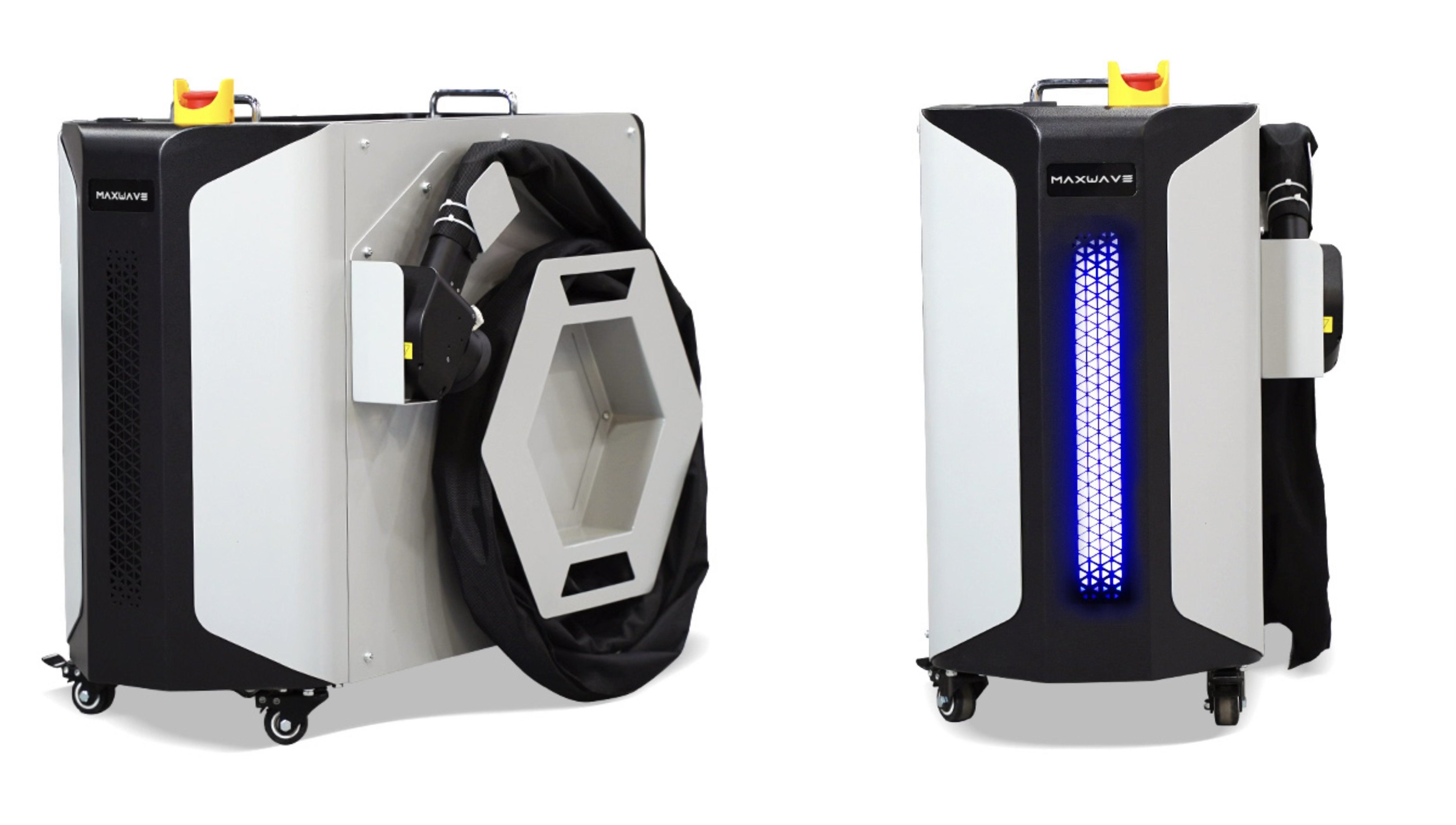
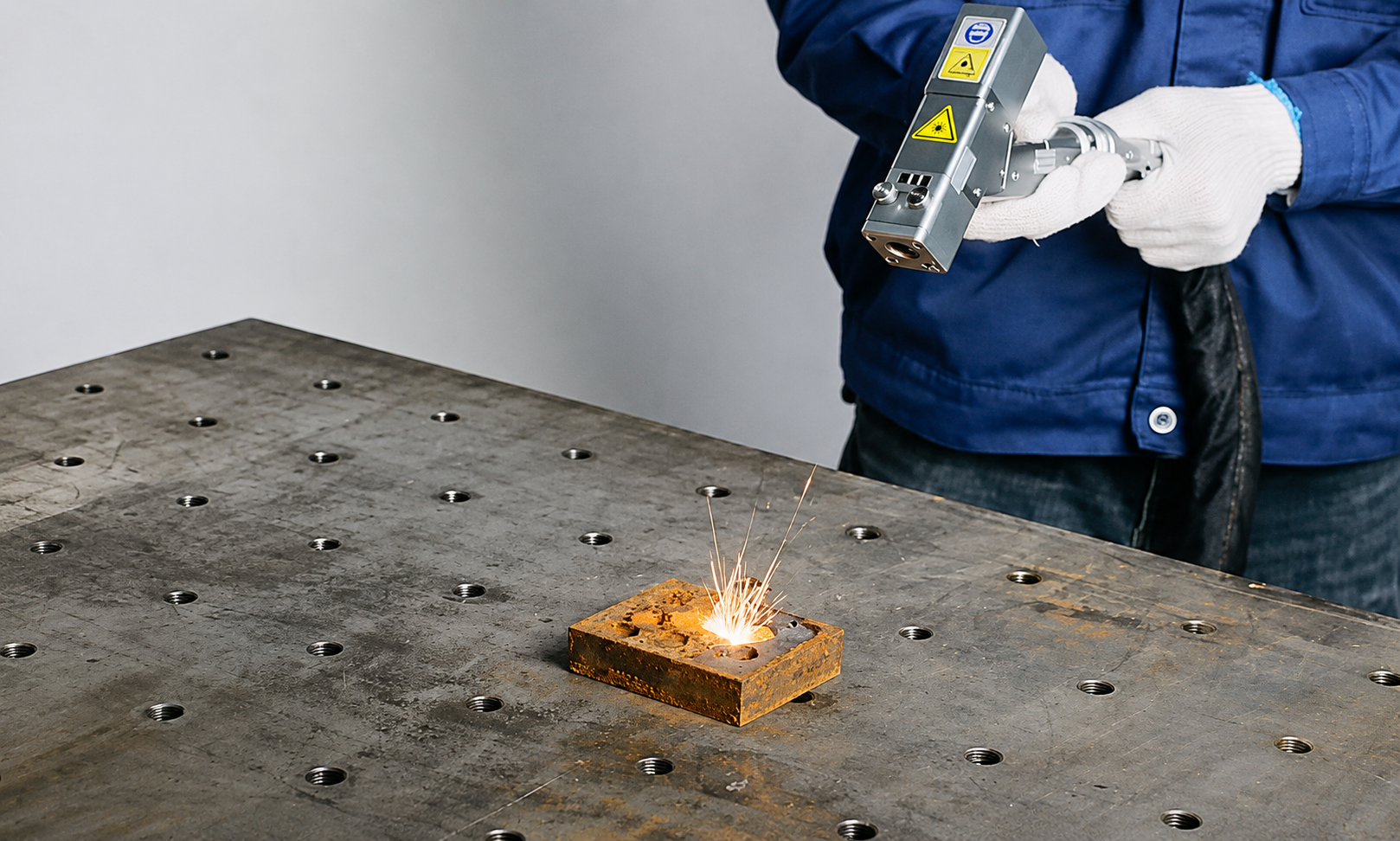
A laser cleaning machine can reduce labor, abrasive media, chemicals, waste disposal, and post-cleaning work, but none of those savings automatically guarantee a fast return on investment. The real question is simple: How much does your current cleaning process cost every year, and how much of that cost can laser cleaning realistically eliminate?
That is what determines laser cleaning ROI.
The economics can be particularly attractive when the initial equipment investment is relatively low. Most standalone LaserCleanerPro laser cleaning machines are priced below $15,000, while its dual-axis, multi-mode handheld laser cleaner is available for approximately $4,300. This makes laser cleaning financially relevant not only for large factories, but also for fabrication shops, welding companies, restoration businesses, maintenance teams, and contract cleaning companies.
However, machine price alone does not determine ROI. A $4,300 machine used every day can potentially recover its cost much faster than the same machine used only a few times per month. For anyone evaluating a laser cleaning machine for industrial rust removal, the calculation should therefore start with the existing cleaning process—not the highest wattage or lowest machine quote.
The basic formula is:
Payback Period = Total Initial Investment ÷ Annual Net Savings
If the result is 1.5, the investment takes approximately 1.5 years, or 18 months, to recover. The formula is straightforward; the challenge is making sure the numbers going into it reflect your real operating costs.
1. How to Calculate Laser Cleaning Machine Payback
Start by calculating two numbers: total initial investment and annual net savings.
The initial investment should include more than the advertised machine price. Depending on the application, you may also need fume extraction, shipping, training, safety equipment, electrical modifications, initial spare parts, or installation and integration.
For example, a small workshop considering LaserCleanerPro's dual-axis multi-mode handheld cleaner might build a budget like this:
Initial Cost | Illustrative Example |
|---|---|
Dual-axis handheld laser cleaner | $4,300 |
Extraction / safety equipment | $1,200 |
Shipping / setup / initial spares | $1,000 |
Total Initial Investment | $6,500 |
In this case, the ROI calculation should use $6,500, not only the $4,300 machine price. The lower equipment price still creates a strong starting point, but the financial model needs to reflect everything required to put the machine into productive use.
The next step is calculating the annual cost of the process you want to replace or reduce. This may include sandblasting, grinding, wire brushing, chemical stripping, manual rust removal, dry ice cleaning, weld cleaning, paint stripping, mold cleaning, or outsourced surface preparation.
Suppose a workshop currently spends $20,000 per year on direct cleaning labor, $6,000 on abrasives or chemicals, $2,000 on grinding wheels and brushes, $2,000 on cleanup and disposal, and another $2,000 on rework or outsourcing. Its current annual cleaning cost is therefore about $32,000.
Laser cleaning still has operating expenses. Electricity, extraction filters, protective optics, routine maintenance, replacement parts, and operator labor all need to be included. If the new process costs $5,000 per year to operate, annual net savings become:
$32,000 – $5,000 = $27,000
Using a $6,500 total installed investment:
$6,500 ÷ $27,000 × 12 ≈ 2.9 months
That is a theoretical result, not a guaranteed three-month payback. If the laser only replaces part of the existing process, utilization is lower than expected, or labor hours are not genuinely eliminated, the actual payback period will be longer.
For example, if the same $6,500 investment generates only $9,000 in annual net savings, payback becomes approximately 8.7 months. If annual savings fall to $4,500, payback extends to roughly 17.3 months.
The key point is that machine price determines how much capital needs to be recovered, while utilization and actual savings determine how quickly you recover it.
Total Investment | Annual Net Savings | Approx. Payback |
|---|---|---|
$4,300 | $6,000 | 8.6 months |
$4,300 | $12,000 | 4.3 months |
$6,500 | $9,000 | 8.7 months |
$10,000 | $15,000 | 8 months |
$15,000 | $18,000 | 10 months |
$15,000 | $9,000 | 20 months |
These figures are illustrative rather than promised returns, but they show why a sub-$15,000 equipment investment can make laser cleaning viable for much smaller operations than many traditional industrial ROI examples suggest.
2. What Should You Count as Annual Savings?
A weak ROI calculation often includes only labor and consumables. A better formula is:
Annual Net Benefit = Avoided Current Costs + Real Additional Contribution – Annual Laser Operating Costs
Labor is usually one of the most important categories. Do not count only the minutes an operator actively holds a grinder or blasting gun. Traditional cleaning can also involve masking, media loading, chemical application, dwell time, scraping, rinsing, drying, cleanup, waste handling, and moving parts between processes.
If laser cleaning genuinely eliminates 15 labor hours per week at a loaded labor cost of $35 per hour, that represents approximately $27,300 in annual labor value. Compared with a $4,300 dual-axis multi-mode handheld laser cleaner, the equipment-only theoretical payback would be about 1.9 months. In practice, installation, extraction, maintenance, operator time, and realistic utilization must also be included, but the example demonstrates how much the lower machine price changes the investment calculation.
Consumables are another major source of savings. Sandblasting may require continuous abrasive-media purchases, while chemical stripping requires new chemicals, solvents, neutralizers, PPE, and disposal supplies. Grinding consumes discs and wire wheels. A laser cleaner for replacing sandblasting or chemical cleaning can reduce many of these recurring purchases, although protective optics and filtration still need to be budgeted.
Waste and cleanup should also be included. Laser cleaning does not make rust, paint, oil, or contamination disappear; removed material becomes fumes and particulates that need appropriate extraction and filtration. However, it can substantially change the cleanup process by reducing spent blasting media, chemical residue, and associated disposal requirements.
For precision applications, reduced rework can be just as important as labor savings. Aggressive grinding or blasting may cause excessive material removal, surface deformation, abrasive contamination, damage to molds or tooling, or extra polishing. If laser cleaning reduces these problems, use your actual rework records from the last 6–12 months to assign a realistic value.
Throughput can also contribute to ROI when cleaning is a production bottleneck. If a slower surface-preparation step delays welding, painting, coating, or assembly, faster cleaning may increase usable production capacity. However, theoretical capacity should not automatically be counted as revenue. Only include additional contribution if your business actually has enough demand to use the extra output.
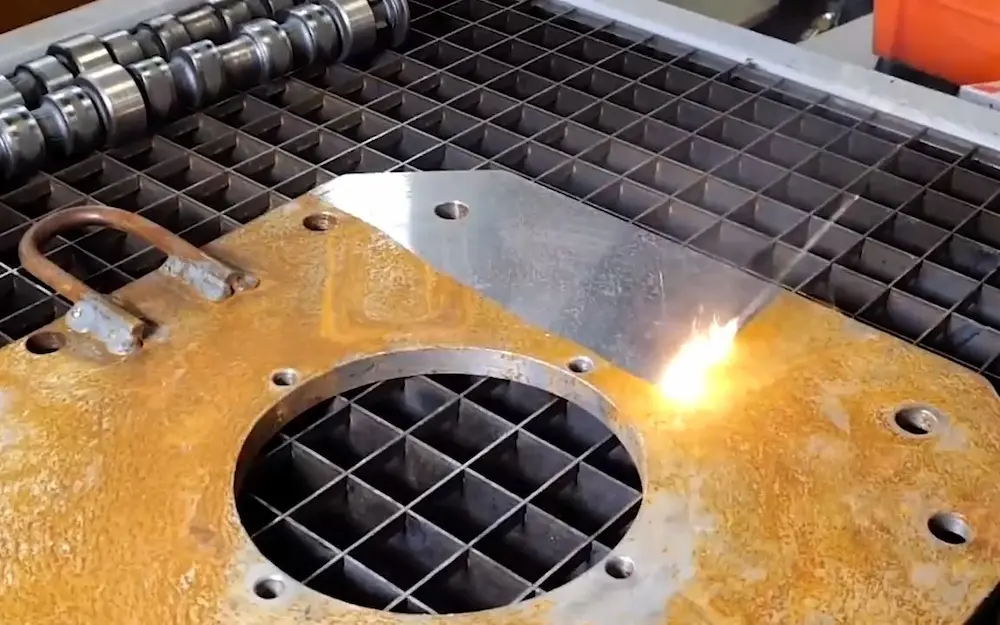
3. What Makes Laser Cleaner ROI Faster—or Slower?
Two companies can buy the same machine and end up with completely different payback periods. The biggest reason is usually utilization.
A workshop using the machine five hours every working day has far more cost available to replace than a shop using it for three hours every Friday. When calculating ROI for laser cleaning equipment for rust, paint and oxide removal, estimate realistic productive hours rather than maximum theoretical capacity.
Your current records are the best starting point. Look at how many parts or square meters you clean each week, how many labor hours the process consumes, how much you spend on consumables, and how often work is outsourced. Those numbers determine how much financial value the laser has available to capture.
Another common mistake is assuming the laser replaces 100% of the old process. Sometimes it can. In other applications, it may only replace grinding before welding while chemical treatment is still required for internal cavities. Abrasive blasting may also remain necessary when the coating specification requires a defined anchor profile. If the laser only removes 70% of the old process, the ROI calculation should only include savings associated with that 70%.
Choosing the right laser type and power also affects ROI. A low-power pulsed system may provide excellent surface control but be too slow for large areas of heavy corrosion. A high-power CW machine may clean faster but cost more than a small maintenance operation can justify. Choosing between a pulsed or CW laser cleaning machine is therefore as much an economic decision as a technical one.
LaserCleanerPro's relatively low equipment pricing makes this particularly relevant. Most standalone systems are below $15,000, so the goal should not be to spend the entire budget on maximum wattage. It should be to choose the lowest-cost configuration that can reliably deliver the required cleaning quality and production speed.
The $4,300 dual-axis handheld system also changes the economics for smaller users. A fabrication shop spending only $8,000–$10,000 per year on grinding, labor, and cleaning supplies might struggle to justify a $30,000 laser cleaner. A machine starting around $4,300 creates a much lower financial hurdle, making laser cleaning more realistic for small welding shops, automotive restoration businesses, contract cleaners, mold-maintenance teams, repair companies, and smaller industrial maintenance departments.
Ramp-up time still matters. Operators need to learn suitable power, scanning speed, working distance, overlap, and cleaning parameters. If you expect only 50% normal utilization during the first month or two, reflect that in the model rather than assuming full productivity from day one.
For uneven savings, cumulative cash flow is more accurate than a simple annual average:
Period | Net Savings | Cumulative Recovery |
|---|---|---|
Months 1–2 | $1,500 | $1,500 |
Months 3–4 | $2,000 | $3,500 |
Months 5–6 | $2,500 | $6,000 |
Months 7–8 | $3,000 | $9,000 |
If total installed investment is $6,500, this example shows the machine reaching break-even during the later period rather than immediately based on an optimistic annualized calculation.

4. Build the ROI Model Before Choosing the Machine
The strongest ROI analysis starts with the process you already have, not with a laser cleaner specification sheet.
Pull the last several months of cleaning records and calculate your current labor, abrasives or chemicals, grinding consumables, waste and cleanup, rework, outsourced work, downtime, and actual cleaning volume. Then define what the new process needs to accomplish.
For example:
We currently use two operators for grinding and rust removal for 18 hours per week. We need to clean carbon-steel components before painting without significantly changing the base surface.
That requirement is much more useful than simply telling a supplier that you want a 500W machine.
Send the application to the supplier and ask for sample testing. Compare cleaning quality, real cleaning speed, required number of passes, recommended laser type and power, electricity requirements, extraction, maintenance, training, warranty, spare parts, and complete machine price.
One advantage of the current LaserCleanerPro range is that you do not necessarily need to build the business case around a $30,000–$50,000 investment. Most standalone machines are below approximately $15,000, while the dual-axis multi-mode handheld laser cleaner is approximately $4,300.
That creates a more rational selection sequence:
Application → Required Cleaning Speed → Laser Type → Power → Machine Price → ROI
instead of:
Budget → Highest Wattage Available
Payback period should also be combined with total cost of ownership. Payback tells you how quickly the initial investment is recovered, while TCO tells you how much the machine costs over its full working life.
Use:
TCO = Initial Investment + Operating Costs + Maintenance + Repairs + Downtime – Residual Value
Two machines could both achieve a 12-month payback while producing very different five-year economics. A cheaper machine may require more repairs and downtime, while another may cost slightly more but remain more reliable.
There is also no universal “good” payback period. A six-month return may be excellent, but a 15-month payback is not automatically poor. The right threshold depends on utilization, service life, production importance, financial risk, quality benefits, and your company's investment criteria.
The important thing is that the number comes from your process and your costs, not from a generic supplier promise.
Conclusion
Laser cleaning machine ROI is ultimately determined by a simple relationship: how much you invest compared with how much your new cleaning process saves each year.
The basic formula remains:
Payback Period = Total Initial Investment ÷ Annual Net Savings
The key inputs are labor, consumables, waste, rework, outsourcing, utilization, maintenance, and downtime. The lower the equipment investment, the less annual savings are required to reach break-even.
Most LaserCleanerPro standalone laser cleaners are priced below $15,000, while its dual-axis multi-mode handheld laser cleaner is available for approximately $4,300. That lower entry price makes laser cleaning financially relevant for smaller fabrication shops, maintenance teams, welding companies, restoration businesses, and contract cleaners—not only large industrial plants.
A $4,300 machine does not automatically guarantee a fast return, but it substantially lowers the amount of labor, consumables, outsourcing, and cleanup that must be eliminated before the investment pays for itself.
Before purchasing, calculate what you currently spend on cleaning and determine how much of that process the laser can realistically replace.
The strongest ROI comes from buying the right-sized laser cleaner for a cleaning problem you already have—not buying the highest wattage available and trying to create enough work afterward.
Not sure which configuration gives your application the best payback? Send LaserCleanerPro photos or samples of your parts, together with your current cleaning method, contamination type, labor hours, consumable costs, surface area, and monthly workload. The engineering team can test the application and recommend a suitable pulsed or CW laser cleaner—from the $4,300 dual-axis handheld system to higher-power configurations—so you can calculate the real payback period before purchasing.