Choosing industrial rust removal equipment is not simply a question of which machine removes rust fastest.
A shipyard removing thick corrosion from structural steel has very different requirements from a mold shop cleaning precision tooling, a fabrication company preparing welds, or a maintenance team removing localized rust from machinery.
The right method depends mainly on four questions:
How severe is the rust? What material is underneath it? How much surface area must be cleaned? What surface condition is required afterward?
The seven main industrial rust removal methods are laser rust removal, abrasive blasting, dry ice blasting, ultrasonic cleaning, chemical rust removal, high-pressure water jetting, and mechanical de-rusting tools.
Each method has a clear advantage, but none is best for every application.
Industrial Rust Removal Equipment Compared
Method | Best For | Main Advantage | Main Limitation |
|---|---|---|---|
Laser rust removal | Precision parts, repeated maintenance, welds, molds, localized rust | Controlled, non-contact removal with low recurring media use | Higher equipment investment; safety and extraction required |
Abrasive blasting | Heavy rust, structural steel, coating preparation | Fast removal and creates surface profile | Dust, abrasive media and cleanup |
Dry ice blasting | Machinery where secondary media waste should be minimized | Dry ice disappears after impact | High air consumption and recurring dry ice cost |
Ultrasonic cleaning | Small precision parts and complex geometry | Reaches cavities and detailed surfaces | Limited by tank size |
Chemical rust removal | Complex shapes, internal surfaces, batch processing | Reaches areas inaccessible to line-of-sight methods | Chemicals, dwell time, rinsing and waste |
High-pressure water jetting | Ships, tanks and large industrial structures | No dry abrasive dust | Wastewater and flash-rust management |
Mechanical tools | Small repairs and localized heavy rust | Lowest equipment investment | Labor-intensive and difficult to scale |
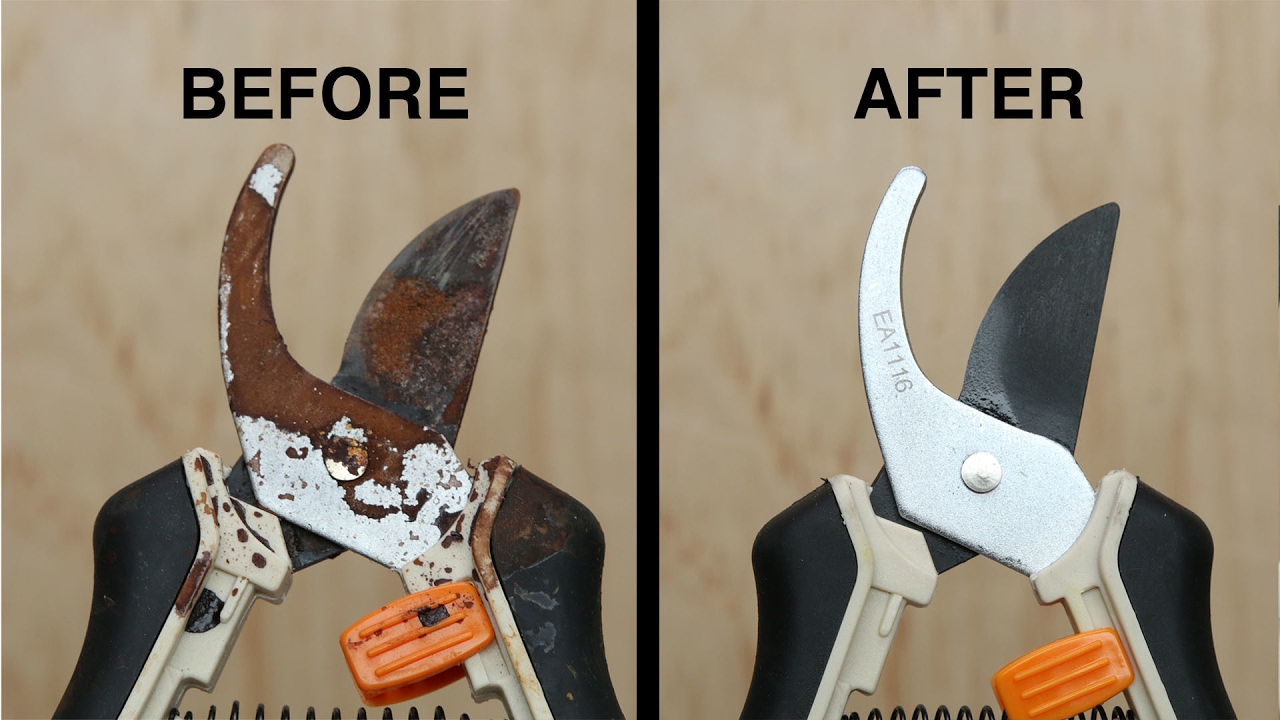
The real difference between these methods is not only cleaning speed. It is what happens to the metal surface after the rust has been removed.
Some applications require a rough profile for coating adhesion. Others require the original surface to remain as unchanged as possible. That distinction should guide equipment selection from the beginning.
1. Seven Industrial Rust Removal Methods and Where They Work Best
1. Laser Rust Removal — Best for Controlled and Repeatable Cleaning
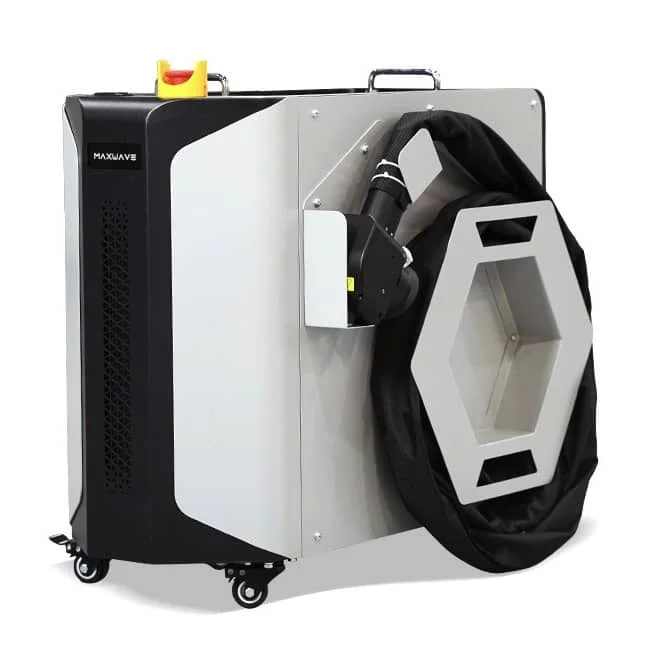
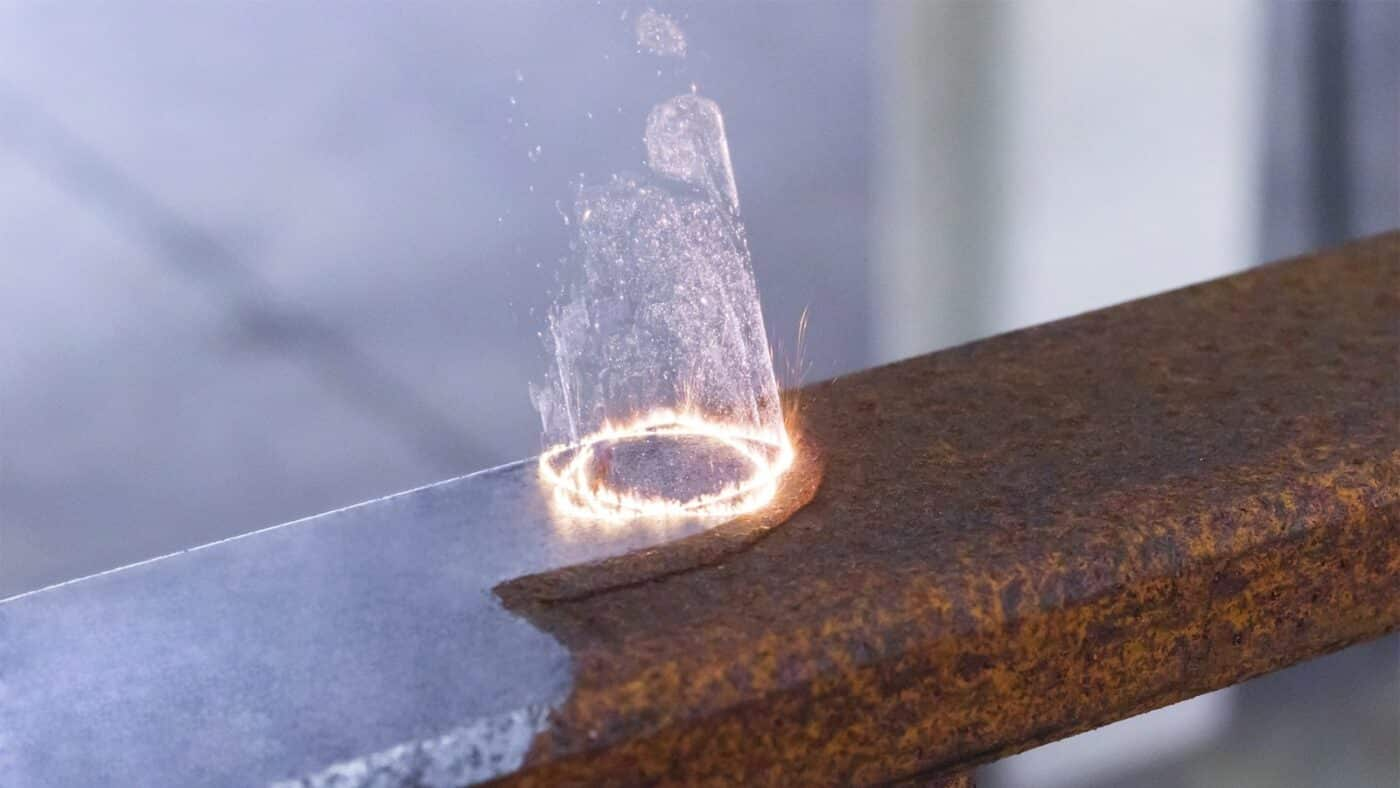
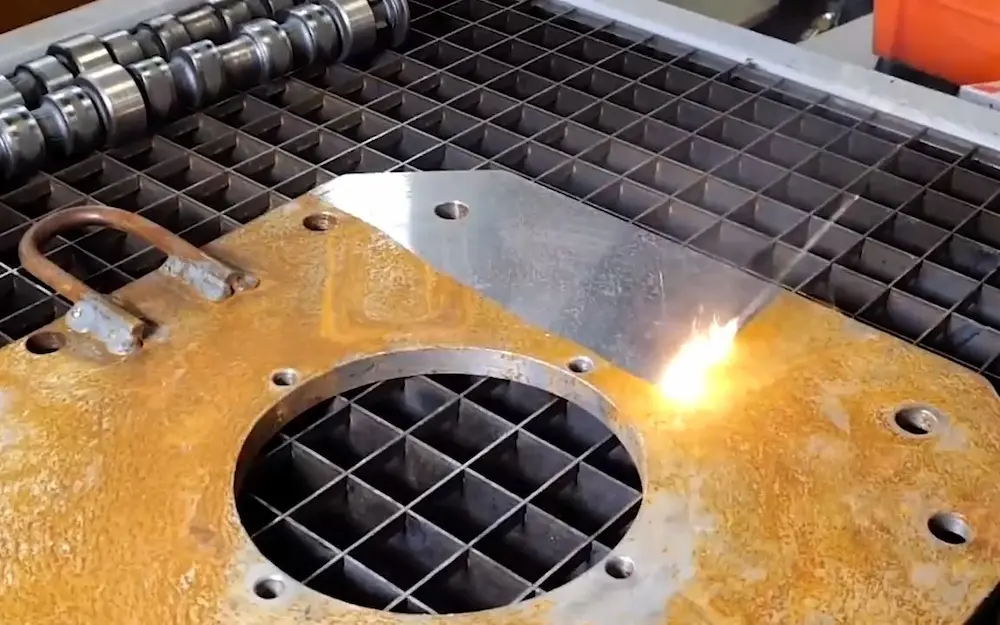
An industrial rust removal machine using laser technology removes corrosion by directing controlled laser energy onto the rust layer.
The contamination absorbs the energy and is removed while the operator controls parameters such as power, scanning speed, pulse characteristics and working distance.
There are two main categories.
Pulsed laser systems deliver energy in short bursts and are generally better suited to precision work where minimizing thermal impact on the underlying metal is important.
Typical applications include molds, tooling, automotive parts, weld seams, restoration projects and high-value components.
Continuous-wave, or CW, systems deliver energy continuously and are better suited to heavier corrosion, thick steel and larger surface areas where cleaning speed matters more than maximum surface sensitivity.
This makes a laser rust removal machine particularly attractive when rust removal is repeated regularly and the business wants to reduce dependence on grinding discs, abrasive media or chemical removers.
Laser cleaning is also a non-contact process. There is no abrasive stream physically striking the component, which can be useful for precision metal surfaces where unnecessary mechanical wear is undesirable.
For delicate applications, a rust removal laser for metal can be especially useful because the operator can target only the affected area instead of aggressively processing the entire part.
However, laser rust removal does not replace every surface-preparation process.
If the next coating requires a defined abrasive anchor profile, abrasive blasting or another profiling step may still be necessary.
Best for: molds, welds, automotive parts, machinery, precision surfaces, localized corrosion and repeated industrial maintenance.
LaserCleanerPro also lowers the entry barrier compared with many traditional industrial-laser price assumptions. Its dual-axis, multi-mode handheld laser cleaner starts at approximately $4,300, while most standalone LaserCleanerPro cleaning systems are below $15,000.
That can make laser rust removal practical not only for large factories, but also for smaller fabrication shops and maintenance businesses.
2. Abrasive Blasting — Best for Heavy Rust and Coating Preparation
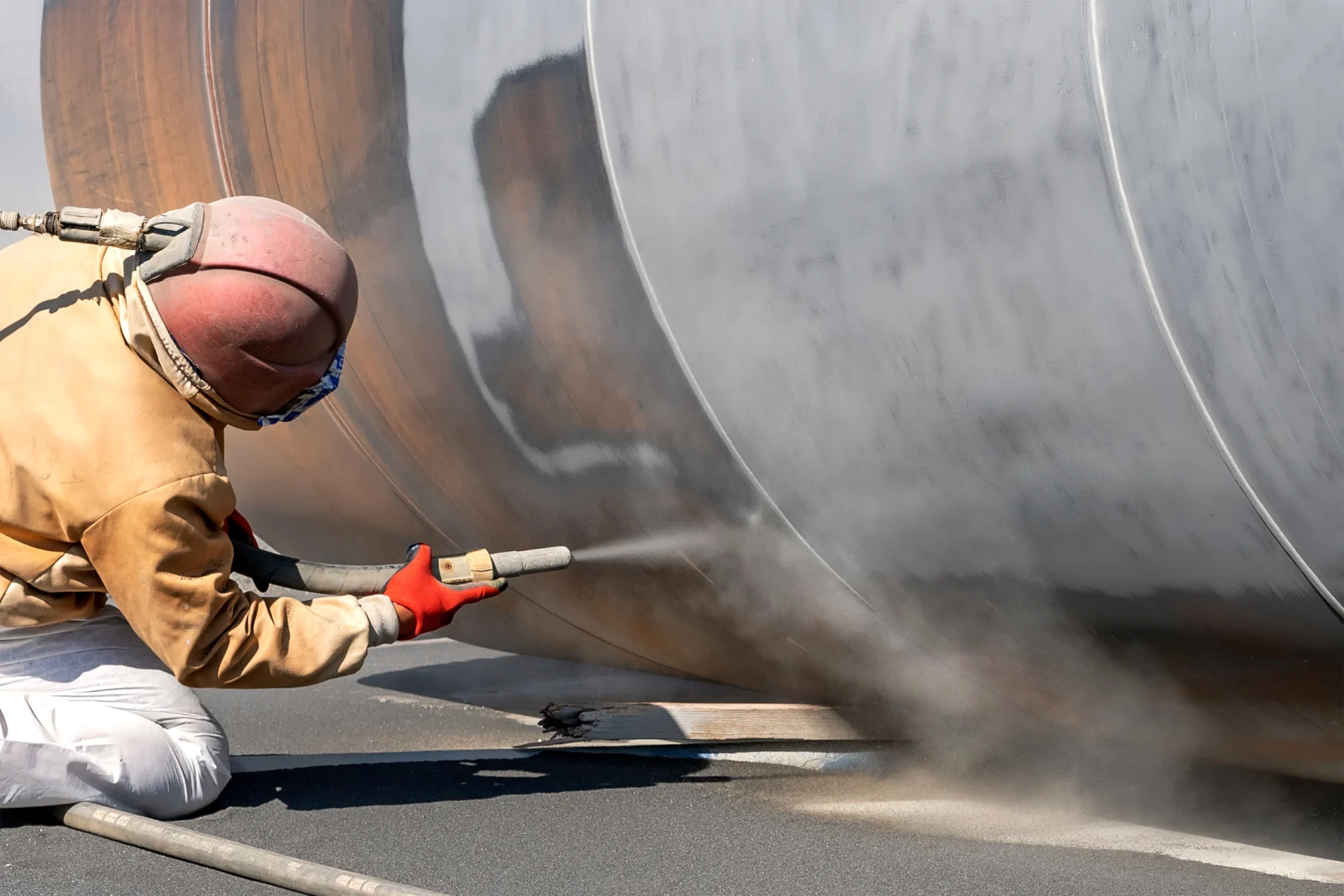
Abrasive blasting remains one of the most widely used industrial rust removal methods.
Compressed air propels abrasive media such as garnet, aluminum oxide or steel grit against the metal surface, physically breaking away rust, mill scale and old coatings.
Its biggest advantage is that it can remove heavy corrosion quickly while also creating a surface profile.
That makes it particularly useful when the metal will be painted or coated afterward.
Typical applications include structural steel, shipbuilding, storage tanks, bridges, large machinery and heavy fabrication.
The downside is everything required around the blasting process.
The operator needs abrasive media, compressed air and suitable containment. Dust and rebound media must be controlled, and the spent abrasive mixed with removed contamination eventually needs to be collected or reused where possible.
This makes blasting very effective technically but potentially expensive operationally when cleaning is repeated frequently.
Best for: heavily rusted structural steel and surfaces that require a coating profile.
3. Dry Ice Blasting — Best When You Want Less Secondary Media Waste
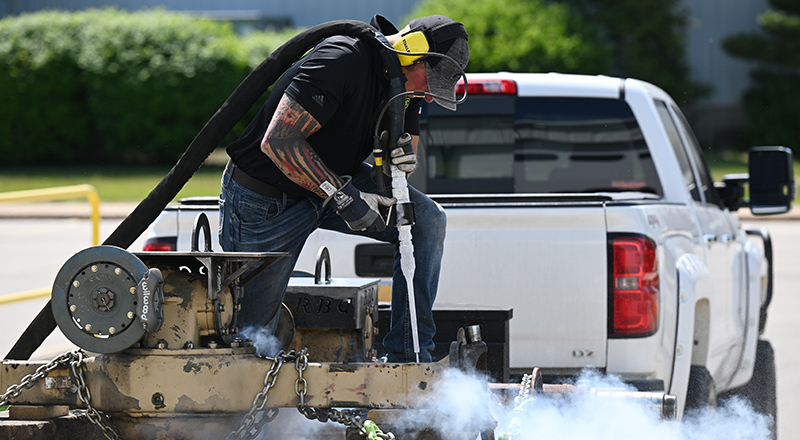
Dry ice blasting uses compressed air to accelerate solid CO₂ pellets onto the contaminated surface.
When the pellets hit the workpiece, they break away contamination and then sublime into gas.
This means there is no spent blasting medium such as sand or garnet left on the floor afterward.
The operator still needs to deal with the removed rust and contamination, but secondary media cleanup can be significantly reduced.
Dry ice blasting is therefore attractive for machinery, production equipment and applications where contamination from abrasive media would be undesirable.
The disadvantages are the recurring dry ice supply, substantial compressed-air requirements and limited ability to create a rough coating profile.
It is primarily a cleaning process rather than an aggressive surface-profiling method.
Best for: machinery and equipment where secondary abrasive waste is a concern.
4. Ultrasonic Cleaning — Best for Small Complex Parts
Ultrasonic rust removal uses cavitation inside a cleaning liquid.
High-frequency sound waves create microscopic bubbles that collapse against the surface, helping remove rust and other contamination from the immersed part.
The biggest advantage is access.
Because the entire component is submerged, the process can reach recesses, holes, threads and complex surfaces that are difficult to clean with a grinder, blasting nozzle or laser beam.
This makes ultrasonic cleaning useful for small mechanical components, precision parts, tooling, fasteners and batch cleaning.
The major limitation is equipment size.
The component must fit inside the ultrasonic tank, so this is not a realistic option for large machinery, structural steel or installed equipment.
Chemistry also remains part of the process. The tank liquid needs to be maintained, and rinsing and corrosion protection may be required afterward.
Best for: small precision parts and complex components suitable for immersion.

5. Chemical Rust Removal — Best for Internal Surfaces and Complex Geometry
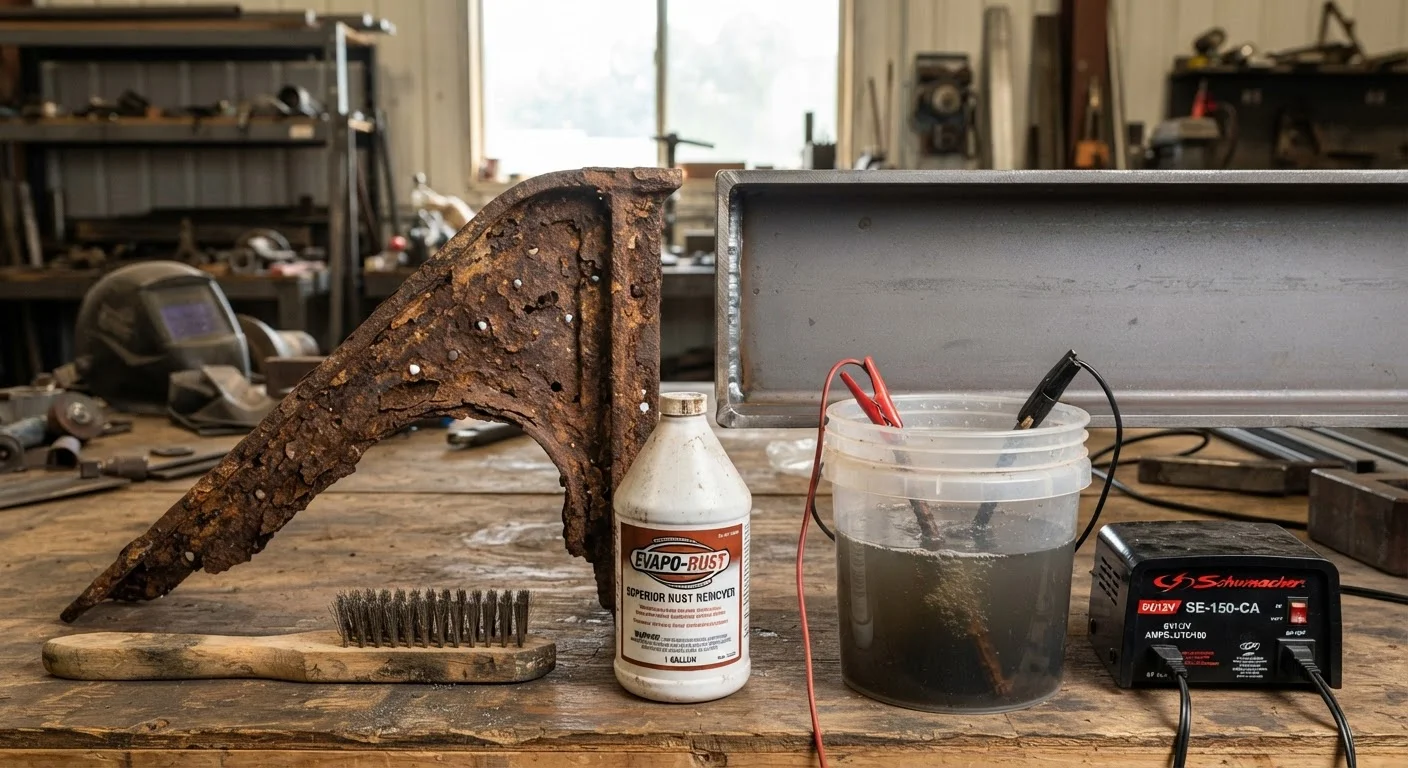
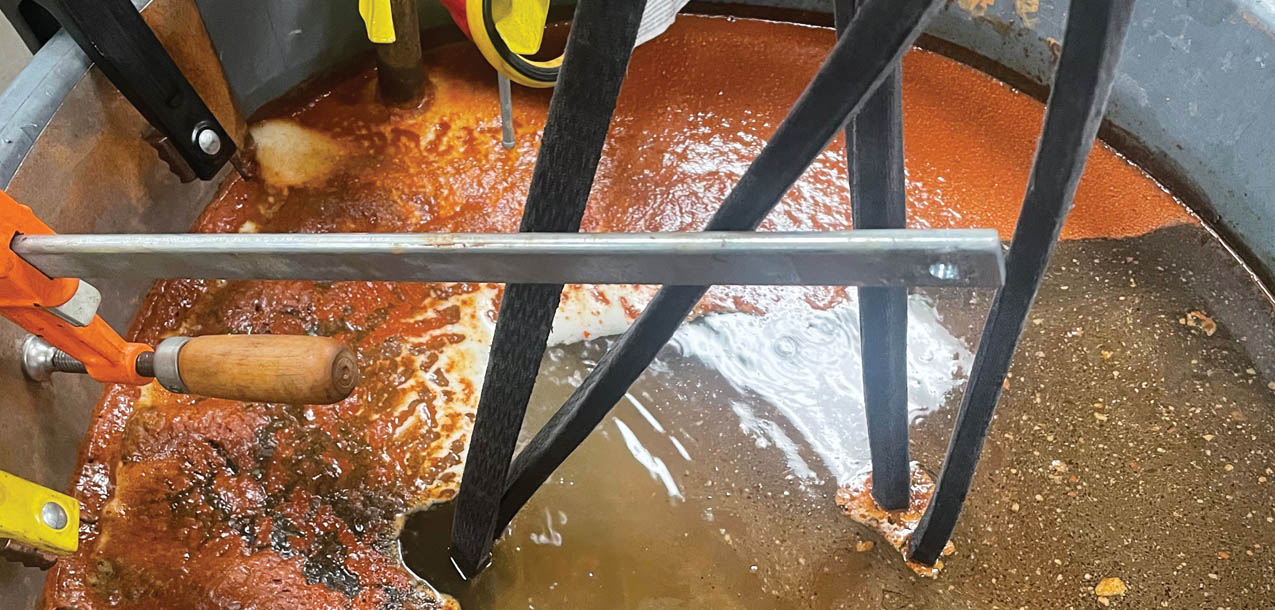
Chemical rust removal uses acids, chelating agents or other formulations to dissolve or loosen corrosion.
Its greatest advantage is that liquid can reach areas that line-of-sight processes cannot.
Threads, internal cavities, complex castings and batches of small components can often be treated more uniformly through immersion than with mechanical or optical cleaning methods.
Chemical systems can therefore be efficient in factories already operating dip tanks or treatment lines.
The disadvantages are recurring chemical purchases, dwell time, chemical handling, rinsing or neutralization requirements and waste management.
Chemical treatment may also leave the surface needing additional preparation before painting or coating.
Best for: complex geometry, internal surfaces and high-volume immersion processing.
6. High-Pressure Water Jetting — Best for Large Industrial Surfaces
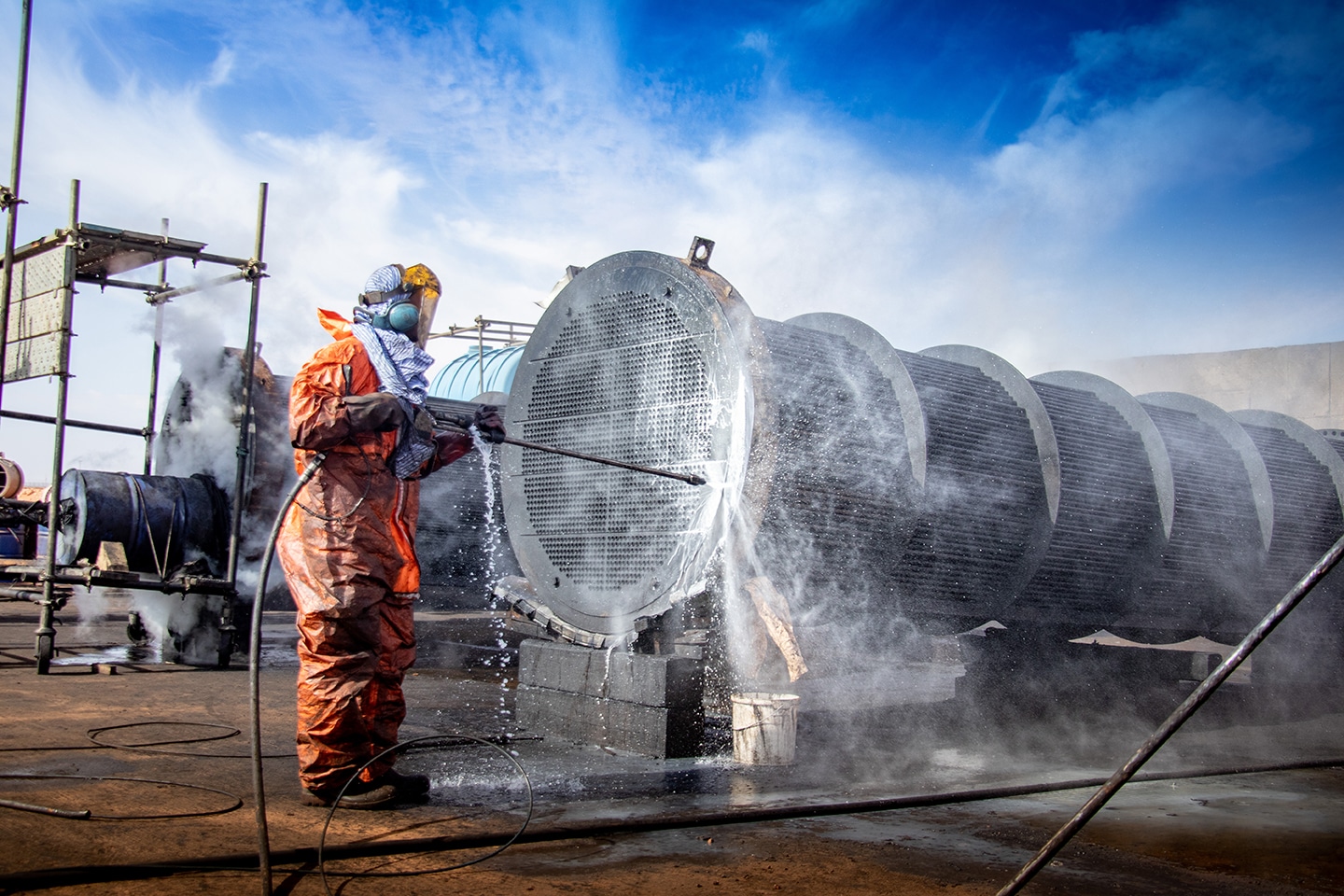
High-pressure and ultra-high-pressure water jetting remove rust, coatings and surface contamination using water rather than dry abrasive media.
This method is particularly common in shipyards, storage tanks, industrial infrastructure and large maintenance projects.
Its main advantage is the ability to process large surfaces without generating the same dry abrasive dust cloud as conventional blasting.
However, water introduces another set of challenges.
The removed contamination still needs to be collected, wastewater may need treatment, and exposed steel can develop flash rust rapidly if the next preparation stage is delayed.
Water jetting also does not always produce the same surface profile as dry abrasive blasting.
If the metal will receive a protective coating afterward, the coating specification must be checked before choosing the process.
Best for: ships, tanks, pipelines, large structures and large-area industrial cleaning.
7. Mechanical De-Rusting Tools — Best for Small Localized Jobs
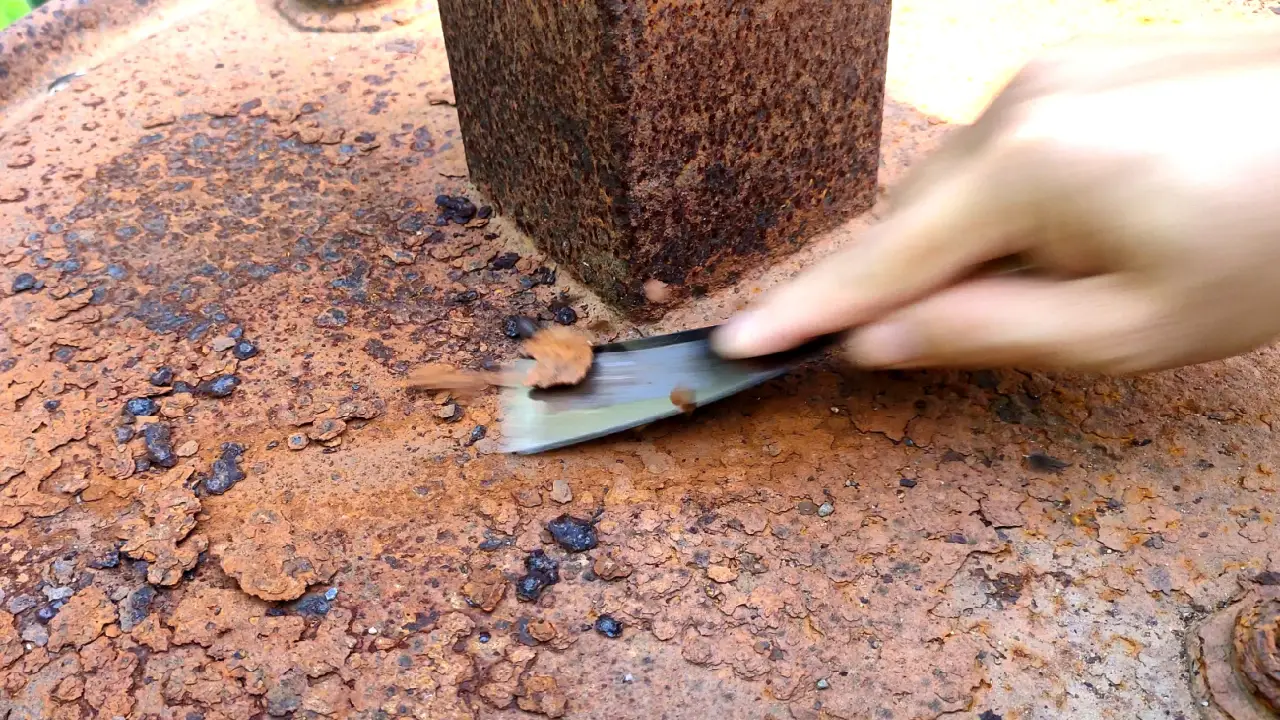
Angle grinders, wire wheels, needle scalers, flap discs and sanding tools remain essential rust removal equipment in almost every maintenance workshop.
Their greatest advantage is simplicity.
The equipment is inexpensive, familiar and ready to use immediately.
If a technician needs to remove rust from one bracket, one weld or a small section of machinery, a grinder may make more economic sense than setting up an industrial cleaning system.
Mechanical tools also work well on thick, loose scale.
The problem appears when the surface area increases.
Manual grinding across large areas requires significant labor, creates operator fatigue and can produce inconsistent results.
Aggressive grinding can also remove healthy base metal along with the corrosion.
That makes mechanical methods excellent for spot work but difficult to scale economically.
Best for: localized repairs, small surfaces and maintenance work where low equipment cost matters most.
2. How to Choose the Right Industrial Rust Removal Machine
Once the seven methods are reduced to their real strengths, the decision becomes much easier.
For heavy rust on large structural steel, compare abrasive blasting, high-power CW laser cleaning and water jetting.
Abrasive blasting usually makes sense when the next coating requires a specific surface profile. Hydroblasting becomes attractive when dust reduction matters. An industrial laser rust removal equipment configuration becomes more interesting when recurring abrasive media, containment, disposal and cleanup are already major operating expenses.
For precision parts, molds and high-value surfaces, pulsed laser rust removal deserves stronger consideration.
Grinding can remove unnecessary metal and abrasive blasting can alter surface texture. Laser allows the operator to concentrate the process on the rust itself.
For very heavy rust and larger steel components, a laser rust removal machine for heavy rust using higher-power CW technology may provide much better throughput than a low-power precision pulsed machine.
For internal cavities and complicated geometry, chemical or ultrasonic processes often have an advantage because liquid can reach areas that a laser beam, blast stream or grinder cannot.
For small maintenance jobs, mechanical tools remain difficult to beat on purchase price.
The correct buying sequence should be:
Define the rust severity → identify the substrate → determine the required finish → calculate the daily workload → compare total process cost.
Do Not Choose Only by Cleaning Speed
A machine that cleans 30 m²/h is not automatically better than one that cleans 5 m²/h.
If the faster process damages the surface or creates additional preparation afterward, the real productivity advantage may disappear.
Likewise, a precision system may look slow on paper but still be the better option when cleaning high-value components where avoiding damage is more important than maximum area per hour.
You should evaluate the complete workflow:
Setup → Rust Removal → Cleanup → Surface Ready for Next Process
That is much more useful than comparing only the active cleaning speed.
Compare Total Cost, Not Just Machine Price
Purchase price is only part of the rust removal cost.
Abrasive blasting requires media, compressed air, containment and cleanup.
Chemical cleaning requires new chemical product, rinsing and waste management.
Dry ice blasting requires a continuous dry ice supply and significant compressed air.
Mechanical removal can consume large amounts of labor and grinding consumables.
Laser systems require electricity, extraction, protective optics and maintenance, but avoid the need to continuously buy blasting media or chemical stripper.
This is where a handheld laser rust removal machine can become particularly attractive for repeated cleaning.
The equipment investment may be higher than purchasing several grinders, but the comparison changes once hundreds of labor hours and recurring consumables are included.
The right metric is:
Total cost per acceptable finished surface
not:
Which machine has the lowest purchase price?
3. Test the Actual Rust Before You Buy
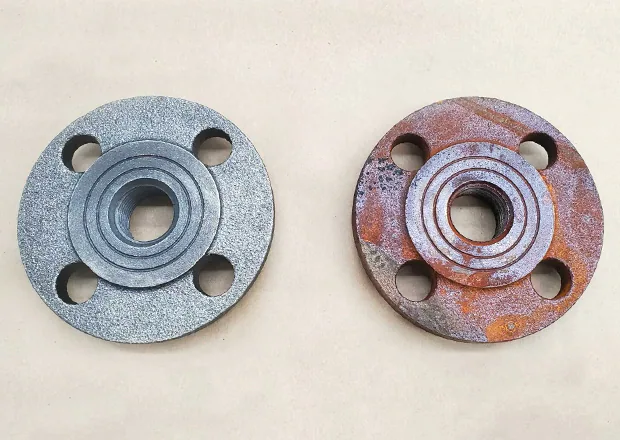
Industrial rust varies dramatically.
Light atmospheric corrosion on stainless components is not the same cleaning problem as thick scale on structural steel.
Before purchasing equipment, send suppliers a representative sample or real workpiece whenever possible.
The test should match your actual:
Substrate, rust severity, coating condition, geometry, surface area and required finish.
Then evaluate the result.
Did the process remove the rust completely?
How many passes were needed?
Was healthy metal affected?
How long did the complete cleaning cycle take?
Does the surface meet the requirements for the next process?
What cleanup remains?
This is particularly important when comparing pulsed and CW laser systems.
Do not simply ask:
“What wattage do I need?”
Ask:
“Which configuration can remove this rust at the required speed without unnecessarily changing the substrate?”
A responsible supplier should be able to explain the recommendation.
For LaserCleanerPro, this may mean a lower-power pulsed system for precision rust removal, the $4,300 dual-axis handheld configuration for flexible workshop work, or a higher-power CW system where heavy corrosion and throughput are the main priorities.
Conclusion
There is no universal best industrial rust removal machine.
The correct choice depends on rust severity, substrate, surface area, required finish, production volume and total operating cost.
Abrasive blasting remains one of the strongest choices for heavily rusted structural steel and coating preparation. Mechanical tools remain practical for small maintenance jobs. Chemical and ultrasonic systems are particularly useful for complex geometry and immersion cleaning, while water jetting works well on large industrial structures.
Laser rust removal becomes especially attractive when the business needs controlled, repeatable rust removal without continuously purchasing abrasive media or chemical stripper.
Pulsed systems are generally better suited to precision surfaces and sensitive components, while higher-power CW systems are more appropriate when heavy rust and productivity are the priority.
For smaller workshops, a handheld system can also make the economics much easier to justify. LaserCleanerPro's dual-axis multi-mode handheld laser cleaner starts at approximately $4,300, while most standalone LaserCleanerPro systems remain below $15,000.
But the final decision should still begin with the workpiece.
Choose the rust removal process that produces the surface you need at the lowest total cost—not simply the machine with the highest power, fastest advertised speed or lowest purchase price.
Send LaserCleanerPro photos or samples showing your rust condition, together with the substrate, rust severity, cleaning area and expected workload. The engineering team can arrange a rust removal test and recommend a pulsed or CW laser configuration based on the cleaning result and throughput your application actually requires.