Laser Cleaning vs Sandblasting — Cost, Speed & Results Compared
An honest comparison, not a sales pitch. Laser cleaning beats sandblasting on consumables, waste and substrate control — but sandblasting still wins on some very large, heavy-rust jobs. Here is the side-by-side, and how to choose the right method for your work.
Neither method wins every job
Laser cleaning is what we make, but pretending sandblasting has no place would not help you decide. Both have real strengths. The right answer depends on your surface, your volume and what happens to the part next — so we have laid out the trade-offs honestly below.
Laser cleaning vs sandblasting, dimension by dimension
Where one method clearly leads, it is marked. Where it genuinely depends on the job, we say so.
| Dimension | Laser cleaning | Sandblasting |
|---|---|---|
| Consumables / media | None — no grit or media | Abrasive media every job |
| Waste & disposal | Minimal dust, easy extraction | Spent grit + dust to collect |
| Substrate impact | Low, energy-controlled | Abrasive; can erode thin metal |
| Setup & containment | Portable, minimal masking | Booth / containment often needed |
| Speed | Strong on detail & repeat work | Strong on very large open areas — depends on the job |
| Running cost | Electricity + maintenance | Media + labour + cleanup |
| Upfront cost | Higher (capital machine) | Lower entry cost |
| Portability | Fiber-delivered, mobile | Equipment + media logistics |
| Precision & selectivity | High — layer & area control | Broad, abrasive |
| Surface profile / anchor | Different finish — confirm to coating spec | Creates an anchor profile some coatings want |
Speed and finish depend on material, rust thickness, coating type, power and setup. Laser cleaning impact is low and controlled, though the result varies by surface — we confirm it on a sample rather than promising the same outcome everywhere.
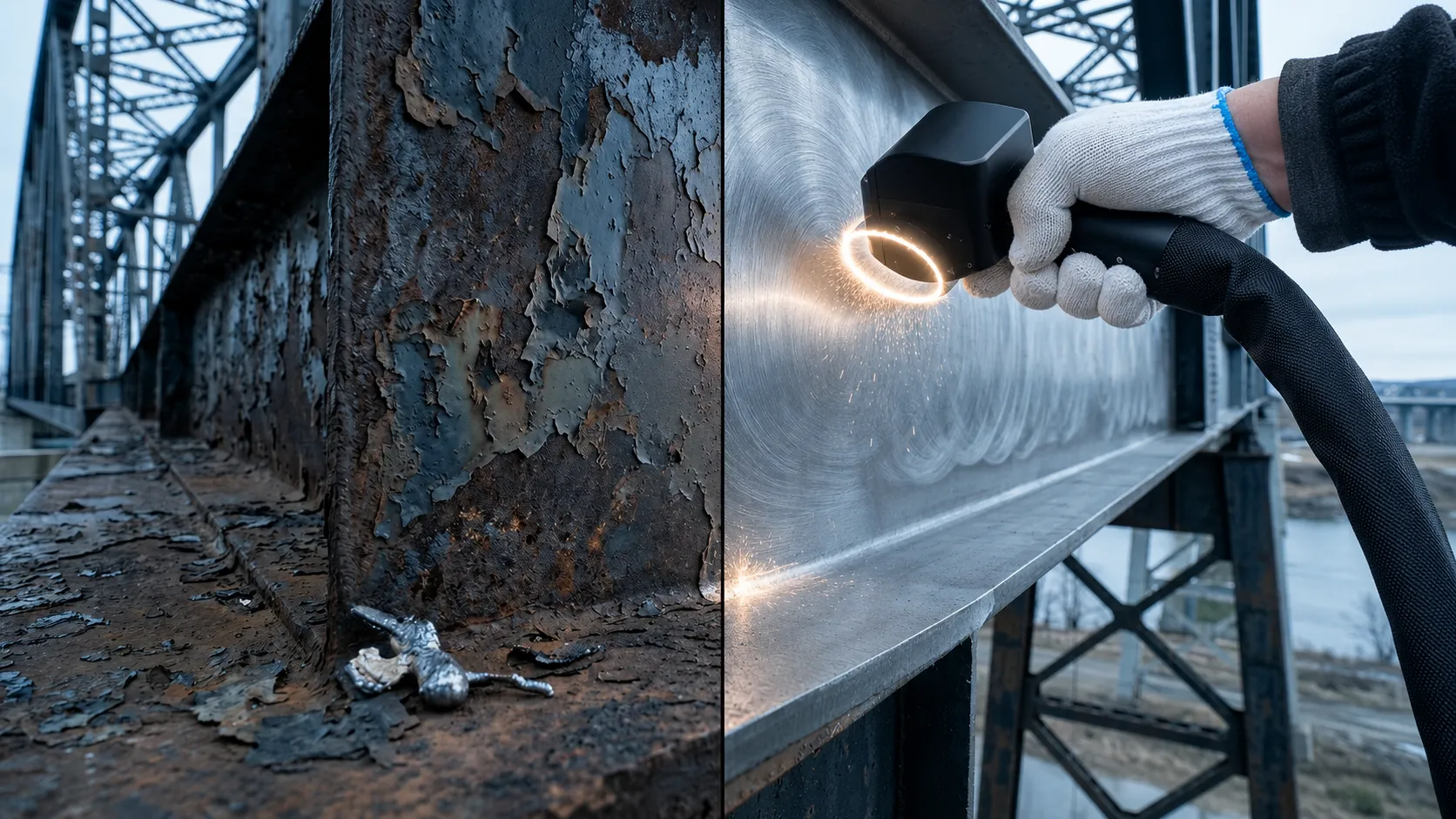
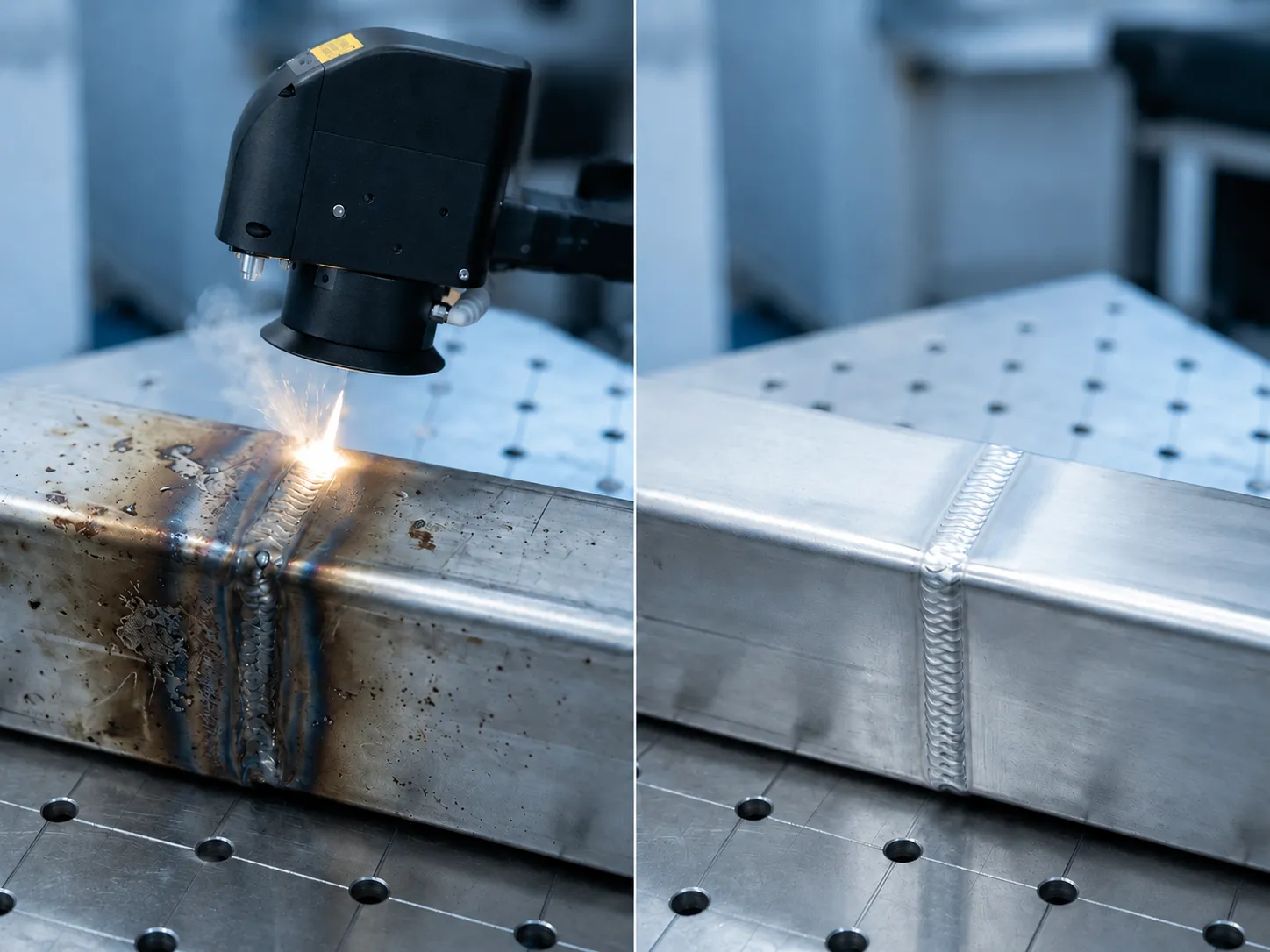
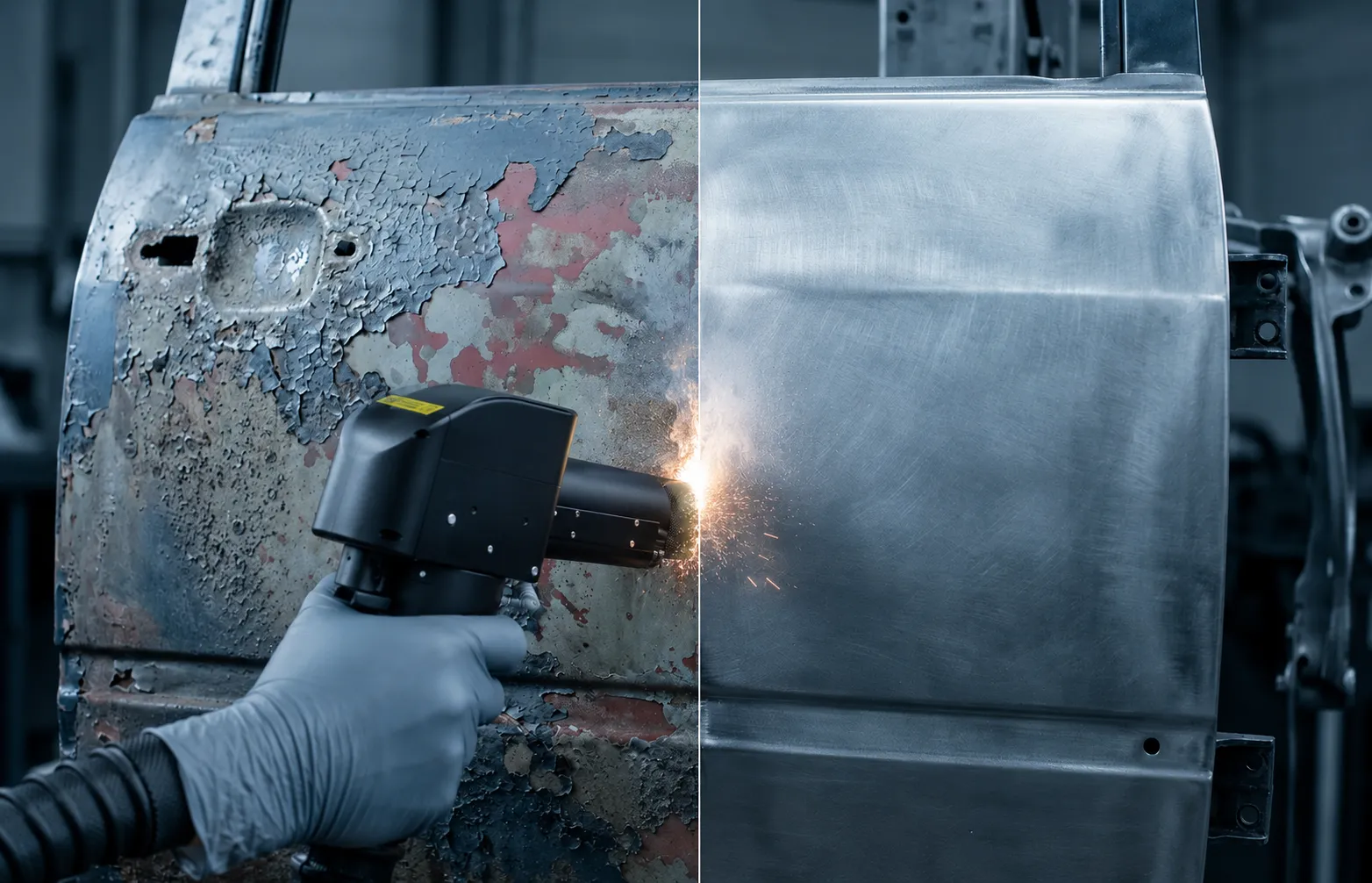
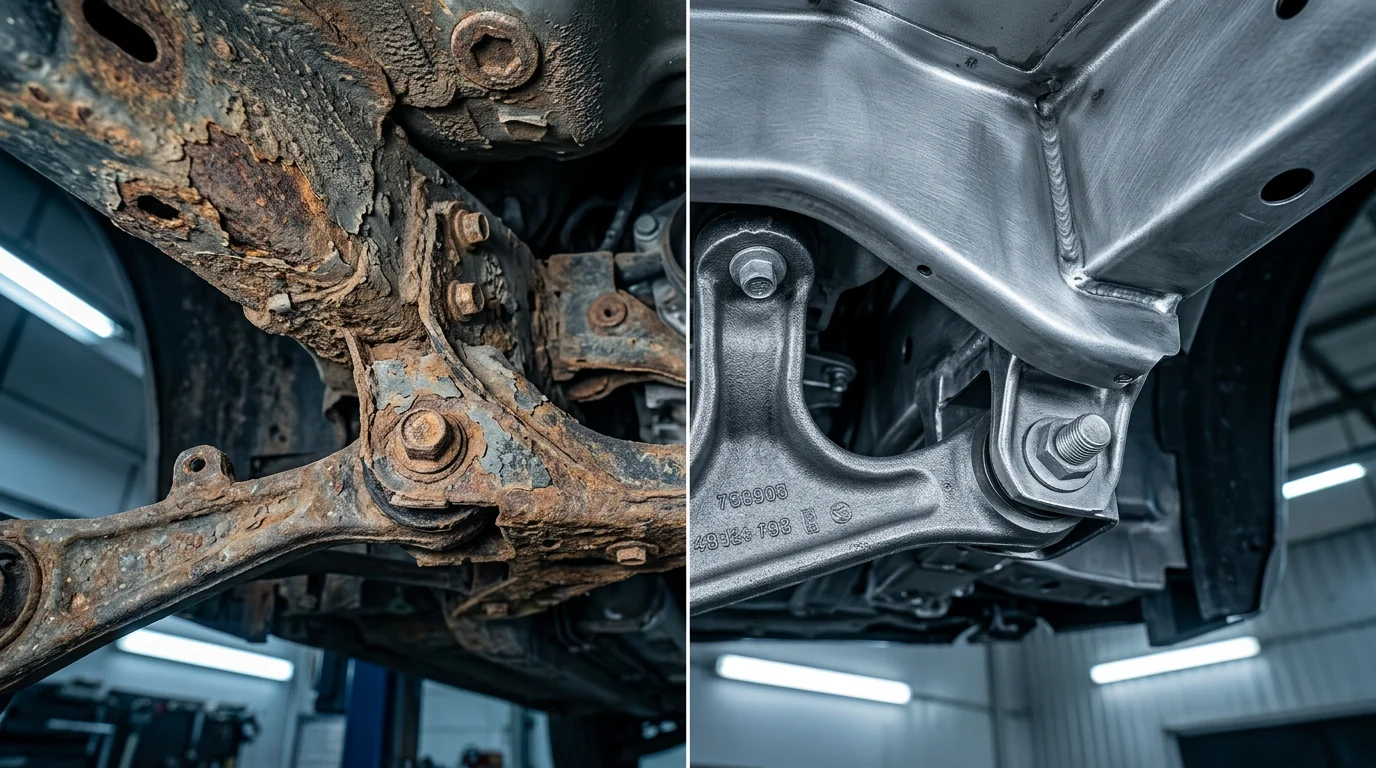
Pick the tool that fits the job
Laser cleaning wins when…
- Precision matters — thin metal, detailed or sensitive parts
- You want no grit, media or chemical waste stream
- Work is indoors, repeated, or on a production line
- Selective, layer-by-layer removal is needed
- Access is awkward and portability helps
Sandblasting is still the call when…
- Very large, first-time heavy rust over huge open areas
- Lowest possible media unit cost is the priority
- A specific anchor profile / roughness is required for the coating
- Upfront budget rules out a capital machine
- Containment and dust are already manageable on site
A simple way to decide
Lean laser if…
- You clean repeatedly and recurring media cost adds up
- The substrate is thin, precise or easily damaged
- Waste handling, dust or compliance is a headache
- You want to offer cleaning as a mobile service
Sandblasting may be enough if…
- It is a one-off, very large heavy-rust job
- You need a specific blast anchor profile
- Upfront cost is the hard constraint
- Containment is already set up and not an issue
Not sure which side you fall on? Send a sample and we will report a measured laser cleaning rate so you can compare like-for-like.
Pulsed vs continuous-wave laser cleaning
Choosing laser is the first decision; the second is pulsed or continuous-wave. They suit different work.
Pulsed
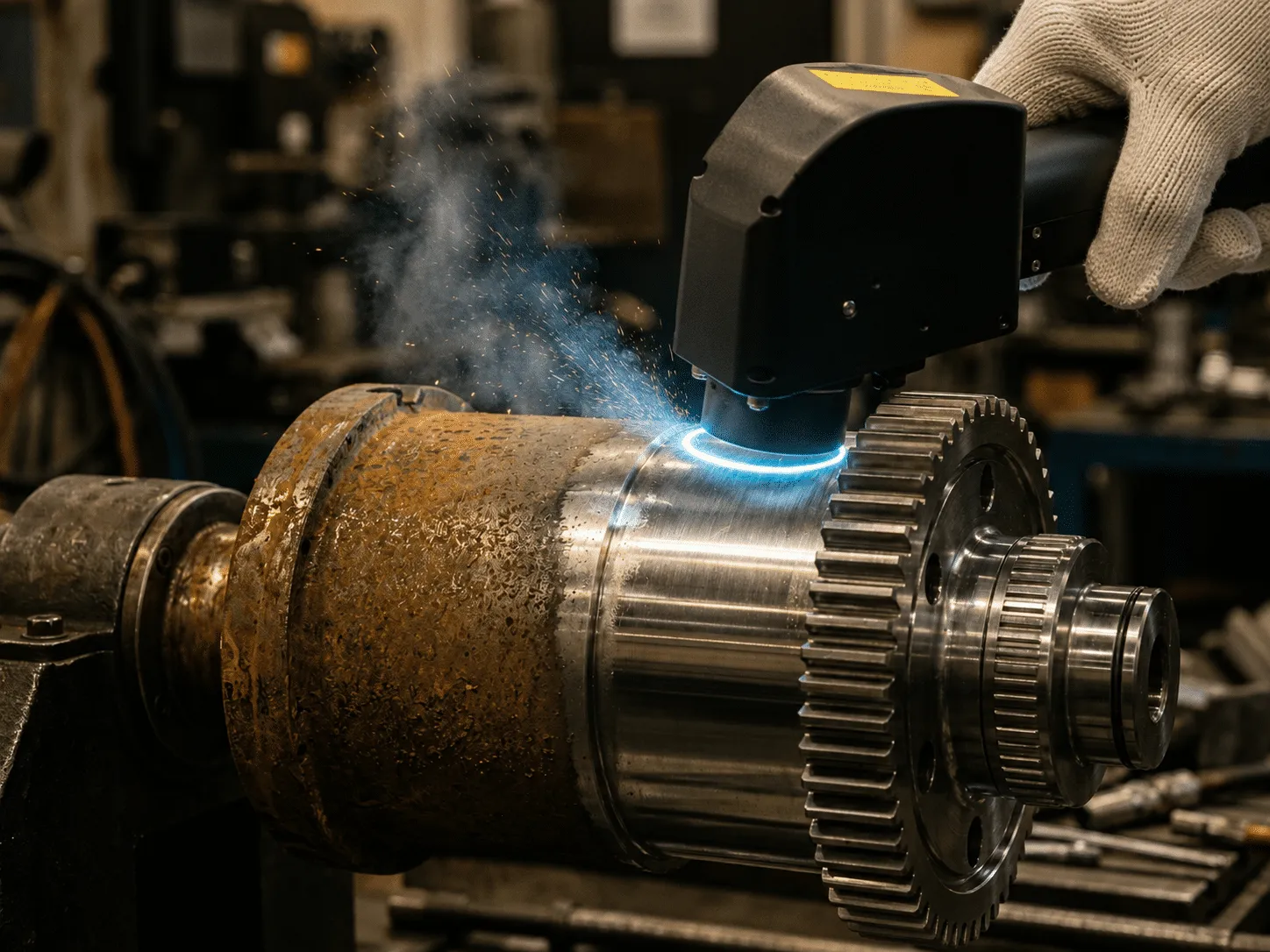
Short, controlled pulses with lower heat build-up — best for precision, thin substrates, molds, automotive and selective coating removal.
View Pulsed SeriesContinuous-wave
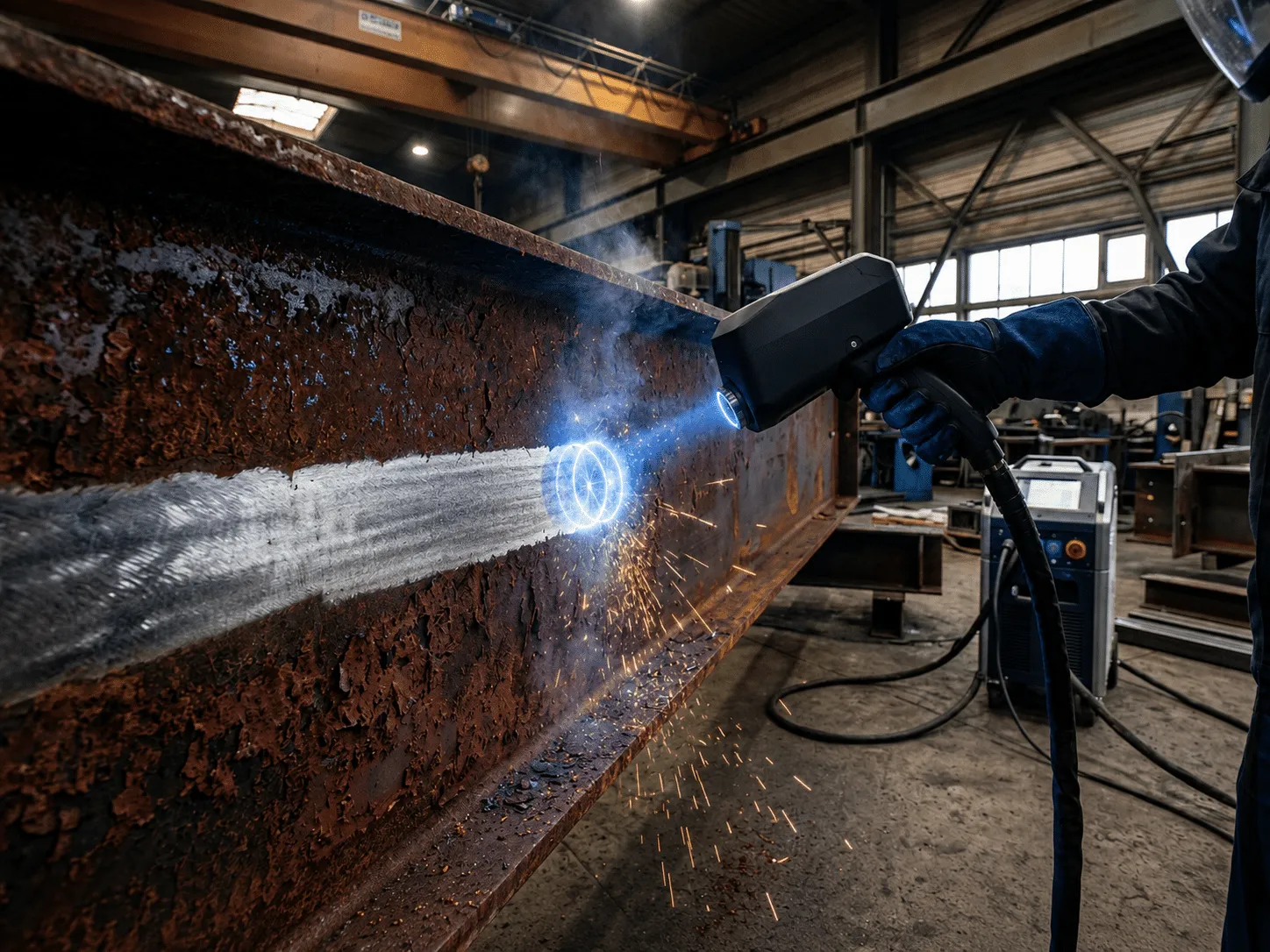
A steady, high-average-power beam for throughput — best for heavy rust, thick coatings and large structural surfaces at volume.
View High-Power SeriesCompare the real cost, not just the day-one price
Sandblasting usually wins on upfront cost; laser usually wins on running cost once recurring media and labour are counted. For high-volume work, the crossover can come quickly — model it with your own numbers.
The comparison, in depth
The table above summarises it; here is the reasoning behind each dimension so you can judge it for your own work.
Consumables & waste
Laser uses no grit, media or solvents, so there is nothing to buy in or dispose of beyond captured dust. Sandblasting consumes abrasive every job and leaves spent grit; chemical methods leave hazardous liquid. Over many jobs this is where laser’s running-cost advantage builds.
Substrate impact
Laser energy is tuned to the contaminant and is non-abrasive, so impact on the base material is low and controlled. Blasting is abrasive and can erode thin metal or profile the surface; this is a real advantage for blasting where a profile is wanted, and a disadvantage where it is not.
Speed
Neither wins outright. Sandblasting can be fast across very large open heavy-rust areas. Laser is strong on detailed, repeated and selective work with little setup. Actual speed depends on material, thickness, power and scan width.
Setup, containment & site use
Laser is portable and largely dry, with minimal masking, which suits indoor, public and access-limited work. Blasting usually needs containment, media handling and often a booth or road closure.
Upfront vs running cost
Blasting typically has the lower upfront cost; laser typically has the lower running cost once recurring media and labour are counted. For high-volume work the crossover can come quickly.
When sandblasting is still the better call
We make laser cleaners, but pretending blasting has no place would not help you decide. It is genuinely the better choice in these cases.
- One-off, very large heavy-rust jobs over huge open areas
- When the lowest possible media unit cost is the priority
- When a specific blast anchor profile is required for the coating
- When upfront budget rules out a capital machine
- When containment and dust are already managed on site
Using both together
Many operations are not choosing one method forever. A common pattern is to blast very large, heavy first-pass areas and use laser for detail, finishing, indoor work, or anywhere dust and substrate damage are a concern. The two are not mutually exclusive — the right mix depends on your job types, and we are happy to say where laser does and does not fit yours.
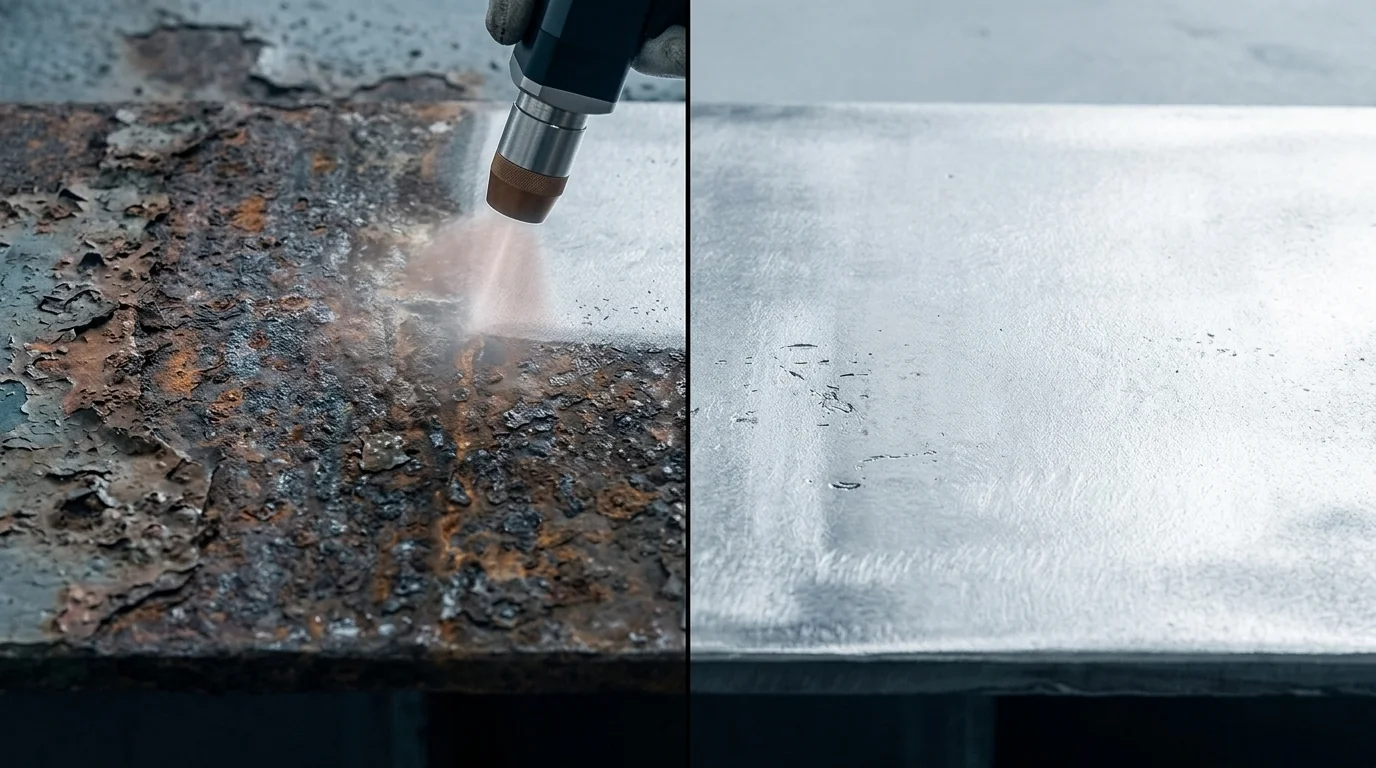
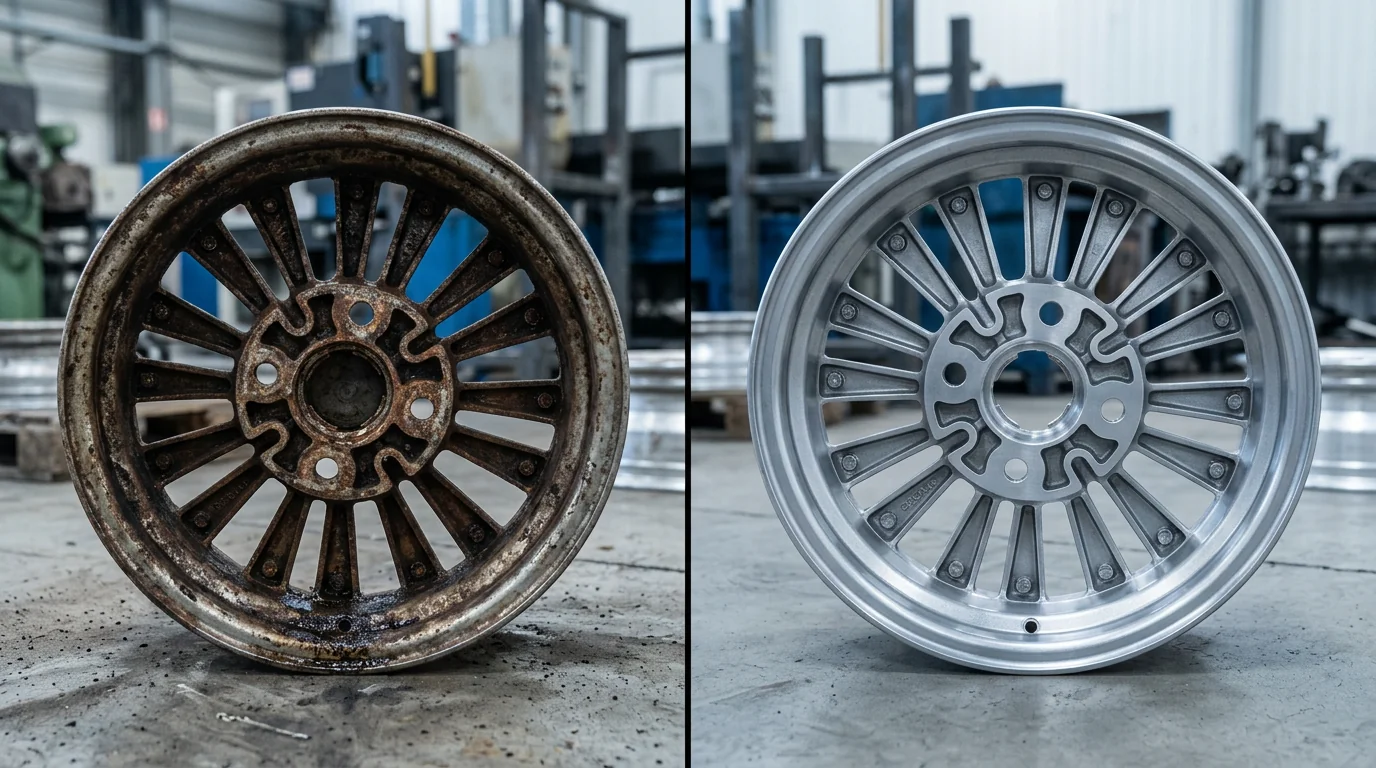
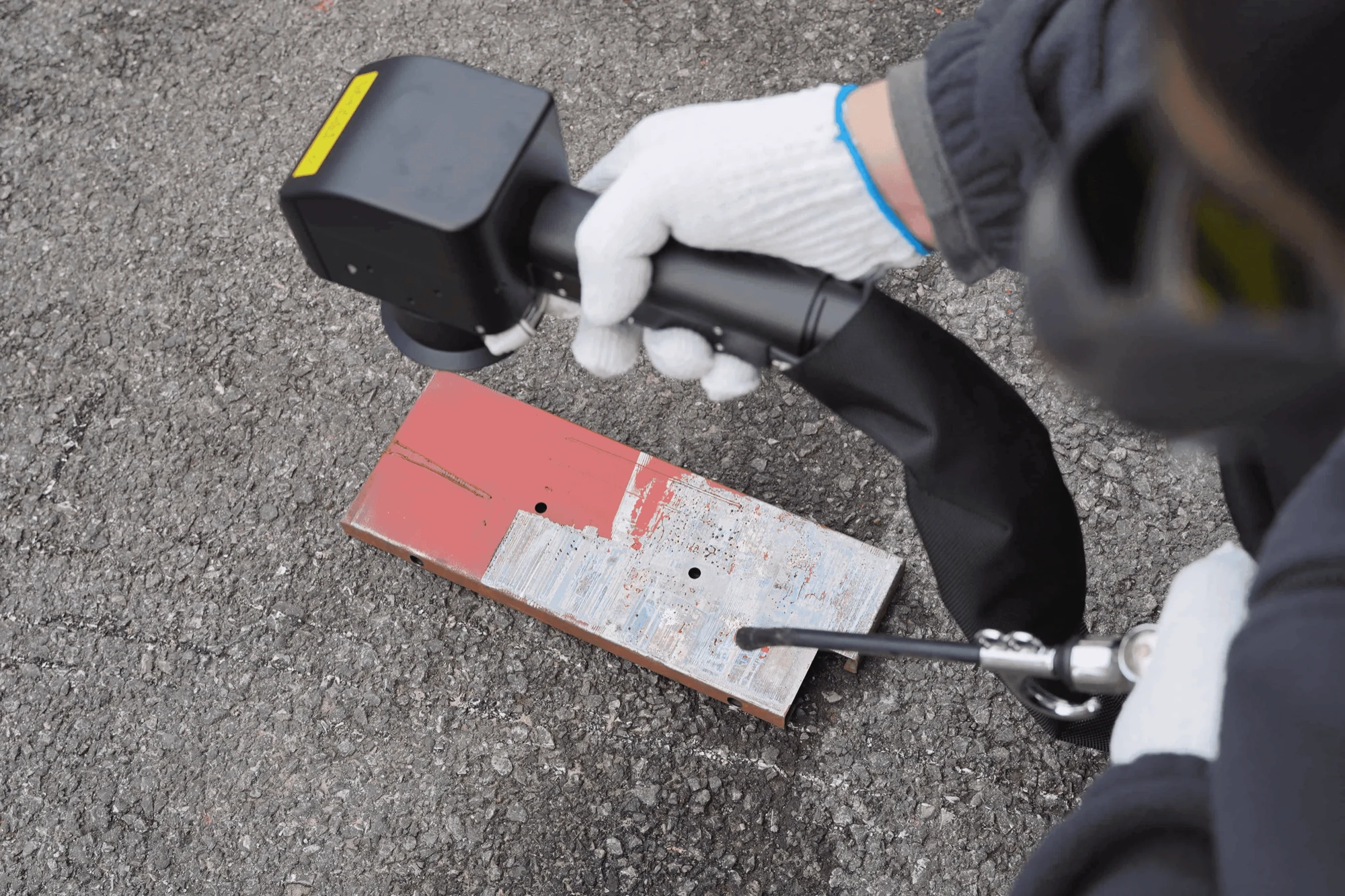
Laser vs sandblasting, answered straight
Compare it on your material — request a quote
Tell us your material, contaminant and volume. We will report a measured laser cleaning rate, recommend pulsed or CW, and send pricing — so you can compare against blasting honestly.
- [email protected]
- +86 153 2715 5363
- Mon–Sat 9:00–18:00 (GMT+8)