Orange rust spots on a chrome faucet, car trim, bicycle, or motorcycle part can look serious, but they do not always mean the component is beyond repair.
If the chrome plating is still smooth and firmly attached, light surface rust can often be removed with aluminum foil, baking soda, white vinegar, WD-40, or a chrome-safe polish. The more serious problem begins when corrosion spreads beneath the plating through scratches, chips, seams, or damaged edges.
The safest way to remove rust from chrome is to inspect the plating first and begin with the least aggressive cleaning method.
For a single household fixture or a few automotive parts, manual cleaning is usually the most practical solution. When workshops or manufacturers need to process large batches, complex shapes, or repeated corrosion, professional laser cleaning may also be worth evaluating.
Check the Chrome Before Removing Rust
Chrome plating is usually applied over steel or another base metal. The orange discoloration you see may come from exposed steel beneath a damaged coating or from iron contamination sitting on the surface.
Inspect the affected area under bright light and gently run a fingernail across it.
What You See | Likely Condition | Recommended Action |
|---|---|---|
Small orange spots on a smooth surface | Light surface rust or iron contamination | Start with wet aluminum foil |
Dull areas with slight roughness | Moderate surface oxidation | Try baking soda, brief vinegar treatment, or chrome polish |
Repeated corrosion on many similar parts | Batch-cleaning or maintenance problem | Consider a controlled laser cleaning test |
Deep pits, bubbles, peeling, or missing chrome | Corrosion beneath failed plating | Replating, replacement, or professional repair |
If the rusted area still feels smooth, it is usually safe to begin with a mild household method.
If you can feel a clear depression, the base metal may already be pitted. Cleaning may improve the appearance, but it cannot rebuild missing chrome.
Stop polishing if the coating is bubbling, lifting, or flaking. Continuing to scrub can remove more of the damaged plating without solving the corrosion underneath.
Before treating the rust, wash the area with warm water and a pH-neutral soap. Grease, soap residue, road salt, brake dust, and loose dirt can prevent the cleaner from reaching the rust and may scratch the surface during rubbing.
Dry the part with a clean microfiber cloth. Also confirm that the finish is genuine chrome. Black chrome, colored chrome, PVD coatings, and chrome-effect plastic trim may react differently to acids and mild abrasives.
When the finish type is uncertain, test your chosen rust remove method on a hidden area first.
Best Ways to Remove Rust From Chrome
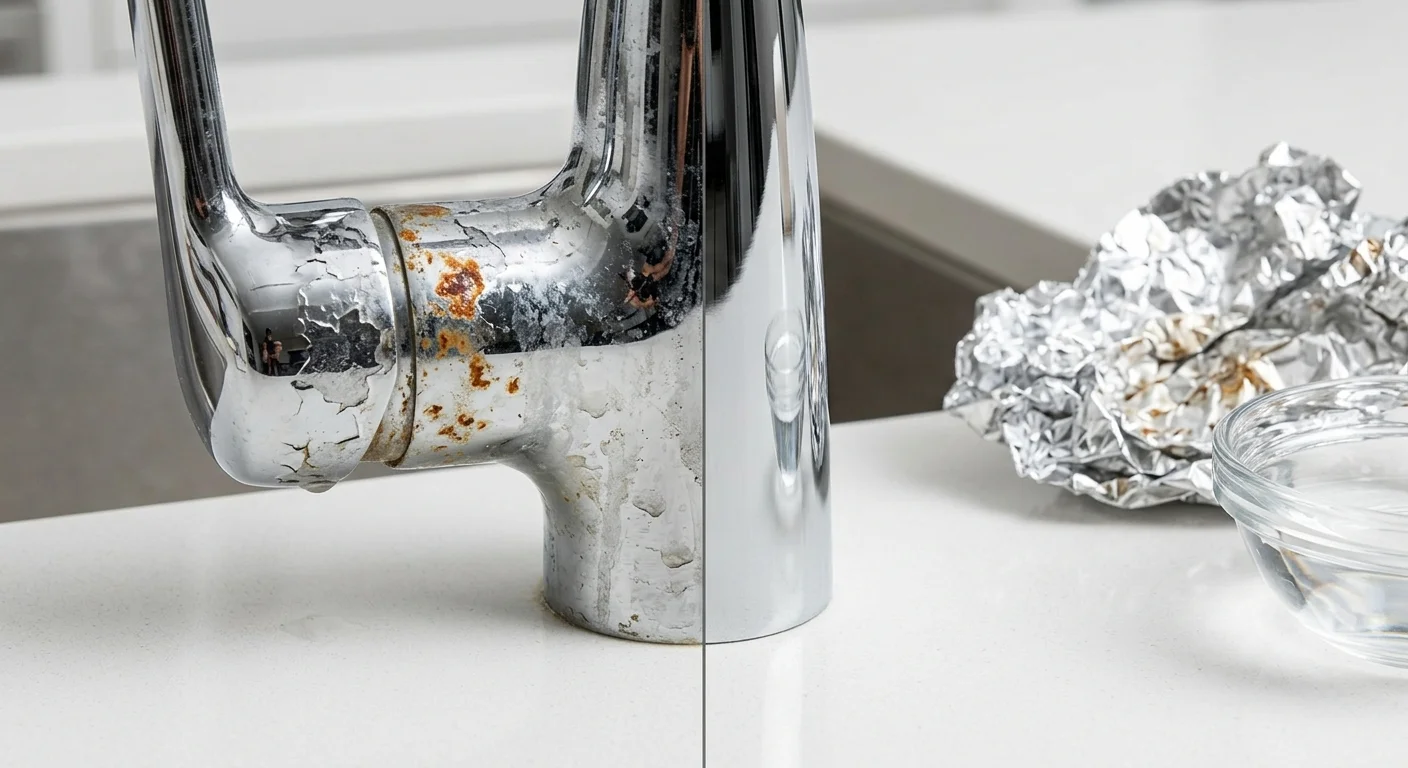
The safest way to remove rust from chrome is to begin with a gentle household method and only increase the cleaning strength when necessary.
Aluminum Foil and Water
Wet aluminum foil is usually the best starting point for light rust on intact chrome.
Aluminum is softer than chrome, while water provides lubrication. Together, they can lift light oxidation without requiring a strong chemical cleaner.
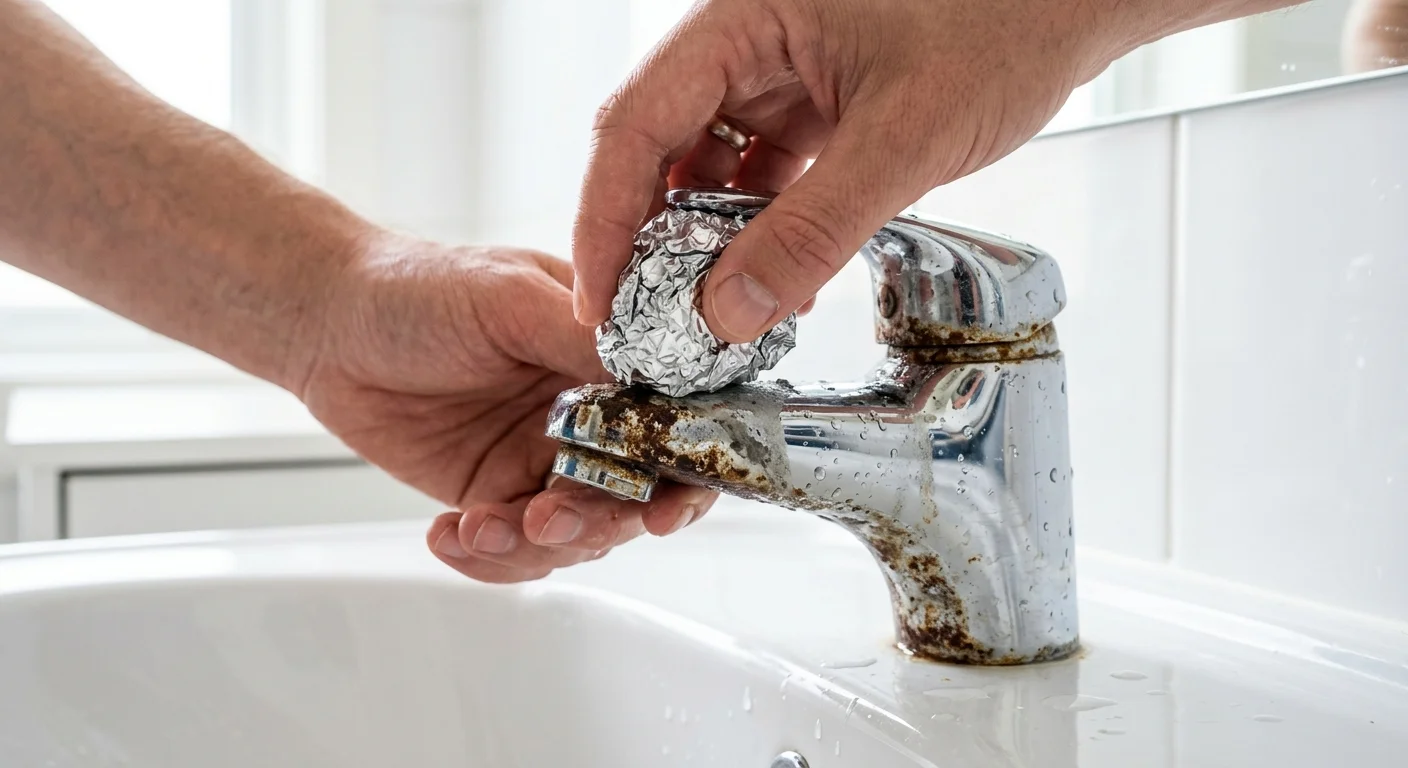
Crumple a small piece of aluminum foil into a loose ball and wet it thoroughly. Rub the rusted area gently using small circular movements. Keep both the foil and chrome wet throughout the process.
After one or two minutes, wipe the surface with a damp microfiber cloth and inspect it. Repeat only if the rust is clearly improving.
Once the spots are gone, rinse the surface and dry it completely.
Never rub dry aluminum foil against chrome. Dry friction increases the risk of fine scratches, particularly on thin decorative plating.
If the rust does not improve after two or three gentle attempts, do not press harder. Move to a different method.
Baking Soda Paste
Baking soda is useful around faucet bases, screws, seams, joints, and other areas that foil cannot easily reach.
Mix approximately three parts baking soda with one part water to create a soft paste. Apply it to the rust and leave it for about five minutes.
Work the paste gently with a soft toothbrush or microfiber cloth. Rinse the area thoroughly and dry any seams or recesses.
Baking soda is relatively mild, but it is still slightly abrasive. Do not combine it with a rough scouring pad, wire brush, or steel wool on thin chrome plating.
White Vinegar
White vinegar can help dissolve more persistent surface oxidation when foil and baking soda are not enough.
Dampen a cloth with vinegar and place it over the rusted area for five to ten minutes. Check the surface regularly and do not allow the cloth to dry.
Remove it, wipe the area gently, and rinse immediately with clean water. Dry the chrome with a microfiber towel.
A second short treatment is safer than one long soak.
Do not leave chrome in vinegar for several hours or overnight. Prolonged acid exposure can dull thin plating and damage nearby paint, seals, or decorative finishes.
Avoid vinegar on black chrome, colored chrome, PVD coatings, or finishes whose composition is unknown.
WD-40 or Chrome Polish
For automotive trim, motorcycle parts, bumpers, or older heavy chrome, WD-40 or a dedicated chrome polish may be more appropriate.
Clean and dry the surface first. Apply a small amount of WD-40 and allow it to sit for three to five minutes. Wipe the area with a microfiber cloth and inspect the result.
If discoloration remains, apply a chrome-safe polish according to the manufacturer’s instructions. Work on a small section at a time and remove all residue afterward.
Avoid aggressive rubbing. Bathroom fixtures, plastic chrome trim, thin decorative plating, and peeling surfaces are much easier to damage than thick automotive chrome.
Which Method Should You Use?
The best method depends on the type of component, the condition of the plating, and the severity of the rust.
For bathroom chrome, begin with mild soap and wet aluminum foil. Baking soda can help around faucet bases and seams. Vinegar should only be used briefly and rinsed away immediately.
Bathroom fixtures often have thin decorative plating, so avoid steel wool, sandpaper, abrasive sponges, and strong acidic descalers unless they are specifically approved for chrome.
After cleaning, dry the fixture carefully. Standing water around joints, screws, and leaking seals is one of the most common reasons bathroom chrome rusts again.
Automotive and motorcycle chrome is exposed to road salt, grease, mud, and brake dust, making pre-cleaning especially important. Light oxidation may respond to wet aluminum foil, while more persistent spots can be treated with WD-40 or chrome polish.
Motorcycle exhausts and engine-area components must be completely cool before cleaning. High-temperature areas also require cleaners and protective products designed specifically for heated metal.
Regardless of the application, avoid increasing pressure when the rust does not disappear. If several mild treatments make little difference, the corrosion may be beneath the chrome rather than on top of it.
You should also avoid coarse steel wool, wire brushes, sandpaper, chlorine bleach, aggressive scouring pads, and strong industrial acids unless the product is specifically approved for the finish.
Never mix bleach with vinegar or another acidic cleaner, because the combination can release dangerous gases.
When Manual Rust Removal Is Not Enough
For one faucet, one bumper spot, or a handful of parts, manual cleaning is normally the simplest and least expensive solution.
The calculation changes in a restoration shop, maintenance department, or manufacturing operation. A business must consider not only whether the rust can be removed, but also how much labor each part requires, whether results remain consistent across a batch, and how much cleanup the process creates.
Manual polishing becomes less practical when rust is located inside grooves, threads, joints, narrow edges, or complex geometries. Repeated sanding or wiping can also produce inconsistent results when different operators apply different amounts of pressure.
Chemical soaking can process several parts at once, but it may require rinsing, drying, wastewater handling, and protection of areas that do not need cleaning. It is also difficult to use when only one localized section of a component should be treated.
When labor time, batch consistency, chemical handling, or access to complex areas becomes the main problem, a cleaning laser may be worth evaluating as a more controlled and repeatable alternative.
This does not mean a laser cleaner is the right tool for a household faucet or a single rust spot. Its value becomes more apparent when the same cleaning task must be repeated efficiently and consistently across many parts.
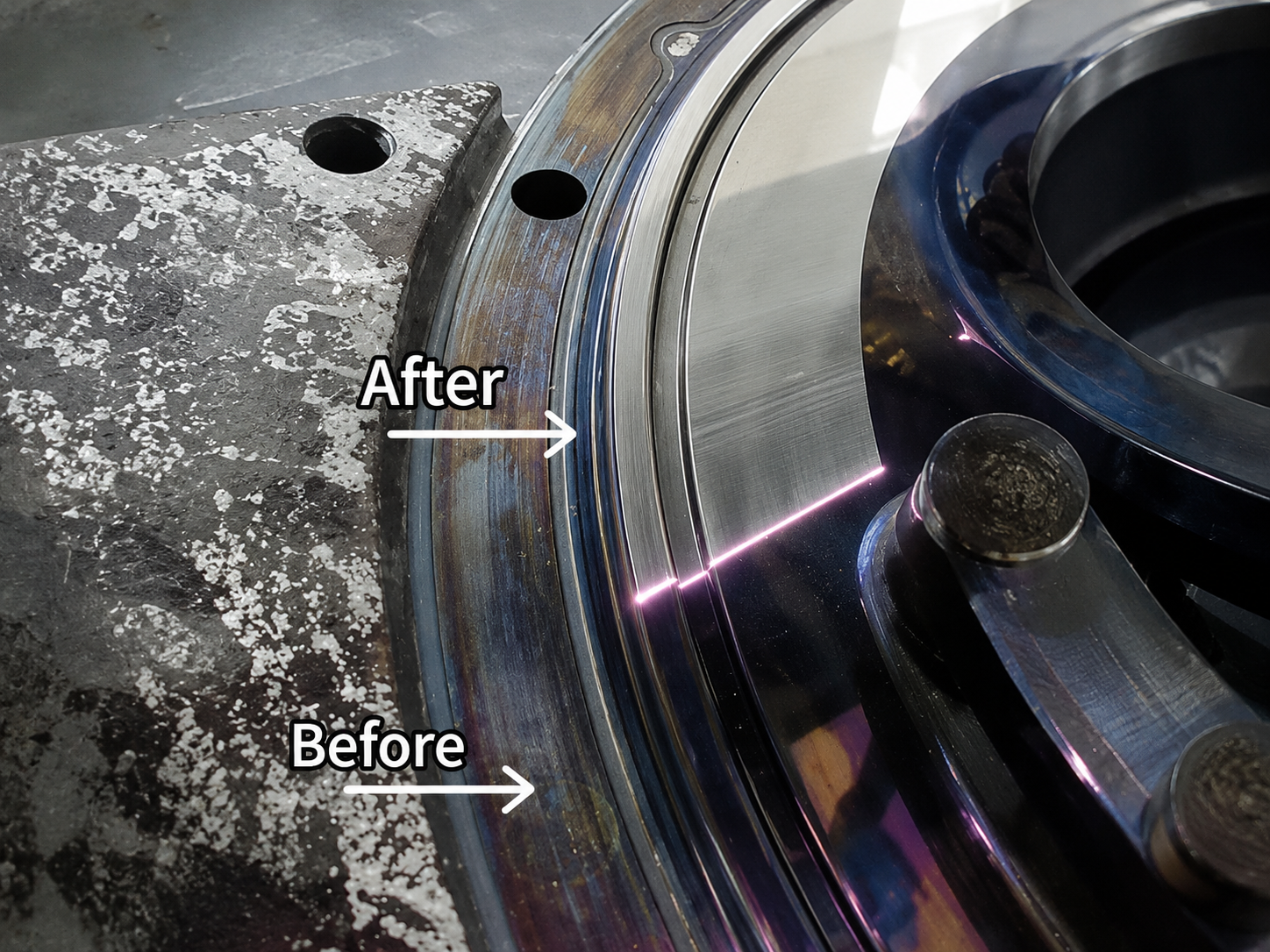
Can Laser Cleaning Remove Rust From Chrome?
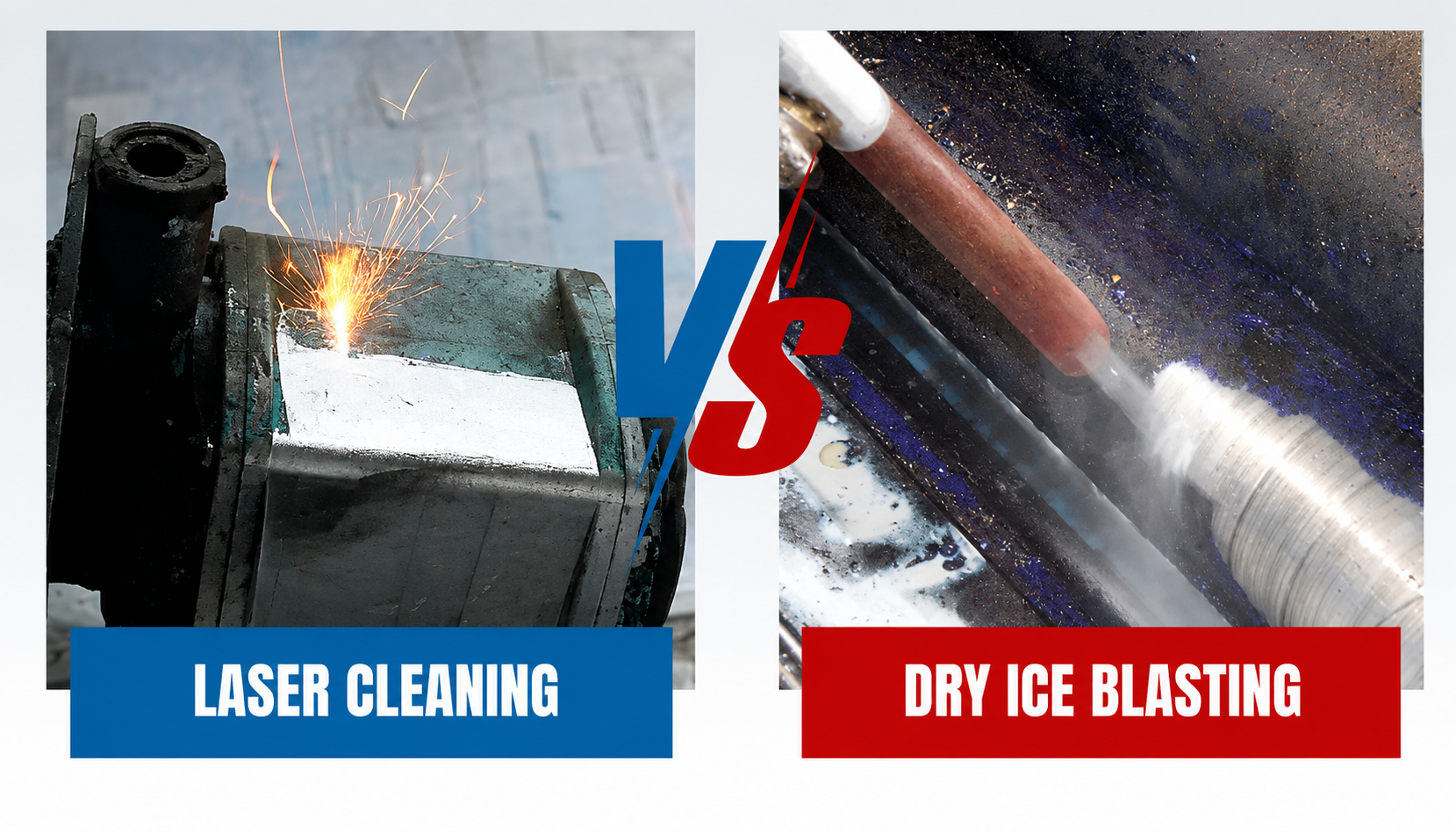
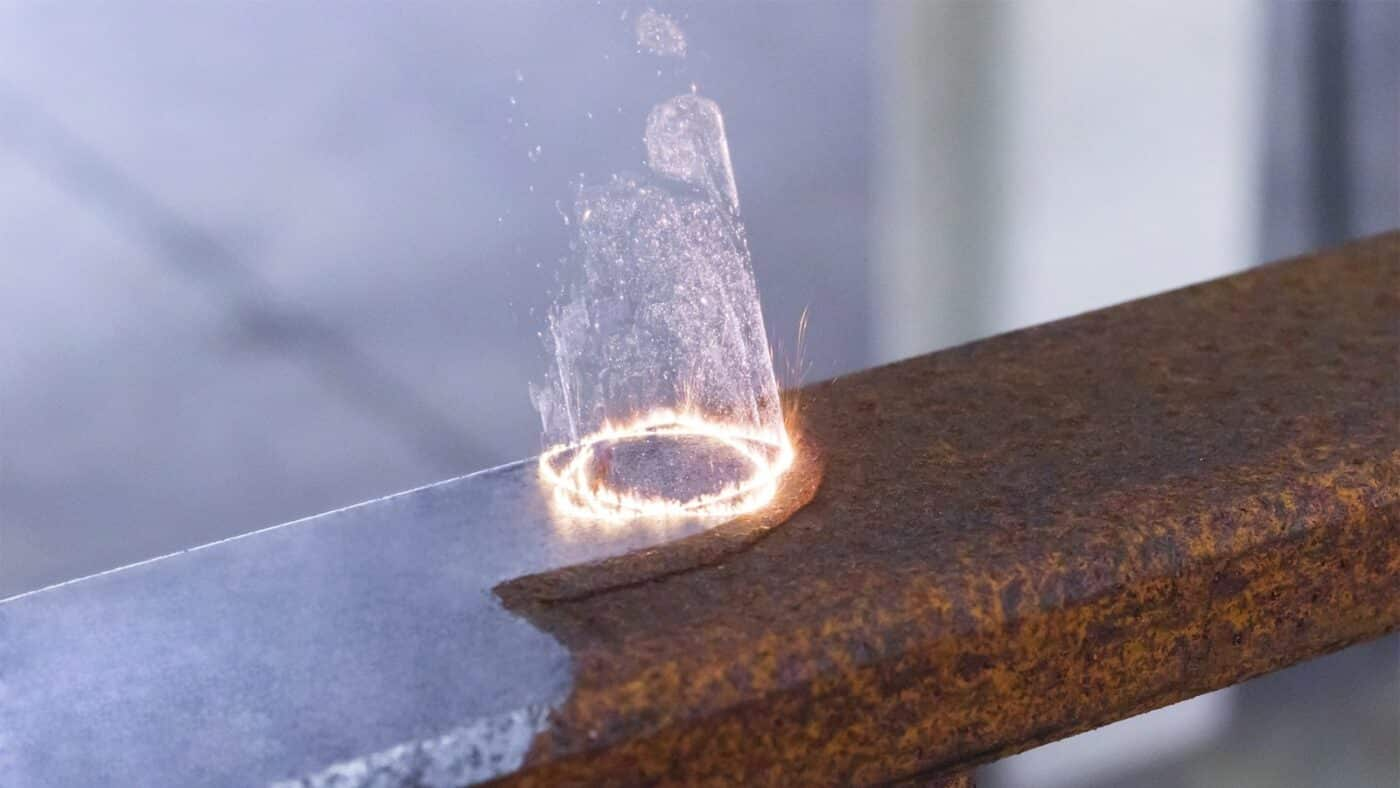
Laser cleaning uses controlled laser energy to remove rust, oxides, grease, paint, and other surface contaminants.
Unlike sanding or steel wool, it is a non-contact process. No abrasive tool rubs directly against the component. Unlike chemical soaking, the entire part does not need to be immersed in a liquid solution.
For suitable applications, laser cleaning offers several practical advantages.
The operator can focus on the corroded area instead of treating the entire component. The same process settings can be repeated across similar parts, improving consistency. A scanning beam can also reach grooves, edges, joints, fixtures, and other shapes that are difficult to polish manually.
These characteristics can make laser cleaning useful for automotive restoration, motorcycle components, tools, molds, production fixtures, hardware, and repeated industrial maintenance work.
However, laser cleaning is not automatically safe for every chrome-plated surface.
Decorative chrome plating may be extremely thin. Excessive power, pulse energy, frequency, overlap, or slow scanning can dull the finish, change its color, overheat the component, or remove part of the chrome layer.
Chrome-plated parts should therefore not be cleaned using the same settings used for heavy rust on bare carbon steel.
For high-value parts, thin coatings, or components with unknown plating thickness, a pulsed laser cleaner is generally more suitable for controlled testing than an aggressive continuous-wave system.
The process should begin with conservative settings on a hidden area or scrap sample. The operator must confirm that the rust is being removed without changing the gloss, color, surface texture, or apparent thickness of the plating.
Laser cleaning also cannot repair chrome that has already peeled, bubbled, or developed deep pits. These components still require replating, replacement, or another restoration process.
For an individual vehicle owner, manual treatment is usually sufficient. For businesses restoring many similar components, a sample laser cleaning test can determine whether the process reduces labor while preserving the finish.
The goal is not to use the most advanced technology. It is to choose the method that removes the rust without damaging the chrome, while meeting the required time, consistency, and processing cost.
How to Prevent Chrome From Rusting Again
After you remove rust from chrome, rinse away all cleaning residue and dry the surface completely.
Moisture trapped in seams, joints, screw holes, and fixture bases can quickly restart corrosion. Use a dry microfiber towel and make sure recessed areas are not left wet.
Apply a thin layer of chrome-safe wax, automotive sealant, corrosion inhibitor, or another manufacturer-approved protective product. This creates a temporary barrier between the surface and moisture, humidity, road salt, or cleaning chemicals.
For bathroom fixtures, wipe away standing water and repair leaking seals or joints.
For vehicles and motorcycles, rinse road salt off promptly and renew the protective layer after using strong cleaning products.
Inspect the chrome regularly. A small orange spot is much easier to remove than corrosion that has already spread beneath the plating.
Conclusion
The best way to remove rust from chrome depends on the condition of the plating and the amount of work involved.
For light household rust, begin with wet aluminum foil or baking soda. More persistent surface oxidation may respond to a short vinegar treatment, WD-40, or a chrome-safe polish.
If the chrome is bubbling, peeling, or deeply pitted, cleaning cannot restore the damaged coating. The realistic options are replating, refinishing, or replacing the component.
For restoration shops and manufacturers handling large batches, complex shapes, or recurring rust-removal work, a laser cleaning machine can provide a more controlled and repeatable alternative to manual polishing and chemical soaking.
Its suitability depends on the chrome thickness, base material, corrosion level, and cleaning parameters—not simply the rated power of the machine.
Not sure whether laser cleaning is safe for your chrome-plated parts? Send clear photos, base-material and coating information, the location of the rust, and your estimated processing volume. A sample cleaning test can confirm whether the chrome remains intact before you choose a pulsed laser cleaner and final cleaning parameters.