Yes, you can buy a laser rust remover for home use—but that does not mean it is the right tool for every homeowner or garage workshop.
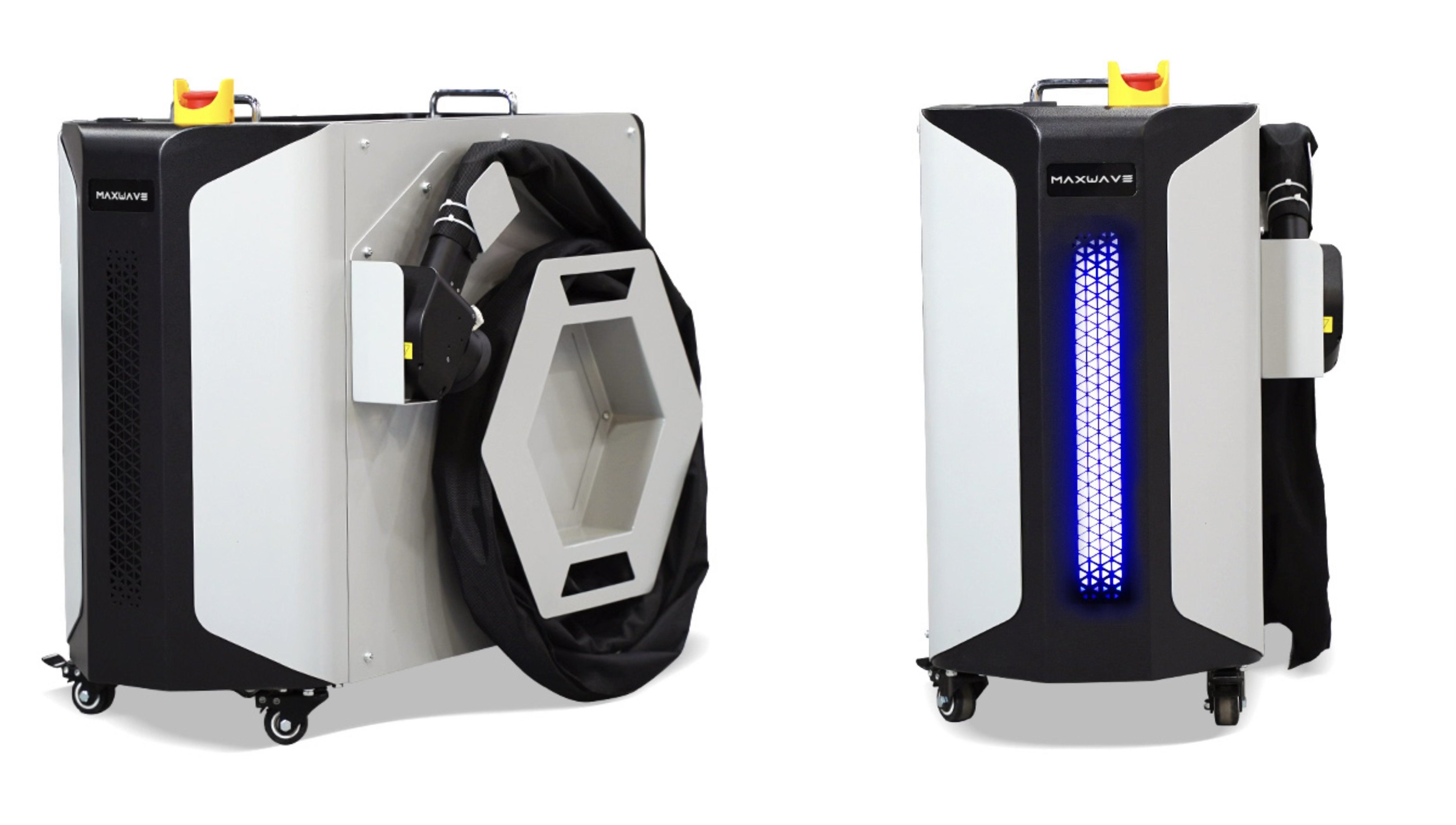
Portable pulsed laser cleaning machines have become smaller and more accessible, making them realistic for restoration workshops, serious hobbyists, automotive enthusiasts, and small businesses working from a garage.
However, they are still industrial laser systems.
The purchase price is much higher than a wire wheel, chemical rust remover, or electrolysis setup, and the safety requirements are also significantly more demanding.
The practical answer is:
A laser rust remover makes sense for home use when you clean valuable metal parts regularly and need precise, low-contact rust removal. For occasional household rust, simpler methods are usually cheaper and easier.
Home Laser Rust Removal at a Glance
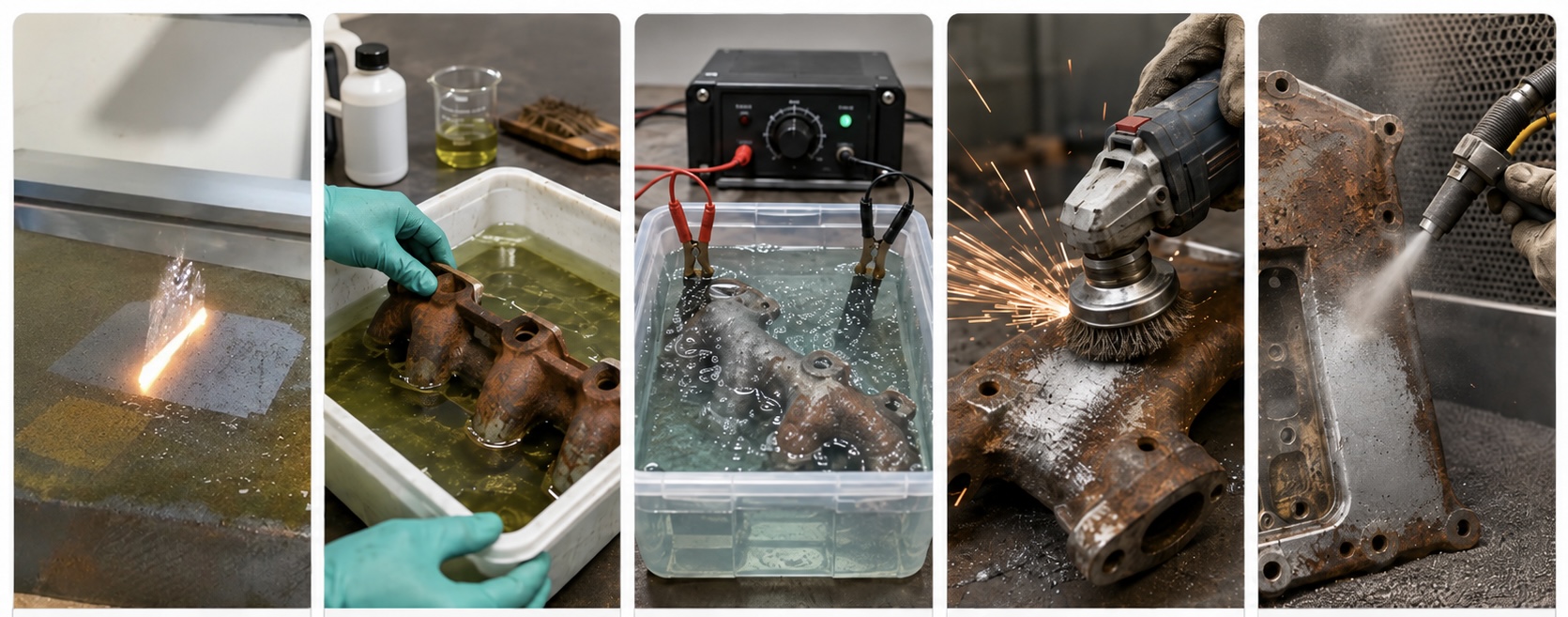
Option | Best For | Cost Level | Main Trade-Off |
|---|---|---|---|
100–300W pulsed laser cleaner | Precision parts, tools, automotive restoration, repeated workshop use | High | Requires serious laser safety controls |
Chemical rust remover | Small parts and occasional household rust | Low | Requires chemical handling and cleanup |
Electrolysis | Removable steel parts and restoration | Very low | Slow and requires a bath setup |
Wire wheel / grinding | Quick local rust removal | Low | Can remove or scratch base metal |
Abrasive blasting | Heavy rust and large parts | Medium | Creates media, dust and surface roughness |
For most home users, the laser only becomes attractive when precision, repeatability, and frequent use justify the extra investment.
What Is a Home-Use Laser Rust Remover?
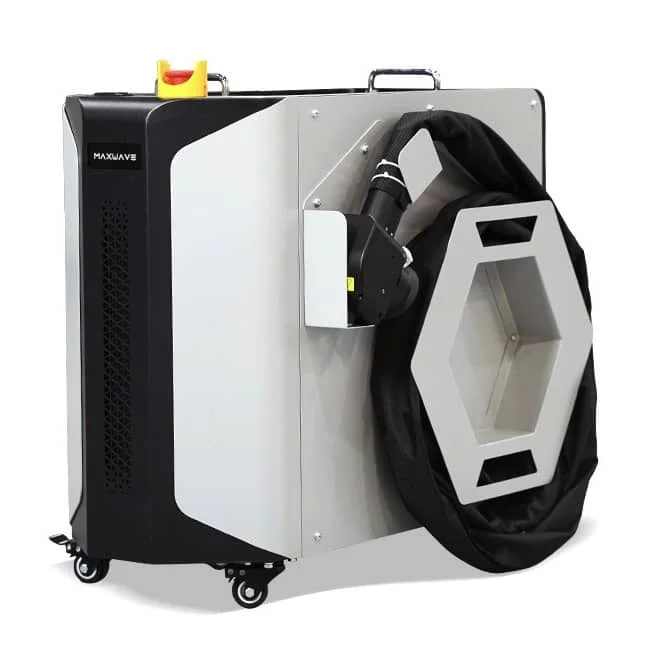
A “home-use” laser rust remover is usually not a small consumer appliance.
It is more accurately described as a compact industrial laser cleaning machine that can operate in a garage or small workshop.
For this environment, pulsed fiber laser cleaners in roughly the 100W–300W class are usually more realistic than high-power continuous-wave machines.
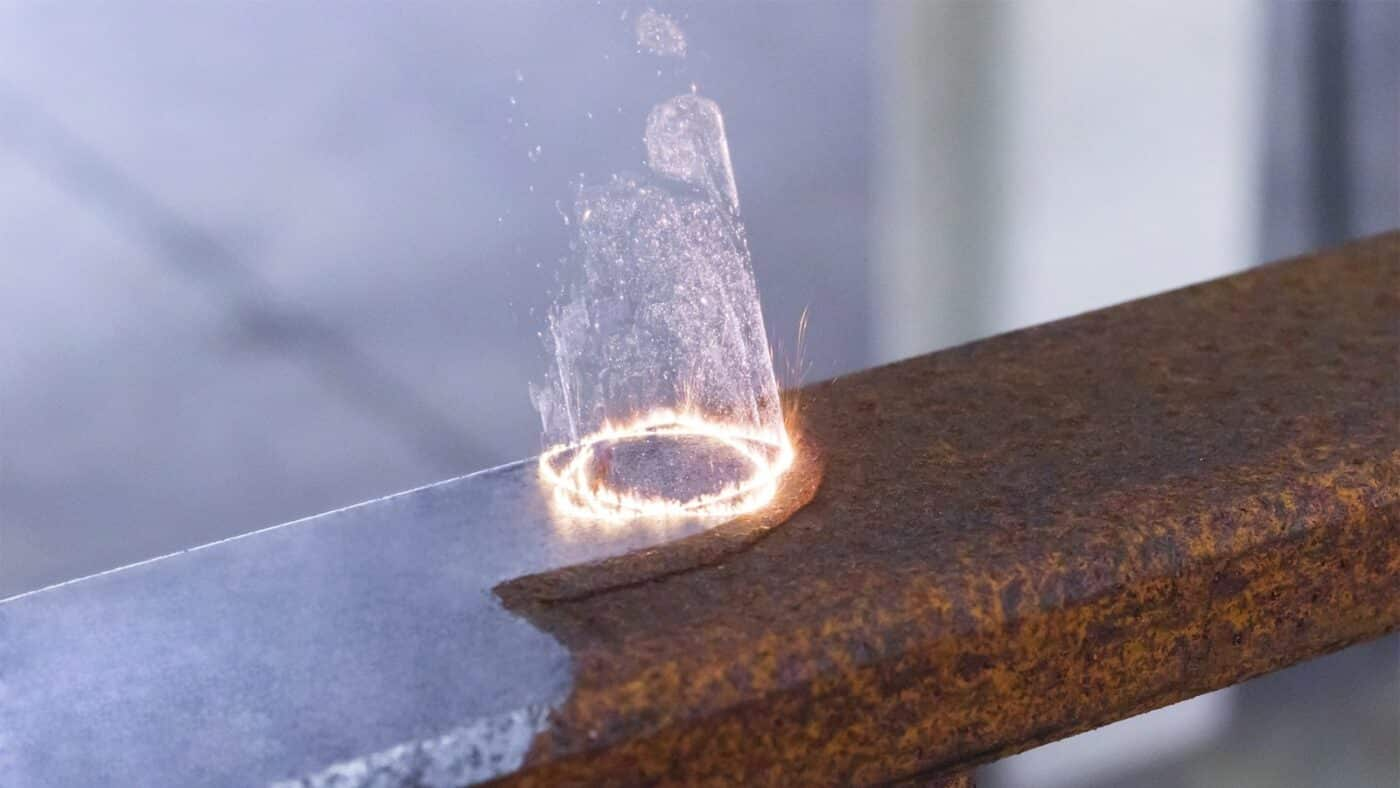
Pulsed systems deliver energy in short bursts, allowing the operator to remove rust, oxidation, paint, carbon, and other surface contamination while limiting the amount of heat transferred into the metal.
This makes them useful for:
Automotive restoration, vintage tools, molds, motorcycle parts, machinery components, stainless steel, weld areas, and other valuable metal pieces where aggressive grinding could damage the surface.
Higher-power continuous-wave machines are designed more for large steel structures, heavy equipment, and industrial-scale rust removal.
They may clean much faster, but they also require more electrical power, cooling, workspace, and safety infrastructure.
For a typical home garage, more wattage is not automatically better.
How Much Does a Home Laser Rust Remover Cost?
This is where buyers should be careful.
Online listings can range from suspiciously inexpensive machines to premium industrial systems costing many times more.
For a genuine portable pulsed laser cleaner, expect the purchase to be a several-thousand-dollar investment rather than a few-hundred-dollar power tool.
The final price depends on:
Laser power, laser source brand, pulse control, cooling system, scanning head, fiber length, machine weight, warranty, training, certifications, and whether you are buying factory-direct or through a local distributor.
Premium systems may cost considerably more because the price also includes local service, safety support, warranty coverage, spare parts, and training.
Do not compare only the machine price.
Your real startup cost may also include:
Laser safety controls + fume extraction + protective equipment + electrical preparation + spare parts + training.
A $5,000 laser cleaning machine that requires several additional purchases before it can be operated safely is not really a $5,000 setup.
Are Cheap Laser Rust Removers Worth Buying?
Be cautious with unusually cheap listings.
A listing that says “laser rust remover” does not automatically mean it contains the same laser source, pulse control, scanning system, safety features, or duty cycle as a professional cleaning machine.
Before purchasing, verify the exact:
Laser type, wavelength, rated power, pulse parameters, laser source manufacturer, cooling method, electrical requirements, warranty, replacement parts, and safety documentation.
Ask for a real cleaning video using a part similar to yours.
Better still, send the supplier one of your actual rusty parts for a sample test.
A professional application test tells you more than the advertised wattage or a dramatic before-and-after video.
What Can You Clean With a Home Laser Rust Remover?
Laser cleaning works particularly well when the contamination sits on the surface and the underlying metal should remain intact.
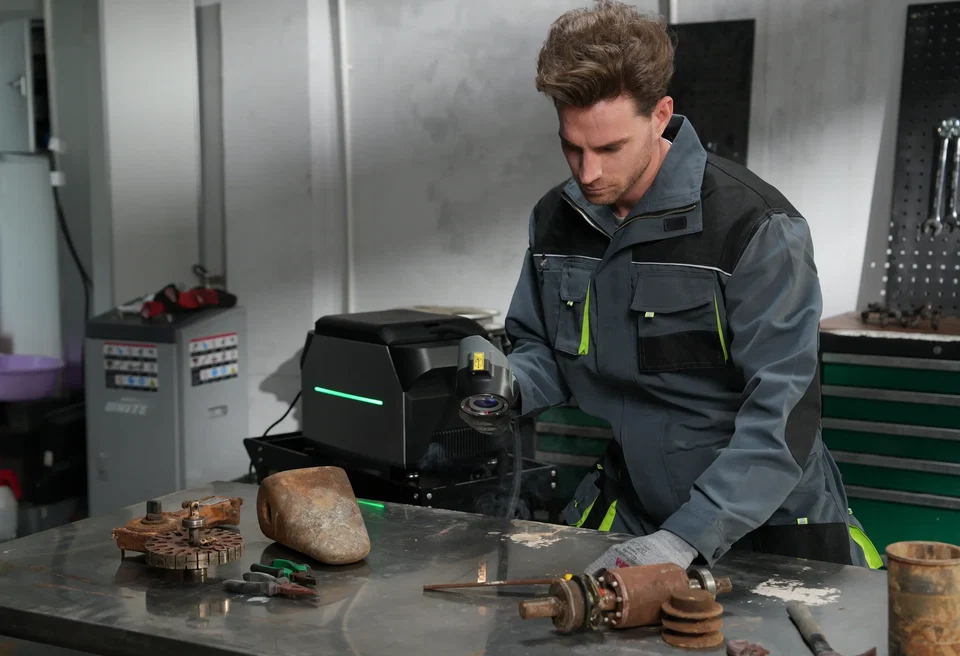
Typical home-workshop applications include light and moderate rust, oxidation, paint, weld discoloration, carbon deposits, and localized contamination on metal components.
A pulsed laser is particularly attractive when surface preservation matters.
For example, grinding a vintage automotive component may remove rust quickly but also erase machining marks, edges, stamped numbers, or original surface texture.
Laser cleaning can provide more control.
That is why it is appealing for restoration work.
However, the laser only removes the corrosion product.
It cannot restore metal that has already disappeared.
If deep corrosion has created pits, holes, cracks, or structural weakness, the part may still require welding, machining, filling, or replacement after cleaning.
Where Does Laser Rust Removal Struggle?
The biggest limitation is heavy bulk removal.
A small pulsed laser can eventually remove thick rust or coating buildup, but multiple passes can make the process slow.
For a heavily corroded trailer frame, steel gate, large agricultural machine, or several square meters of thick scale, blasting or mechanical removal may be more economical.
Geometry can also create problems.
Laser cleaning requires the beam to reach the contaminated surface directly. Deep internal cavities, hidden surfaces, pipe interiors, and inaccessible recesses may be easier to treat chemically or through electrolysis.
So before buying, ask:
Am I mostly cleaning valuable small and medium parts—or large areas of cheap steel?
That question often determines whether laser cleaning makes financial sense.
Is a Laser Rust Remover Safe to Use at Home?
This is the most important part of the decision.
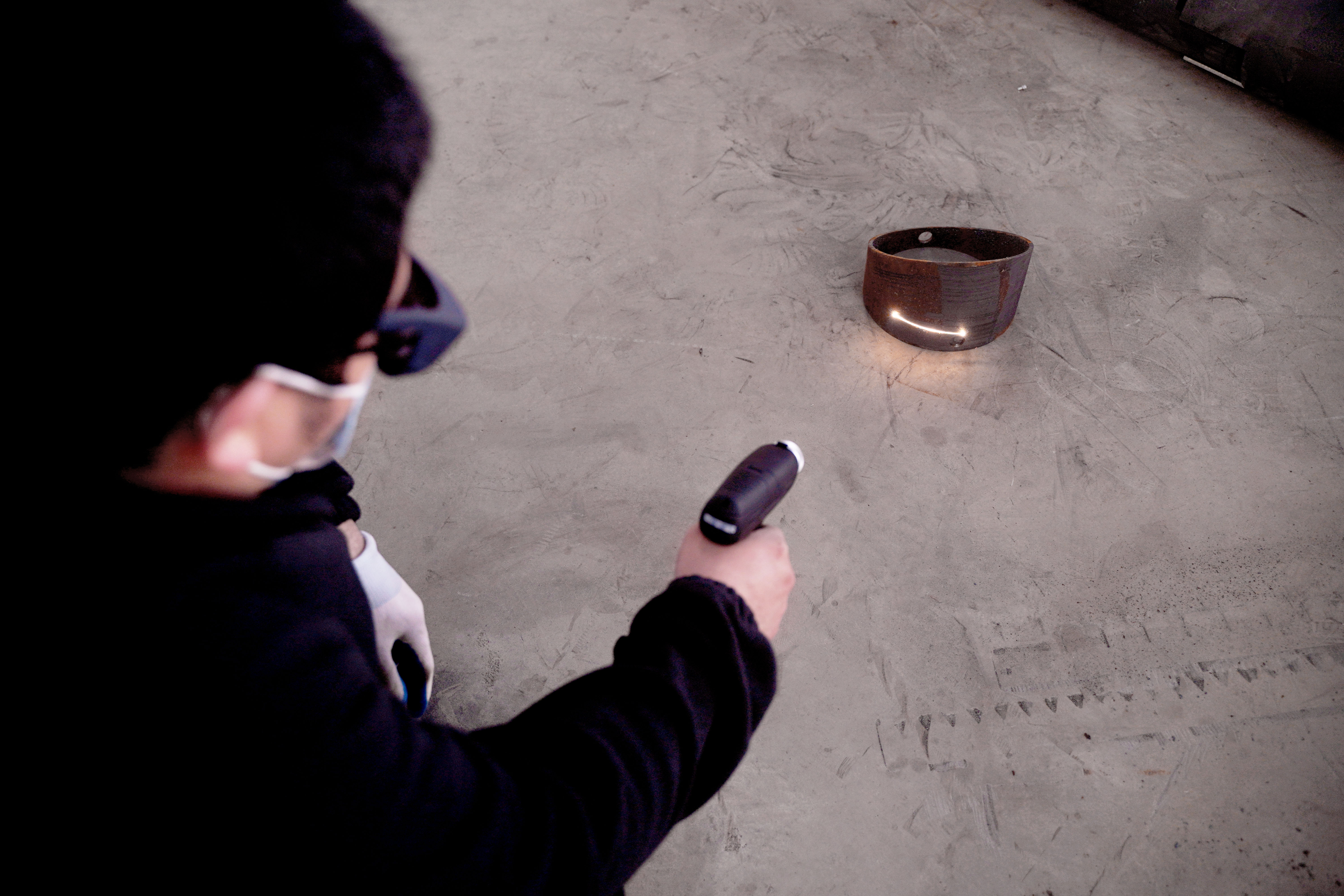
Portable laser cleaning machines are typically high-hazard laser systems. They are not comparable to ordinary workshop tools.
The beam may be invisible, and direct or reflected laser energy can cause serious eye or skin injury.
The process can also create airborne particles and fumes when rust, paint, coatings, oil, or other contaminants are removed.
A safe installation therefore requires more than putting on a pair of glasses and opening the garage door.
A proper setup should include a controlled work area, restricted access, suitable laser-rated protection matched to the actual machine, appropriate fume extraction, fire precautions, and electrical installation that matches the equipment.
Old coatings create another concern.
You may not know whether the paint contains lead, chromium, or another hazardous material until the laser turns that coating into airborne contamination.
If you cannot create a controlled laser workspace and manage the fumes properly, you should not operate a Class 4 cleaning laser at home.
For many casual users, this safety requirement alone is enough reason to choose another rust-removal method.
Laser Cleaning vs. Chemical Rust Removers
Chemical rust removers are much cheaper and easier to use for occasional projects.
They work well for small parts, hand tools, hardware, and components that can be soaked or coated with a chemical solution.
Their biggest advantage is accessibility.
You do not need a several-thousand-dollar machine or a dedicated laser-controlled area.
The downside is chemical handling, rinsing, disposal, and the possibility of affecting coatings or materials if the wrong product is used.
For someone restoring one or two tools per month, chemicals usually make more financial sense.
For a workshop processing dozens of valuable parts repeatedly, laser cleaning becomes more interesting.
Laser Cleaning vs. Wire Wheels and Grinding
Mechanical cleaning remains one of the cheapest and fastest ways to remove rust.
A grinder or wire wheel can clean a steel surface quickly and requires equipment that many home workshops already own.
The trade-off is surface damage.
Abrasive tools can change edge geometry, remove base material, leave scratches, or create an uneven surface.
For structural steel or components that will be repainted, that may not matter.
For precision parts, antique tools, molds, or valuable automotive components, it can matter a lot.
Mechanical methods prioritize speed and low cost. Laser cleaning prioritizes control.
Laser Cleaning vs. Electrolysis
Electrolysis is one of the most attractive alternatives for hobby restoration.
The rusty component is placed in an electrolyte bath and connected to a low-voltage electrical system. Over time, the process loosens corrosion without aggressive grinding.
The major advantages are very low cost and good preservation of the underlying metal.
The disadvantages are speed and convenience.
The part must fit inside a container, the process may take hours, and the component must be cleaned and protected afterward to prevent new rust.
For old tools, brackets, cast-iron parts, and removable steel components, electrolysis can be an excellent home solution.
A laser becomes more attractive when parts cannot easily be soaked or when you need faster, localized cleaning.
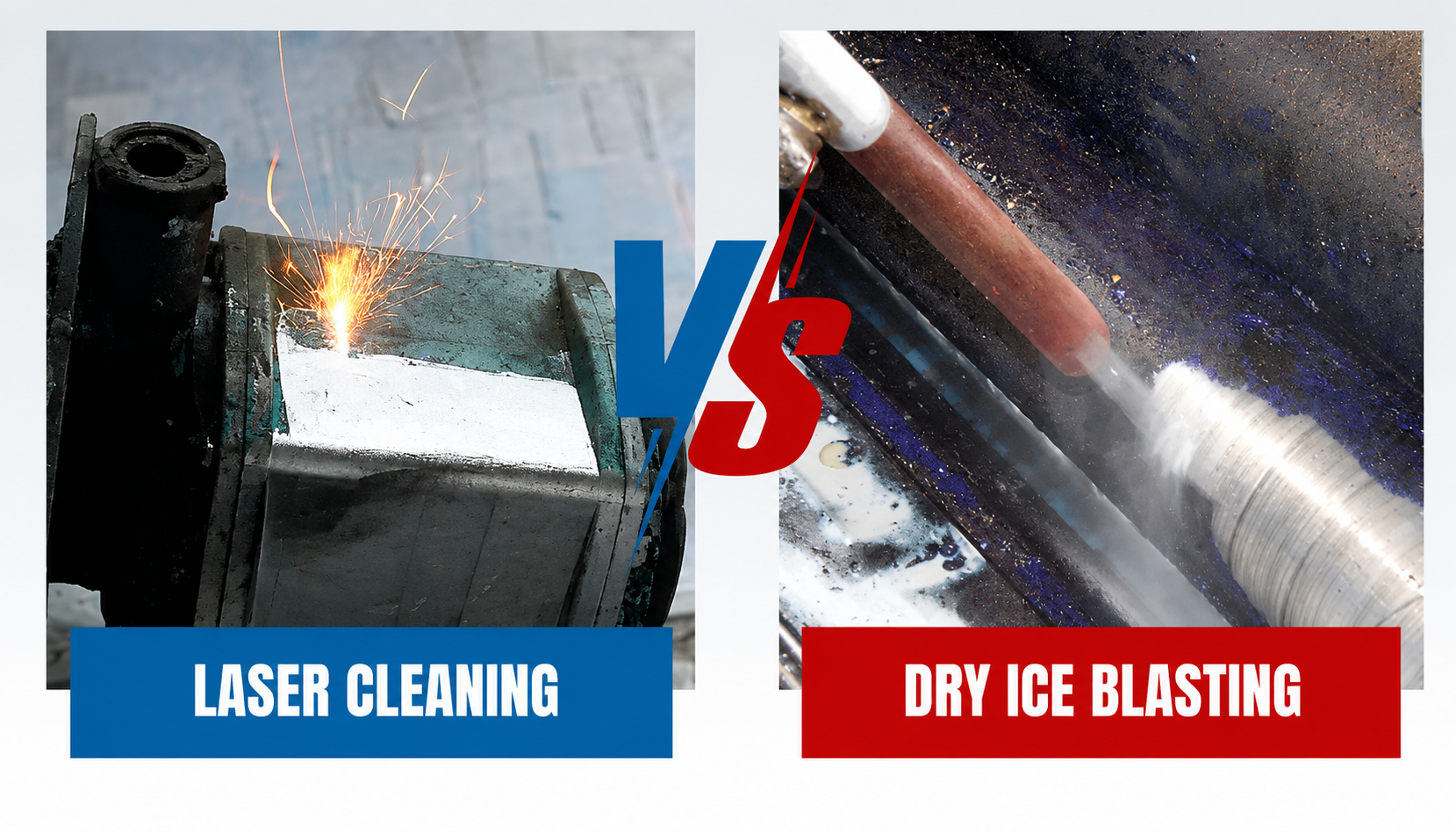
Laser Cleaning vs. Sandblasting
Sandblasting and other abrasive blasting methods are difficult to beat when the job involves large areas of heavy rust.
They remove thick corrosion quickly and leave a rough surface that can be useful before applying new coatings.
The disadvantages are containment, dust, abrasive media, cleanup, and substrate wear.
Laser cleaning creates much less secondary blasting media and provides more precise control, but a small pulsed laser will usually lose the productivity comparison on very large rusted surfaces.
Therefore:
Large steel surface + heavy rust → blasting usually makes more sense.
High-value component + precision requirement → laser becomes much more attractive.
When Is a Home Laser Rust Remover Worth Buying?
A laser rust remover makes more sense when you are using it as workshop equipment rather than as an occasional household tool.
Good candidates include:
Automotive restoration businesses, motorcycle workshops, metal restoration specialists, small fabrication shops, mold-maintenance businesses, vintage-tool restorers, and users cleaning valuable parts every week.
It is particularly attractive when damaging the base metal would be expensive.
For example, spending extra time with a laser may be worthwhile on a rare automotive component where grinding away original material would reduce its value.
The economics become much weaker when the laser spends most of the month unused.
A homeowner removing rust from a garden gate, one trailer, or a few tools may never use the machine enough to recover the investment.
When Should You Skip the Laser?
Do not buy one simply because the cleaning videos look impressive.
A laser cleaner is probably unnecessary if your rust-removal work is occasional, your parts are inexpensive, most surfaces are large and heavily corroded, or you cannot create a safe controlled workspace.
In these situations, chemical cleaning, electrolysis, grinding, wire brushing, or abrasive blasting can deliver a better cost-to-result ratio.
The purpose of buying a laser should be to solve a repeated problem that your current tools handle poorly.
It should not be to replace a $20 wire brush with a $5,000 machine just because the laser is more satisfying to watch.
What Power Should a Home User Consider?
For a serious home workshop or small restoration business, a 100W–300W pulsed laser cleaner is usually the most logical category to investigate first.
Lower power favors precision and portability.
Moving upward provides more productivity and more headroom for moderate rust, paint, and larger parts.
But power should not be selected by wattage alone.
Pulse energy, scanning width, pulse frequency, beam control, cooling, cleaning-head weight, and actual results on your material all matter.
A 200W machine with better pulse control may be more useful than a poorly configured higher-power system.
Before choosing, test the exact application.
What Should You Ask Before Buying?
Instead of asking the supplier only, “How much power do I need?”, provide information about the actual job.
Tell them:
What material you are cleaning, what contamination is present, how thick or severe it is, the approximate size of the parts, and how often you expect to use the machine.
Then request a sample cleaning test.
Watch for cleaning speed, surface condition, discoloration, remaining rust, and whether multiple passes are necessary.
Also ask what safety equipment, extraction, electrical supply, maintenance, and spare parts are required.
Your real application should choose the machine—not the supplier's most popular model.
Conclusion
Yes, you can buy a laser rust remove machine for home use.
But for most homeowners, the better question is whether you should.
A portable pulsed laser cleaner can be an excellent tool for a serious garage workshop, restoration business, or anyone regularly cleaning valuable metal parts where preserving the substrate matters.
For occasional rust removal, however, chemical cleaners, electrolysis, wire wheels, grinding, or blasting usually offer a much lower-cost solution.
The decision comes down to three things:
How often you remove rust, how valuable the parts are, and whether you can operate the laser safely.
If the machine will be used every week on high-value components, a compact pulsed laser cleaner may be worth investigating.
If it will come out twice a year to clean garden tools, save the money.
Considering a laser rust remover for your workshop? Send LaserCleanerPro photos or samples of your parts, together with the material, rust condition, typical part size, and expected workload. The engineering team can arrange an application test and recommend whether a compact pulsed laser cleaner—or a simpler alternative—makes more sense for your actual use.